
 •
Rating:
•
Rating:
THE REVIEW
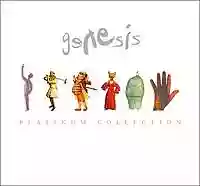
In 2004, the Genesis, or rather their management, came out with this Platinum Collection on three discs, succeeding the pointless and blatant Turn It On Again - The Hits by five years. It is a journey back in time to discover (or rediscover) the story of this great band, starting from their major, ephemeral chart successes to their earliest, unforgettable classics; a definitely commercial operation but one that presents some interest, especially for newcomers. I must say that I own an original copy of the Platinum (which I find very sober and elegant in its vast graphic), bought in Livigno for eleven Euros, even though I already owned all the band's albums: I use it successfully to make converts and educate friends. The main point of interest for Genesis fans is that half of the tracks (precisely 22 out of 40) have been remixed and skillfully restored by the talented Nick Davis: this allows us to rediscover, for instance, the magic of The Musical Box and The Knife as never heard before, and it also adds considerable impact to impressive tracks of the new era such as the powerful Abacab, the romantic Undertow, or the catchy Turn It On Again, making them much more appealing.
The first disc is dedicated to the soft underbelly of Genesis, the painful side, characterized by a dry creative vein and excessive care for chart results. The worst of this phase is present, and the few good things can be found in the first track, the beautiful No Son Of Mine, and in the longer tracks from the ’83 album. There are two "intruders": the mediocre Paperlate from the EP 3x3 and the title track of the much-hated Calling All Stations. Few have bothered to listen to this album without dismissing it outright, and I find that it is a historically unfortunate but well-made work and not entirely detestable. I think it is worth remembering.
The second CD gathers material from Three and Four-wheel Genesis; it captures the shift towards more direct forms, but it is still noticeable that the quality is sufficiently high. There are many notable omissions, for example, Dodo, Dance On A Volcano, or the magnificent One For The Vine, and despite significant drops in tone (Misunderstanding and Keep It Dark), the selection works quite well. Furthermore, here you begin to admire the good restructuring work of the sound that brings new energy to many forgotten tracks, like the gentle Duchess shining with piano, or the stunning Afterglow, with its perfect and crystal-clear guitar, and even the jaunty Follow You Follow Me, light but always enjoyable (I will never forget it because it was the first Genesis song I heard), shows new brilliance.
The third disc hosts the true masterpieces, those with Gabriel on vocals, an exciting collection opened by the title track from The Lamb. The pieces have been adjusted and cleaned up in the studio, and they have never sounded better, especially in the set from Selling England. and the two aforementioned final tracks. Not everything is here, the major absences being Watcher Of The Skies, The Fountain Of Salmacis, and Stagnation, but for those approaching this band, it's an excellent starting point to discover what Genesis was capable of in its youth. A valid incentive, as I've witnessed on several occasions, to seek out the actual records: if you start with The Musical Box, who knows what the rest of the album holds...
This is an opportunity to clarify a point I hold dear and which is too often overlooked. Who composed these wonderful songs? As is known, they are accredited to the whole group, but distinctions are useful. One thing needs to be said immediately: these are not Peter Gabriel's songs. For instance, take Genesis's manifesto of the era, The Musical Box; the lyrics are Gabriel's, but the core of the song was composed by Rutherford and Phillips, later enriched first by Mick Barnard, who briefly replaced Ant, then by Steve Hackett. Many tracks, Supper's Ready being exemplary, were musically composed by Banks with Collins, Hackett, and Rutherford supporting, and Gabriel to a lesser extent; many lyrics sung by Gabriel were actually written by Tony or Mike (Cinema Show, Firth Of Fifth, but also Fountain Of Salmacis). So the great Peter was the principal and inimitable poet of the group, a skilful storyteller with infinite creativity and unparalleled stage presence, but he was not a true composer, and did not personally weave the magical atmospheres upon which his stories were based; it should be said, however, that he is the author of the group's strong pieces like Dancing With The Moonlit Knight and a good part of The Knife, but also, for example, a work like The Lamb, conceptually and lyrically (but not entirely?) Peter’s child, is from a musical standpoint almost entirely the result of the creativity of the great catalysts, Tony and Mike. Note that I say this not to undervalue the enormous capabilities of a whirlwind like Gabriel, but to clarify how the Genesis of the golden period worked; it has often happened to me to hear that Peter was a genius who wrote immense masterpieces, which were then arranged by the rest of the band, and that he was therefore not only the charismatic leader but also the artistic leader of the band. This is not true at all, and it rather undeservedly diminishes the skill of all the musicians, also because, in many cases, it was the music that carried the lyrics, and not vice versa; so Genesis does not mean Peter Gabriel and does not mean Phil Collins either. Beyond these sterile syllogisms, I believe it is right to give all the members of this great band the honor and merits they deserve beyond the subsequent questionable devolutions.
One last note on the tumultuous divorce between the singer and the band: many take for granted that the musicians, resentful of the growing popularity of the great personality, maliciously isolated and then excluded him, or put him in a position where he could no longer work. This is also a historical misconception: the first break was provoked by Peter himself. How many know, or have chosen to forget, the phone call made to young Gabriel by William Friedkin? I won’t elaborate further, let those with ears to understand hear...
P. S. I have also seen flying around the internet a version with a different cover; in this one, the figurines are: the human shadow on Calling All Stations, the little angel inside the cover of Nursery Cryme, a colorful silhouette from The Way We Walk, Jacob sleeping on the bench, the little devil from A Trick Of The Tail and the thoughtful Rael.
Loading comments slowly
Summary by Bot
The Platinum Collection by Genesis revisits the band's extensive career with three discs featuring remixed and restored tracks, providing a fresh listening experience. The review highlights the distinct eras of Genesis, from commercial hits to progressive masterpieces, while clarifying misconceptions about Peter Gabriel’s role in composition. Though some omissions and weaker songs appear, the set serves well for newcomers and fans alike, encouraging exploration of Genesis’ broader catalog.Tracklist Lyrics Videos
Genesis
English rock band formed in 1967, celebrated for landmark early-1970s progressive albums (Foxtrot, Selling England by the Pound, The Lamb) and a later, more pop-oriented phase led commercially by Phil Collins.116 Reviews
Other reviews
By Old King Cole
For the Genesis, it is as absurd, useless, and insulting as one can imagine.
Every Genesis song (those with Peter) makes sense when listened to in a well-determined concept... They are songs that have no meaning stuck inside a 'The Best Of'.
