
 •
Rating:
•
Rating: THE REVIEW
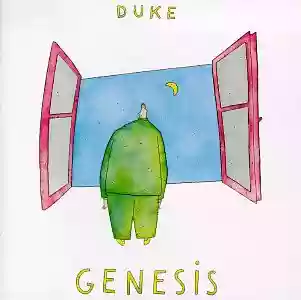
Until the time of 'Duke' I had never understood their work, although among the tracks of their last seventies album, and then there were blah blah blah and the title of the album is too long and I don't remember it (an allusion to the departure of Peter Gabriel from the group, engaged from then on in a mediocre solo career), I had appreciated the lovely 'follow you follow me', for the rest all the albums before 'Duke' seemed too arrogant and artsy, too intellectual.
Starting from 'Duke', the presence of Phil Collins became more pronounced, the music became more modern, the electronic drums had more prominence, the lyrics lost much of their original mysticism to become more concrete (perhaps thanks to the departure of Peter Gabriel) and certain complicated, ambiguous references to nostalgia gave way to overwhelming pop ballads, in which I enthusiastically indulged. The songs themselves were arranged more in favor of Collins's drums than Rutherford's bass or Banks's keyboards, in this sense and misunderstanding, which was not only their first successful single of the eighties but also indicated the direction their work would take in the following years, please don’t ask is a touching love ballad dedicated to a separated wife who gains custody of the son. Is there perhaps another rock group that has better rendered the intimately negative aspects of divorce and not even having the necessary money for a woman to go to the hairdresser at least twice a week? I don't think so.
Duke travels and duke end must have some meaning, but since the lyrics are not in the album, it’s difficult to say what Collins is singing about; in the last piece, a piano reaches remarkable virtuosity peaks. The only disappointment comes from alone tonight which reminds too closely of tonight tonight tonight later heard in the group’s masterpiece 'invisible touch' and represents the only case where Collins has plagiarized himself.
Loading comments slowly
Summary by Bot
Genesis’ album Duke marks a turning point with Phil Collins’ growing role, bringing modern electronic drums and more accessible, heartfelt lyrics. It departs from their earlier intellectual style, embracing pop ballads like 'Follow You Follow Me'. The review praises the emotional depth in songs such as 'Please Don’t Ask' but notes some self-plagiarizing moments.Tracklist Lyrics Videos
Genesis
English rock band formed in 1967, celebrated for landmark early-1970s progressive albums (Foxtrot, Selling England by the Pound, The Lamb) and a later, more pop-oriented phase led commercially by Phil Collins.116 Reviews
Other reviews
By Grasshopper
A masterpiece, yes, but of indecision, uncertainty, instability, an eccentric album like a March day, a continuous alternation of lights and shadows.
Phil Collins has taken the helm of the commercial turn, but it’s Tony Banks... who reveals himself as a master of pop songs.
By London
"In 1980, there is no more room for prog; there is only a need for simplicity before everything degenerates into the complete stagnation of the second half of the decade."
"Turn It On Again is a simple hit piece, great for live performances, but nothing more."
