
 •
Rating:
•
Rating:
THE REVIEW
After rather hastily dismissing vocalist Ray Wilson, Genesis (currently on standby) decided to delve into their archives for some tracks that had been "left by the wayside." Thus, in 1998, "Archive 1967-75" was released, tracing the group's rise from the tentative "From Genesis to Revelation" to worldwide fame over 4 CDs.
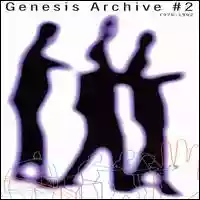
In 2000 (almost quietly), it was the turn of "Archive #2 1976-92." If the Gabriel-era Genesis had recorded practically everything they had composed (Archive 1967-75 is more a collection of "unreleased live performances," with very few gems discarded from the early albums), the Genesis led by the chameleon drummer had produced chart-topping albums, almost entirely abandoning the experimentation and complexity that had previously defined them.
However, Genesis did not lose their talent, and indeed, this collection contains much of the ideas sacrificed for the charts. The first of the 3 CDs making up "Archive #2" is perhaps the most interesting: 11 unreleased tracks plus a useless remix of "I can't dance." "On the Shoreline" is a fine piece. It starts with an introduction reminiscent of "No Son of Mine," but then reveals itself to be much more interesting, featuring good lyrics and relaxed but not cloying sounds. After the bland "Hearts on Fire" (though with a nice bass line) and "You Might Recall," Banks gives us "Evidence of Autumn" (a Duke recording outtake) with sounds typically dear to the keyboardist: melancholic and indeed, autumnal. Following is "Do the Neurotic," one of the best pieces in the collection. It is an instrumental (as the title suggests), very aggressive and unusual for Genesis standards of the time: Rutherford's guitar is perpetually in the foreground (here he plays at being Hackett). Collins drums out a fast and powerful rhythm, while Banks' keyboards serve as embellishment, creating 7 minutes of instrumental progressions. Frankly, it's surprising that it was excluded from "Invisible Touch" (no, on second thought, I understand why).
Collins' pop tune "I'd rather be you" is mediocre, while the following tracks are almost all successful. "Naminanu" seems like a sketch of something unfinished; it's actually a semi-instrumental (the only word Collins repeatedly says is Naminanu) with a vaguely jazzy undertone. It would not have appeared out of place on "Abacab," quite the opposite. We thus arrive at another gem, the marvelous "Inside and Out." Also composed by Steve Hackett, it features two distinctly different parts: the first reminiscent of the more delicate tracks on "Wind and Wuthering," and the second with a decidedly instrumental energetic and unusual surge (much credit goes to the guitarist) that makes it fully progressive. Collins is in great form on vocals in "Feeding the Fire," and the guitars make the track very aggressive. The protest lyric complements the track’s "positivity" (naturally "discarded" from "Invisible Touch"). The pleasant instrumental "Submarine" optimally closes the album.
The second CD consists of live material, while the third is a mix of the first two: remixes, unreleased tracks, and live performances. The overall appeal is less significant, but at least 3 tracks make the disk appealing. "The Day the Light Went Out" (from the "Abacab" sessions) has a lively pace, with the keyboards at the forefront. However, it features more "dark" atmospheres in the chorus. "Pigeons" is an amusing march, boasting humorous lyrics and an inspired Collins on vocals. "It's Yourself" is the group’s most "unjustly forgotten" composition, and the reason is incomprehensible. A "discarded" track from "A Trick of the Tail," it reprises some musical themes present on Los Endos. The sung introduction gives way to a sweet, hypnotic, rarefied instrumental. The barely audible voices (probably recorded backwards) wonderfully close it.
The rating is 4/5 for Genesis fans, 3/5 for others.
Loading comments slowly
Summary by Bot
This review praises Genesis Archive #2 (1976-1992) as a valuable collection of unreleased tracks and live performances that reveal the band’s creativity beyond their commercial hits. The first CD stands out for its interesting and diverse material including both aggressive instrumentals and melodic songs. Live and remix discs add moderately to the appeal, with several forgotten gems highlighted. Overall, fans of Genesis will find much to appreciate, though casual listeners may be less enthused.
Genesis
English rock band formed in 1967, celebrated for landmark early-1970s progressive albums (Foxtrot, Selling England by the Pound, The Lamb) and a later, more pop-oriented phase led commercially by Phil Collins.116 Reviews
