
 •
Rating:
•
Rating:
THE REVIEW
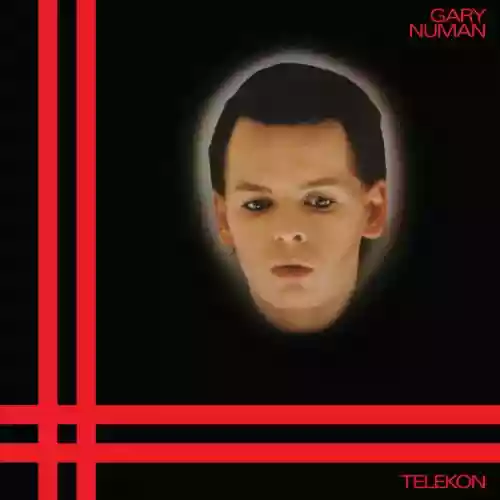
This time I want to talk to you about Gary Numan's second solo album, Telekon, an album, in my opinion, suitable for evenings and nights from June to late September. Released in 1980 with 10 tracks, in the 1998 reissue their number rises to 16. Telekon is the natural continuation of "The Pleasure Principle". It is characterized by the addition of a keyboard with a subtle sound and the almost constant presence of the piano. On the cover, the singer's face, surrounded by an icy aura, splits the total black of the background, which is, however, warmed by the orange color of the credits and lines intersecting like a gift package.
Besides being the composer of the music, Gary Numan is also the author of the lyrics, which have an important role in the creative process. When they don't talk about difficult loves, they are very cryptic, but hint at situations on the edge of physical or psychological violence. Sometimes, however, there's a feeling they are written just to have something to sing: many tracks, in fact, could well do without the words. Even the song titles, in some cases, are very sophisticated and add value to the work.
But let’s take a closer look at each individual track. The album opens with This Wreckage, which lasts almost 6 minutes. The intro is a bit too long and nothing special, but then the song unfolds in the best way thanks to important lyrics, interpreted without overdoing it. Yes, because often, to very original melodic lines and great atmosphere, there is an unmistakable singing which, however, is the real weak point of this commendable and, all in all, honest artist. The Aircrash Bureau, also almost 6 minutes long, has its only strength in the instrumental theme that evokes one or two tracks from The Pleasure Principle, and it makes us feel like we are masters of the sky, piloting a plane.
The third track, the title track Telekon, is the most threatening and dark song on the album: a "gust" of synth with three chords acts as a continuous bass line for the singing and drums and, when it duets with the crazy notes of the piano, it creates an excellent crystal contrast. The lyrics talk about two people who start discovering each other's flaws and no longer trust each other. The spacey, powerful, and characteristic synthesizer still brings us back to the previous album. Remind Me To Smile is a reflection on the weight of fame on artists; to not be overwhelmed by it, one must remember to smile and laugh. We Are Glass talks about the omnipotence of youth willingly bordering on cruelty. I Die: You Die has a very catchy chorus and is perhaps the best song of the group, but it’s not easy to understand what it's about. I’m an Agent, the song with the worst title, sounds like the theme song of a cartoon due to the pompous singing, but in the end, this is not a flaw.
A bit detached, The Joy Circuit, with strings in the foreground and piano bringing more calm, is an exercise in experimentation not fully realized. From this moment on, the tone definitely changes, and Numan's stylistic evolution is evident. The next two tracks are what I define as the most "scientific" ones on Telekon. Sleep By Windows is like a warm breeze on a night. Almost ambient and expanded in its slow pace marked by the drums, only in the end does it pick up speed to fade into electronic crumbs, a somewhat questionable choice. The more or less poetic verses suggest a way to punish or keep away a love that is no longer there. I Dream Of Wires is the only track in which Numan imagines life in the future: first proclaiming himself "the last electrician," then listing normal everyday actions that could be performed with the help of computerized devices or the power of thought. Musically it starts quietly, with an acidic and ghostly electronic sound and remains gloomy until the first chorus; when it turns to rock with the explosion of percussions, it loses some of the mystery that characterized it.
The heart of Telekon however, lies in the soft tracks where the new keyboard expresses itself bare, rarefying the atmosphere, tinting it with a pale pink. Please Push No More is one of the gems of the album: pleasant and epidermal like a fresh summer breeze, slightly crepuscular, it mourns with resignation a love that is now over. A Game Called Echo could have been a great instrumental thanks to long synthetic passages that separate the verses. Remember I Was Vapour repeats the same theme many times to contain all the singer’s needs in the sentimental realm.
The last pieces of the album are all instrumentals that don't abandon the quiet atmosphere of the previous three.
Photograph is a little masterpiece, sparse and concise. It's also the most different track, so much so that it could be mistaken for a classical genre piece, centered as it is on piano, church organ, and final synth. Down in the Park, presented with a new arrangement performed on the piano, however, does not live up to the original. The synthetic reinterpretation of the first movement of the three Gymnopedies by Eric Satie, which closes the work, is successful.
Loading comments slowly
Summary by Bot
Telekon, Gary Numan's second solo album, continues the electronic and synth-driven style of The Pleasure Principle with more keyboards and piano. The review praises its dark atmosphere, innovative instrumentation, and thought-provoking lyrics, while highlighting some limitations in vocal delivery. The album evolves through various moods, blending threatening synths, experimental tracks, and serene instrumentals, making it ideal for reflective nights.Tracklist Lyrics Videos
Gary Numan
English singer, songwriter, and electronic music pioneer. Broke out with Tubeway Army before solo success with the fully synth-driven The Pleasure Principle and the UK No.1 single Cars. Influential on synth-pop and later industrial-leaning records such as Sacrifice, Exile, and Pure.04 Reviews
