
 •
Rating:
•
Rating:
THE REVIEW
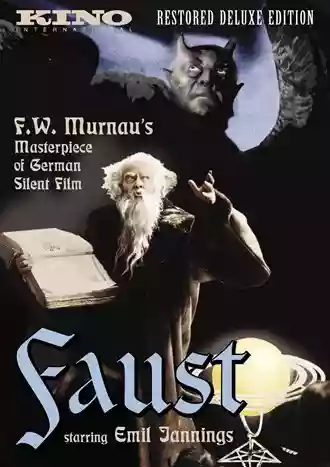
After the review of Sokurov's "Faust," a couple of years later and 80 years earlier, here is the review of Murnau's Faust.
Faust is a film by Friedrich Wilhelm Murnau, a German director born in 1888, considered among the most authoritative and influential film directors of all time, a master of German expressionism.
In 1926, he directed Faust, inspired by the famous work of Goethe but also by Marlowe's "Doctor Faustus" and the German "Volkshbuck."
It is his last film in his homeland before emigrating to the United States.
Faust is an old scientist; the plague breaks out in the city, and he is deeply saddened and distressed because he cannot find an antidote for the devastating epidemic.
In the depths of despair, he renounces science and faith in God until he invokes the devil himself from ancient writings, with whom he makes a blood pact in exchange for earthly pleasures and youth...
An infernal atmosphere is felt from the beginning, among gloomy landscapes and messengers of death.
The figure of the devil is malevolent and contemptible; Faust, who believes he leads the game, is actually an instrument in the hands of Mephisto.
The scene of Faust's evocation of the demon and the devil's appearance is suggestive, with an unpleasant and robust middle-aged man who greets him by removing his head-covering.
Faust, immediately repentant and horrified for having summoned the evil one, flees, but wherever he goes, he always finds the devil a step ahead greeting him...
This film, for us kids today, represents a really challenging view.
Silent film, with some subtitles and no soundtrack!
Yet it is a film with great visual charm, especially considering the means of that era, which are truly little compared to today.
Murnau makes wise use of light and shadows depending on the situations and employs spaces, dilating them exceedingly in flying demonic escapades.
The emphasis of the "silent" actors of the time is well-known and gives a strong emotional impact to the viewer, provided one does not get distracted or, worse, fall asleep. Indeed, the drooping eyelid in front of a silent film without a soundtrack is really just around the corner... just like the devil who often lurks, plotting behind the naïve Faust destined to fall.
But the devil does not know the word that will save him.
Loading comments slowly
Summary by Bot
Friedrich Wilhelm Murnau's 1926 silent film Faust remains a visually captivating masterpiece of German expressionism. The film captures the dark, infernal atmosphere of the Faust legend through masterful use of light, shadow, and space. The silent acting style delivers strong emotional impact, although it challenges modern viewers accustomed to sound. The devil’s menacing presence and Faust’s tragic pact unfold with haunting intensity in this historic cinematic work.
Friedrich Wilhelm Murnau
Friedrich Wilhelm Murnau (born 1888, died 1931) was a German film director and a leading figure of German Expressionist cinema, director of films including Nosferatu and Faust. He emigrated to the United States in the mid-1920s.01 Reviews
