
 •
Rating:
•
Rating:
THE REVIEW
We all agree that true great artists, the ones we call "icons," are born once among a thousand stars and starlets that crowd our charts. Despite what is said, Frederick Bulsara was indisputably a symbol, an icon, a legend.
Eclectic, extravagant, histrionic, his genius is responsible for songs that have entered history, true anthems like "Bohemian Rhapsody," "Who wants to live forever," "Let me live," "Innuendo." A forerunner of glam, the inventor of rock opera, a pioneer of the music video trend, the adjectives to describe this key figure of the international rock scene of all time are limitless. In him blended restlessness and candor, a joy of living alternated with moments of deep despair, but above all, courage, great courage to always be offbeat, out of the ordinary, and beyond common morality.
He did not hesitate to appear on stage in tight multicolored leotards (who doesn't remember the video of "Friends will be friends") that accentuated his athletic physique, nor did he hesitate to dress as a woman (in "I want to break free" he boasts a miniskirt that shows legs like a true top model) and, more importantly, he did not hide from the world first his nature as a happy homosexual and then the drama of his illness.
Perhaps one of the last true musical geniuses of our times, a sacred monster who left us too soon. The long discography of Queen continues to unveil musical gems that help illuminate Freddie's compositional and vocal talent, yet this album collects many spin-offs, many solo projects realized parallel to his work with Queen, which he never left but which allowed him to find himself as well.
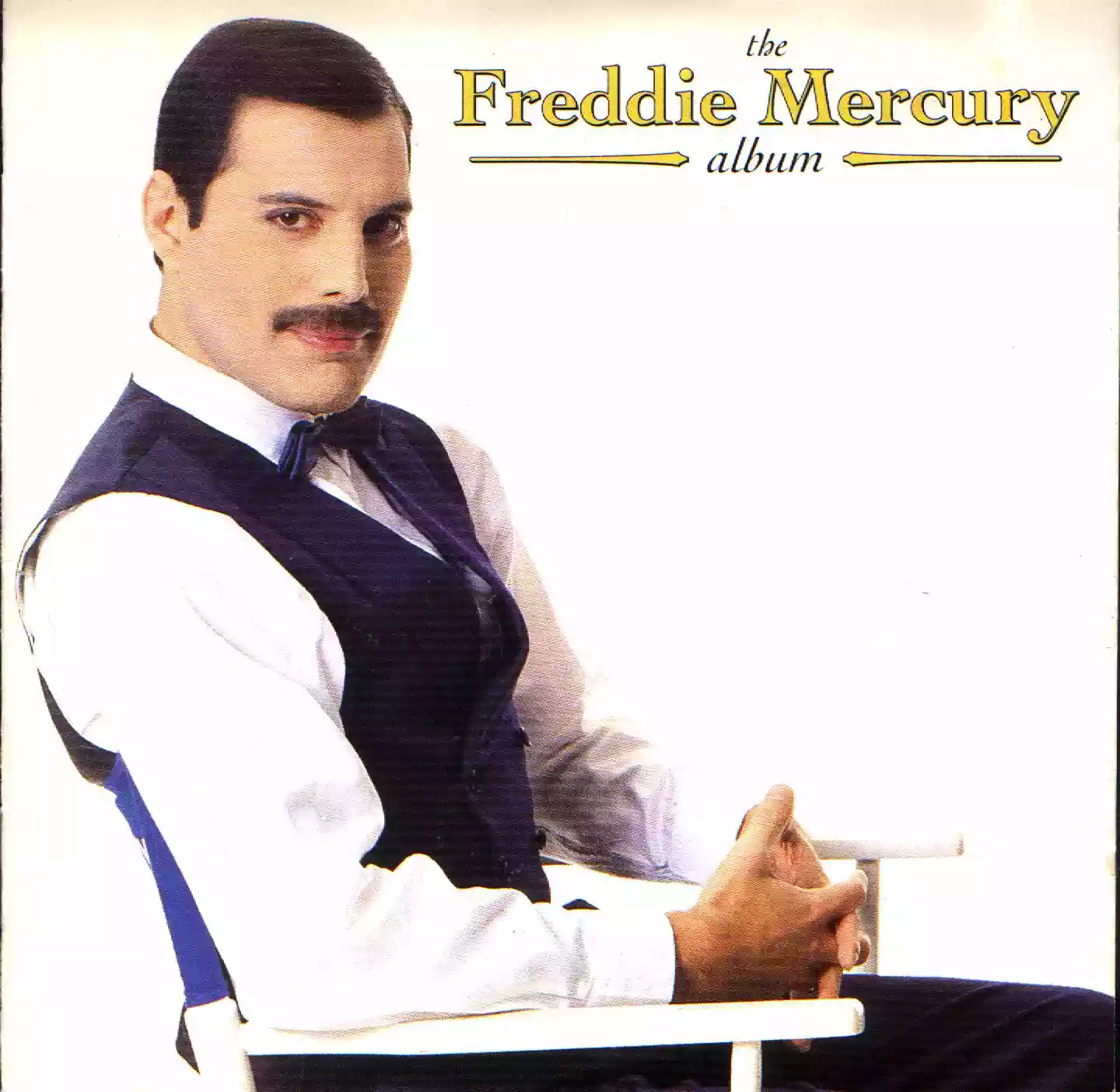
Eleven "stylistic exercises" that deviate slightly from the imposing rock to which the Queen had accustomed us. "The great pretender," for example, is the cover of a famous sixties song also sung by Elvis, in whose video Freddie poses as a seducer declaring himself a liar who can also lie well, hiding his loneliness. Sumptuous voice and usual self-irony for a classic piece, but there is nothing old or boring about it. "Foolin around," "Let's turn it on," "Your kind of lover," they resemble each other a bit, small forays into easy pop from one who always made rock his bread and butter. Easy pieces, captivating rhythms, slightly subdued voice (almost disco-music in some parts) that nevertheless remain enjoyable. Beyond the fooling around, in some deeply autobiographical moments, we discover the torment of an artistic soul, with all its insecurities and fears. In "Mr. Bad Guy," Freddie talks about himself in a sacrilegious and playful manner as was his style. Well, know that he is indeed a real bad guy, and you can't help but like him for what he is, but it is in "In my defence" that he reveals all his pains. A piece with a wonderful melody, sincerely painful yet authentic, sung with a voice that is both suffering yet light, rising with the usual power to declare that he is just a singer with a song, that there is nothing he can do to fix what is wrong and in his defense... well, there is nothing else to say. There is still so much to say about the other tracks on this CD, the instrumental "Exercises in free love" (musically impeccable and poetic, Freddie could also be very "classical"), the super famous disco-glam chart-breaking single "Living on my own" that still today lights up the dance floors and that at the time launched the catchphrase "dee-do de-de, dee-do de-de." "Barcelona" was the anthem of the Spanish Olympics in 1992, a competition Freddie never saw but honored with his tenor voice, as delicate as a caress yet strong, in this prestigious duet with the Spanish soprano Montserrat Caballé where the two voices, the male rock and the female lyric, blend together to sing the praises of the Catalan city in an unexpected yet beautiful harmony.
But, as Freddie himself says in perhaps the most beautiful and suggestive piece on this CD, "Time waits for nobody" and this extraordinary character leaves us in 1991, after a life spent and told in music, in the studio until the last minutes when he was able to stand (the recordings of "Made in Heaven" continued even with him now skin and bones, in a wheelchair, frequently interrupted due to the resurgence of symptoms of his illness), surrounded by the affection of millions of fans around the world who mourned the genius, the recklessness, but above all the man who, struck by the "plague of the century," did not hide, but remained until the end in front of the cameras to denounce, to let his voice still be heard extraordinarily powerful and almost untouched by the virus, also in aid of those who, like him, knew they were inevitably destined to leave this Earth too soon.
His last image is that of the last frame of the video "These are the days of our lives," where neither the makeup nor the aid of black and white manage to conceal the thinness and the dark circles and it is precisely that gaunt face that murmurs "I still love you" that is the last image we have of an extraordinary rock interpreter, a trendsetter but a student of the great classics who made transgression his banner... we will always remember him triumphant in the jam-packed Wembley Stadium and in adoration as he bursts onto the scene with the crown and cloak... trying to think of him at the moment he attacked the oceanic crowds in a white leotard and yellow jacket playing sensually with the microphone stand, when the black beast that took him away was still far away... we miss you Freddie. We miss you because the music after you has never had such a weighty representative, we miss you because you knew you were great, but it seemed you didn't care, busy as you were teasing yourself and us. You said it yourself that no one lives forever, no one dares to love forever... and as you said in an interview... "C'est la vie"... someone still loves you.
Loading comments slowly
Summary by Bot
This review celebrates Freddie Mercury's solo album as a testament to his unmatched artistry and bravery. It highlights his musical versatility beyond Queen's rock legacy, blending pop, disco, classical, and glam. The review emphasizes his courage in personal expression and the enduring impact of his work. Emotive tracks reveal both his playfulness and vulnerability, cementing his status as a true music icon.
Freddie Mercury
Freddie Mercury (born Farrokh Bulsara) was a British singer and songwriter, best known as the lead vocalist of Queen and for a solo career that included the album “Mr. Bad Guy” and the crossover project “Barcelona” with Montserrat Caballé.11 Reviews
Other reviews
By claudio12345
I cannot consider it the BEST OF FREDDIE MERCURY, which could have been achieved by adding songs like THERE MUST BE MORE TO LIFE THAN THIS or LOVE ME LIKE THERE'S NO TOMORROW.
'IN MY DEFENCE is one of Freddie’s best-sung songs... the chorus is powerful and energetic.'
