
 •
Rating:
•
Rating:
THE REVIEW
In 1972, Frank Zappa released two albums and a live recording (admittedly not exceptional), demonstrating that he had returned to an excellent level after a brief period of obscurity and creative crisis. A few months after the splendid "Waka Jawaka," another album of great depth was released, in which the American artist managed, as always, to superbly blend musical genres almost at antipodes such as jazz, rock, and even the funk of the title track, thanks also to a substantial brass section led by Sal Marquez and the presence of great musicians like George Duke (keyboards) and Aynsley Dunbar (drums).
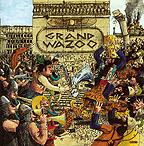
The album, with an inviting cover and masterful production that greatly highlights a decidedly rich and compact sound, teems with freshness and absolute mastery, even over thirty years after its release, standing as a plausible demonstration of the absolute genius of a musician who has always divided critics. "The Grand Wazoo," the longest track on the album, engages immediately, mainly thanks to its captivating rhythm that allows us to fully appreciate its over 13-minute length and the superb solos of various musicians that completely adhere to the almost entirely instrumental nature of a broad-scope project that continues with the slow "For Calvin", a stupid-song characterized by an opening entrusted to a curious vocal experiment and dominated initially by an almost rarefied and hypnotic air, concluding with a jarring sonic romanticism.
"Cletus Awreetus-Awrightus", dedicated to an imaginary emperor of funk, is without a doubt the most amusing moment of the album and features at the end some brilliantly witty Zappaesque vocal parodies, along with the usual precise virtuosity. In "Eat That Question", the absolute master is Duke's piano, which casts light on a truly evocative whirlpool of sounds, while everything is ready for the absolute gem that is "Blessed Relief", where to surprise the listener is a sonic texture masterfully supported by brass and pianos providing the whole thing with an explosive nocturnal flavor, perfectly fitting as an ideal conclusion to an album that, at the end, thus reprises some characteristics of the previous album without ever forgetting to offer future inspiration to other musicians (some solutions borrowed in decidedly different compositional forms undoubtedly inspired Waits' "Foreign Affairs").
I can only highly recommend listening to this masterpiece that ennobles Zappa's already extraordinary and immense production.
Loading comments slowly
Summary by Bot
Frank Zappa's 1972 album The Grand Wazoo is a masterful fusion of jazz, rock, and funk, featuring a strong brass section and exceptional musicians like George Duke. The album impresses with its rich, compact sound and instrumental depth, showcasing Zappa’s genius in composition and production. Standout tracks include the 13-minute title track and the witty funk number "Cletus Awreetus-Awrightus." This album remains fresh and inspiring decades after its release.Tracklist Lyrics Videos
Frank Zappa
Frank Vincent Zappa (1940–1993) was an American composer, guitarist, bandleader and producer known for genre-defying albums, abrasive satire and orchestral experiments. He released extensive studio and live material, explored electronic composition (Synclavier) and advanced both rock-fusion and contemporary classical idioms.54 Reviews
Other reviews
By DanteCruciani
Zappa is one of the greatest musical geniuses of the 20th century.
The album closes with a gem, 'Blessed Relief,' which brings back a very suggestive tranquility.
