
 •
Rating:
•
Rating:
THE REVIEW
I believe that the second half of the seventies was an important transitional moment for Frank Zappa, a clear watershed between what was his first and stellar decade in music, and what would come after: the infamous eighties. After the marvelous "One Size Fits All" and the honest "Bongo Fury" and "Zoot Allures", a strange reversal of trend occurred: no longer the usual and much-appreciated annual wagonload of albums, but an unusual and long period of silence, about one and a half years. Creative crisis? Good old Frank was approaching forty....
Was the crazy and magical inspiration of the early years waning? Some would say: indeed the next album was a live one! As if to insinuate, in short, that more or less all musicians, when they go through a crisis, release a live album. Let's call it a lifeline, okay?.... Well, let it be clear that for me, lifelines like "Zappa in New York" are always welcome, no matter what some critic might say. The reality is different, however: our mustached hero was planning and preparing a project that gathered all his most interesting and particular compositions of those years, all the material that was unpublished and kept in the drawers.
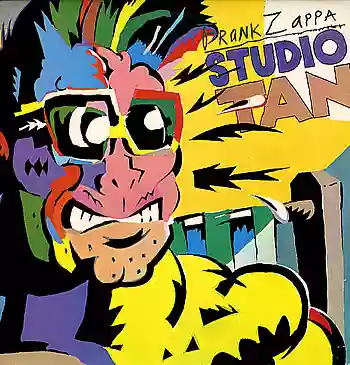
That project was meant to be called "Lather" and could have been found on the record store shelves at the time, without having to wait for 1996. But record companies, as we know, are not always so clear and attentive (meaning they're often bothered by mental handicaps, with all due respect to the handicapped), and so that project was split into four separate albums: the already mentioned "Zappa in New York" (1978), "Studio Tan" (1978), "Sleep Dirt" (1979), and "Orchestral Favourites" (1979). After these four, the epochal "Sheik Yerbouti" and "Joe's Garage" would come, but that's another story. Let's get to our "Studio Tan": with only four tracks in total, this is undoubtedly an interesting and very pleasant album, but I hasten to say that I don't consider it an absolute masterpiece like dozens of other works by the artist.
It's certainly a must for any Zappa lover, however; primarily for the revision of "Music for electric violin and low budget orchestra" that Zappa composed in '69 for Jean-Luc Ponty for the album "King Kong". Here the track is adapted for guitar and, indeed, for our low-cost orchestra. The result is not as pompous as one might imagine: the passages sound fresh and vital, and everything is perfectly in place. Let's remember that the track written for Ponty was perhaps Frank Zappa's most ambitious and "cultured" composition, and it's no coincidence that it was revived and proposed again: the "high" musical attitude will always be present throughout the career of this great artist, up to his latest works. Even better is the finale "RDNZL" (8:13), absolutely exceptional, with continuous changes in rhythm and brilliant melodic ideas. Duke is masterful as always on the keyboards, Zappa's guitar solo is beautiful. Maybe the peak of the album. "Studio Tan" is characterized by the presence of many musicians, who change depending on the track, demonstrating that the various pieces were composed at different times, and also better explaining how this album and the other three works of the period were nevertheless cauldrons of ideas and sounds, put together over the years. You'll find Thompson, the two Fowler brothers, Ruth Underwood, Duke, and Humphrey. But also Don Brewer on bongos, Eddie Jobson on keyboards, Max Bennett on bass, and Davey Moire on vocals. The latter are present in the playful and delightful "Lemme Take You To The Beach" (2:44), a sort of small speeded-up surf/doo-wop track, complete with the choir-like elements Zappa loved.
The long opening track is "The Adventures Of Greggery Peccary" (20:32), a sort of small rock operetta with typical Zappa-style whimsical cues. Zappa's voice, alternating with Duke's, narrates the story and adventures of the protagonist for almost the entire duration of the track, with a sound backdrop full of good cues and many amusing little voices. In the long run, it might not feel entirely fresh and direct, perhaps due to a few less successful moments and that continuous narrating voice. But overall, the intent is good, and there are a couple of really interesting episodes where the voices, drums, and sounds fit together perfectly, creating beautiful musical passages. Zappa is always Zappa, right? And this composition is yet another demonstration of the desire to always create new musical puzzles, never forgetting the "cultured" lesson of classical music. It can be found here in "Studio Tan", it can certainly be found in the excellent "Orchestral Favourites" (where Zappa will once again call upon the historic Abnucleal Emuukha Electric Orchestra with whom he had already collaborated in "Lumpy Gravy"), and in many other projects.
As I already said, the period between '76 and '79 was a great period of "transition" and perhaps a search for a new orientation, much more felt and necessary than in other moments of his career; but Zappa, as in other periods of "transition", would carry with him all the countless artistic elements and all the "lessons" acquired previously, thus ready to cross into the eighties, where there would be alternate between stratospheric and exceptionally fun concerts, synclavier madness, strong attacks on Reagan-era American society and the stupidity of parental-advisory, and much, much more. And the beautiful thing is that the composition of tracks like "Valley girl" and "Cocaine decisions" would alternate with the productions and directions of classical projects with Boulez and Nagano or in favor of Edgar Varese. And all the hard and long nights of those years spent transcribing his fantastic world onto the score sheet were already flying towards the thunderous applause after the performance of G-Spot Tornado with the Ensemble Modern ("The Yellow Shark", 1993).
On that occasion, Frank Zappa wore a colorful jester's hat on his head and, despite everything, had a big smile on his face. Covered by a nice pair of graying mustaches.
Applause.
Loading comments slowly
Summary by Bot
Studio Tan marks a crucial transitional moment in Frank Zappa’s discography during the late 1970s. Though not considered a masterpiece, it showcases Zappa's continued inventive spirit and blend of rock and classical styles. The album features diverse musicians and revisits complex compositions previously composed for others. Key tracks like "RDNZL" and "The Adventures of Greggery Peccary" highlight his musical ingenuity, despite some uneven moments. Studio Tan remains essential listening for fans appreciating Zappa’s evolving artistry.Tracklist Lyrics Videos
Frank Zappa
Frank Vincent Zappa (1940–1993) was an American composer, guitarist, bandleader and producer known for genre-defying albums, abrasive satire and orchestral experiments. He released extensive studio and live material, explored electronic composition (Synclavier) and advanced both rock-fusion and contemporary classical idioms.54 Reviews
