 •
Rating:
•
Rating:
THE REVIEW
If the Sixties ended wonderfully for Frank Zappa (I only need to mention two gems, "Hot Rats" and "Burnt Weeny Sandwich"), the same could not be said about the Seventies.
Starting off strongly with masterpieces like "Chung's Revenge" and, especially, the mad "The Grand Wazoo," Uncle Frank decided (voluntarily or involuntarily?) to hit the brakes, and released only a few interesting but, essentially unconvincing albums ("Apostrophe," "One Size Fits All"), with only the live "Frank Zappa in New York" appearing slightly less disappointing. Under such conditions (it must be said, however, that the art of Frank Zappa, albeit slightly restrained, was still quite delightful), no one would have expected a revival so explosive and convincing.
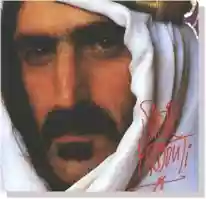
It's the year of grace 1979, and Frank Zappa creates what, at least according to many critics, can be considered the quintessential Zappa masterpiece, "Sheik Yerbouti" (furthermore, in its original version, it is even a double album). Zappa finds himself amidst legal storms that almost mockingly prevent him from accessing his personal archive. Despite this, however, Uncle Frank does not give up and manages, after the release of the double LP, to even position himself on the hit parade in very hot zones (something that hadn't happened to him in quite a while). "Sheik Yerbouti" is based, and lives, thanks to the brilliant and wild imagination of Frank Zappa capable of contaminating, in an exhilarating way, multiple musical genres together, from pop to rock, from psychedelia to sophisticated references to classical music. And all this through a series of pieces that can be dismantled at will, primarily based on celestial musical notes and lyrics that are never banal or redundant.
Also, in this album, the sound editing sends shivers down the spine (Zappa himself called it "xenocrony"), while the completely renewed band features some musical aces that would make any singer-songwriter envious: Adrian Belew, the guitarist, Terry Bozzio, the drummer, Tommy Mars, the keyboardist. A good part of the material is recorded live, during concerts or some test recordings, and the studio-recorded inserts often surpass, by magic and interpretation, the live tracks.
At least worth mentioning are the exhilarating "City of tiny lites," the splendid "Wild Love," the famous "Bobby Brown" (one of the most significant tracks of the period), and "I have been in you," a humorous parody looted from Peter Frampton. Zappa's guitar soars high, but it is the extraordinary blend between band and composer that makes this album unique and unrepeatable.
It would take years to deconstruct and finally reassemble a track like "Bobby Brown," seemingly lighthearted and catchy (even though, in reality, it truly is catchy), yet underneath, incredibly difficult in both melody and rhythm because it is intrinsically complex and musically obsessive. And that Frank Zappa's guitar truly soars high is demonstrated by "Rat Tomago" and the very long "Yo' Mama." It's a golden period for Zappa, who, finally after years, even manages to release a 45, "Dancin' Fool," and rise high in the charts. But the powerful blow Zappa strikes with one of his proverbial gags, "Jewish Princess": he draws the ire of the Jewish community and loudly reaffirms his indestructible political incorrectness.
Not bad for someone who can't even get close to touching his own archive! The first album produced by the "Zappa" production house, (a production house that would only have its lifespan in 1979), it is one of the few Frank Zappa albums loved by critics almost immediately and by the public without waiting for revisionism or reevaluations.
Loading comments slowly
Summary by Bot
Sheik Yerbouti marked a triumphant return for Frank Zappa in 1979 after a somewhat restrained decade. The album is celebrated as one of Zappa's greatest, blending multiple genres with sharp lyrics and exceptional musicianship. Noteworthy tracks like "Bobby Brown" and "Dancin' Fool" highlight Zappa's complex and innovative style. The album's unique mix of live performances and studio edits create an unforgettable listening experience. Sheik Yerbouti also sparked controversy, reflecting Zappa's fearless political incorrectness.Tracklist Lyrics Videos
Frank Zappa
Frank Vincent Zappa (1940–1993) was an American composer, guitarist, bandleader and producer known for genre-defying albums, abrasive satire and orchestral experiments. He released extensive studio and live material, explored electronic composition (Synclavier) and advanced both rock-fusion and contemporary classical idioms.54 Reviews
Other reviews
By Stràfiko Piezzecore
Yes, you moron, shake your booty with your shitty disco music, meanwhile I’ll have a smoke and play a bit.
Frank passionately lashes out against the real scourge of today’s society: the posers.
