
 •
Rating:
•
Rating:
THE REVIEW
To categorize Frank Zappa's music within a single genre, I think is nearly impossible. If we exclude the first two albums, Freak Out and Absolutely Free, which can be considered as early attempts at rock opera, all of Zappa's subsequent and vast production defies any classification. It could be considered progressive, but Zappa's music has always been far from the stylistic elements and rules dictated in England from the late '60s onwards, or as jazz/rock, but here the concept of jazz and rock is completely subverted in favor of a hybrid of both that, however, isn't the sum of the two. Perhaps, given the interest that good old Frank has stirred in the academic field, his work is closer to classical music, but even in this case, the concept of "classical" must be considered cautiously. Thus, his music is simply the music of Frank Zappa... without trying to find underlying meanings or possible comparisons with what has been produced so far.
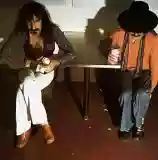
However, there is one title in his discography that can have a precise categorization and that is the live Bongo Fury. The entire work is permeated with a rock blues atmosphere, Zappa's first love, even if in the crazy and entirely personal version of the mustachioed man from Baltimore. Recorded in May 1975 at the Armadillo World Headquarters in Austin, for the occasion Zappa recruited that old rogue Captain Beefheart and his most loyal members of the "Mothers," including the Fowler brothers, Bozzio, Duke, Napoleon Brock. Right from the opening Debra Kadabra to the famous Muffin Man, the great showman is indeed the Captain with a delirious singing voice strong from a few hectolitres of beer drunk and with the entire band on fire, with Zappa enjoying dueling with Beefheart's harmonica (also on sax) with his solos so strange yet original at the same time. Only Duke seems slightly subdued, but probably because of the genre played, which favored guitar work over keyboards.
A curious episode seems to be linked to this recording: during one of the two evenings, a bomb scare abruptly interrupted the concert, followed by the evacuation of the venue. After about half an hour, once the false alarm was confirmed, the band resumed playing with Zappa apologizing to Beefheart for interrupting him in the middle of a sax solo. After a gesture from him, the band picked up playing from the exact point where they had been forced to stop... . Probably Zappa's most accessible work, but forget about the soft blues of Clapton and the likes. Pure madness in blues form!
Loading comments slowly
Summary by Bot
Bongo Fury is a rare Frank Zappa album with a definable style: a blues-infused rock live performance. Recorded in 1975 with Captain Beefheart and key band members, it showcases a wild, original fusion of blues and rock. An unexpected bomb scare interrupted, then resumed the show. This album stands out as one of Zappa's most accessible yet uniquely mad blues-rock recordings.Tracklist Lyrics Videos
Frank Zappa
Frank Vincent Zappa (1940–1993) was an American composer, guitarist, bandleader and producer known for genre-defying albums, abrasive satire and orchestral experiments. He released extensive studio and live material, explored electronic composition (Synclavier) and advanced both rock-fusion and contemporary classical idioms.54 Reviews
