
 •
Rating:
•
Rating:
THE REVIEW
"For me, this evolution of the site is wrong: especially because, loving to contradict myself, I will feel obliged to write reviews about it" (cptgaio's thought on the introduction of "Dermiche" and "Nervose" categories)
"I am not an architect: I write about architecture because DeBaser gives me the opportunity. We are all amateurs in the spotlight and this is our bullfight" (cptgaio's thought while writing this review)
Technical Matters:
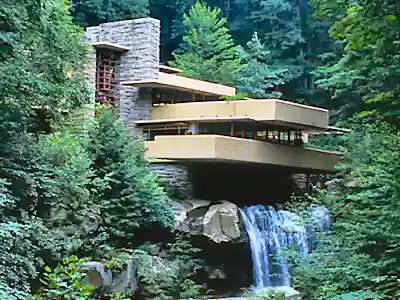
What: A dwelling
Where: On Bear Run creek, located in a wooded area of Mil Run (Pennsylvania, U.S.A.)
Who: Frank Lloyd Wright
When: conceived in 1934, finished in 1937
How: Modern Movement (20th Century Architecture): Frank Lloyd Wright coined, for "Fallingwater", the term, later used for other works (even not his own), Organic Architecture
Why: Commissioned by Edgar J. Kaufman Sr. who wanted a weekend residence placed on a waterfall of Bear Run: Wright built it. Since the '60s, it is owned by the Western Pennsylvania Conservancy which has made it a museum open to the public.
Don't be so didactic, cribbio!
Lloyd sought the balance between humanity and nature: between what was already shaped by the Earth and what man would modify. The perfect symbiosis, of these different souls, in a single Architectural Space was the ultimate goal and the unique creed of the great American architect. In "Fallingwater", the highest example (recognized by almost everyone in the field and beyond) of Organic Architecture, the dream comes true: the structure of the building is not only constructed with materials strictly from the area but also attempts to respect as much as possible the chaotic distribution, of shapes and colors, that nature had previously formed. Built on three asymmetric floors, which replicate the stream's flow, the living room is the hub from which, in a continuous interplay of volumes, other rooms and terraces emerge: in any part of the house you are, the sound of the creek is clearly audible. The stairs ending in the stream are, probably, the emblem of a philosophy that, despite the passing years, still seems very current.
The place where it was erected and its "atypical" structure contributed to creating (almost immediately) structural problems in the building: Lloyd worked hard for the resolution but never saw what should be the definitive solution, found in very recent times: twists of fate for an artist who believed in the natural flow of things.
Anything else to add?
I don't think you have any desire to read my umpteenth rant about the passage of time, the inevitability of fate, the nature we defy, and blah blah blah (no rights paid to Cesare Cremonini for the onomatopoeia, don't worry) so I'll stop here...
Mo.
Loading comments slowly
Summary by Bot
This review highlights Frank Lloyd Wright's Fallingwater as a pinnacle of Organic Architecture, emphasizing its harmony with nature and innovative design. The reviewer discusses the house's connection to its natural surroundings, the use of local materials, and its architectural philosophy. Despite structural challenges faced over the years, Fallingwater remains a symbol of balance between nature and human creativity. The review combines technical insights with reflective observations on the building's place in architecture history.
Frank Lloyd Wright
Frank Lloyd Wright (1867–1959) was an American architect, a leading figure in 20th-century architecture known for projects such as Fallingwater and for promoting ideas associated with Organic Architecture and the Modern Movement.01 Reviews
