
 •
Rating:
•
Rating:
THE REVIEW
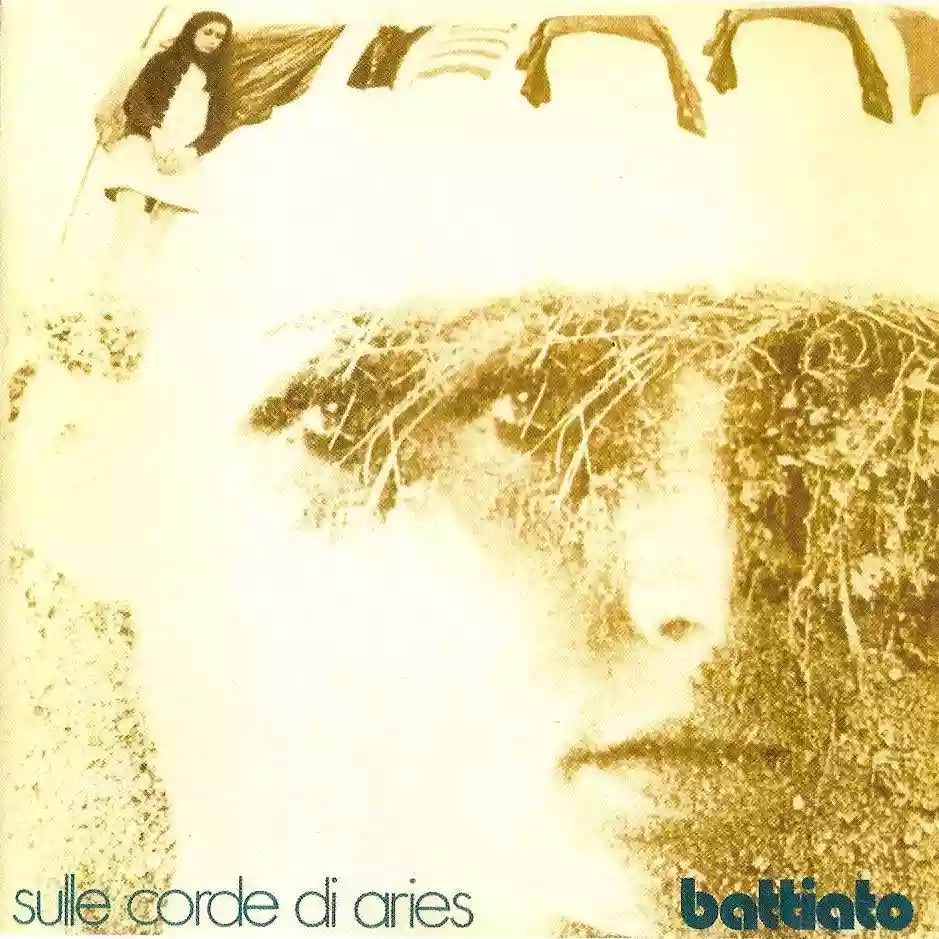
Sulle Corde Di Aries, Franco Battiato 1973
Franco Battiato is a controversial artist in many respects, accused of complete musical incapacity and of false intellectualism for its own sake, but also idolized by many fans around the world with various musical orientations. His early musical period was entirely dedicated to experimentation and to a form of "Etno-progressive" that takes full shape in "Sulle Corde Di Aries".
The album opens with a long suite of impressionistic beauty: Sequenze e Frequenze. The lyrics recall Battiato's childhood (a recurring theme in his subsequent albums) with words pronounced with measured slowness, imprinting themselves vividly in the listener's mind. After the first 5 minutes, the journey begins. Pure local psychedelia.
Keyboards in full swing, classical guitar in the background and electronics, lots and lots of electronics surrounding all the wonder of this enchantment.
The keyboards strongly evoke the repetitiveness and simplicity of many New-Age compositions, but everything is animated by a vague and ever-present emotional atmosphere, crowned by the excellent performance of tenor Rosella Conz, reminiscent of the atmospheres of great, much more acclaimed English albums (Island with its Formentera Lady above all). After the first journey, the second begins.
Aries.
An instrument of wonderful beauty.
The beginning is naturally marked by many keyboards, which sweetly accompany the arrival of warm rhythms that immediately evoke exotic and sun-drenched atmospheres, or a sandstorm. But the flash that Battiato casually strikes here is another, in the sudden calm, as Gianni Mocchetti warbles sweetly on the mandolin, and here comes Gianni Bedori, diving into a wonderful sax solo of dazzling beauty that gently guides the track to its closure.
You can sense Jazz, and the air is filled with immensely open spaces, where cultures flow into one another and blend, in a wonderful musical melting pot, which Battiato would never replicate so well in a song of just 5 and a half minutes.
This is followed by the track I personally appreciate the least (but which is the only one Battiato later included in various reissues and compilations), namely Aria di Rivoluzione. The lyrics remain top-notch with a sort of narration in German of various events during World War II, overlaid by a percussive setup very similar to that of "Aries". A beautiful track nonetheless.
The album closes with the wonderful Da Oriente ad Occidente, which expands the concept expressed in Aries and musically transfigures a real journey from the Italian coasts to the East in 6 minutes of dreamlike beauty. First, a classical guitar, which is quickly replaced by the marvelous Sila Greca, giving way to Gianfranco D'Adda's percussion, and for the last 3 minutes, to typically Chinese exotic instruments, Indian percussion, and oboe, crowning the finale of one of the most beautiful Italian albums of the '70s.
Insurmountable work of art.
Loading comments slowly
Summary by Bot
Sulle Corde Di Aries, released in 1973, highlights Franco Battiato’s exploration of ethnic-progressive and psychedelic styles, enhanced by electronic and jazz elements. The album opens with a captivating impressionistic suite and flows through exotic, jazz-influenced compositions enriched by evocative vocals and varied instrumentation. The review praises the blend of cultural soundscapes and instrumental mastery that cements the album as a landmark in Italian progressive music of the 70s.
Franco Battiato
Italian singer-songwriter and composer from Sicily, Battiato moved from 1970s electronic/progressive experimentation to chart-topping pop with La voce del padrone, and later to spiritual, orchestral and operatic works. He frequently collaborated with arranger Giusto Pio and philosopher Manlio Sgalambro.100 Reviews
Other reviews
By DanteCruciani
"Anyone who has stopped to reflect will have stumbled upon that sudden 'frequency' that brings you back at once to that moment, that smell, that taste."
"Our body is a spaceship and it often happens in the early afternoon that it moves on luminous trails, people!"
By 123asterisco
This voice of Shahrazād, aphonic and silent, speaks of nights and stars ground in a mortar.
A ritual for percussion, keyboards, and stalagmitic and shadowy caverns.
