
 •
Rating:
•
Rating:
THE REVIEW
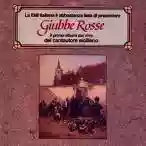
The first live album by the Sicilian singer-songwriter. A double work that I count among the most evocative of his entire production.
It begins with the wonderful "Giubbe rosse", the only unpublished composition, defined by Battiato himself as "an anthem to Sicily," whose skies he had come "to mythologize" after moving away to northern Italy (northern Italy from which his ascent to musical peaks comparable to those of the Himalayan range began). The text evokes images of his youth on the native island and reveals the joy of finding it unchanged in his memories. Landscapes, places, habits, real or imaginary actions to be performed ("passing by the fish market, picking up dog collars at the pharmacy and collecting stained glass from the gazebo"), all set to very rhythmic music, in which each instrument is masterfully blended.
The following tracks are taken from concerts held in Paris, Madrid, and Milan.
The first three songs are compositions written by the Sicilian singer-songwriter for other performers (Milva, Dalla and Morandi, Giuni Russo). These are the well-known "Alexander Platz", a melancholic tale of life in Berlin divided by the wall. Battiato recounts the grey existence of a woman in that difficult place and time. Full of pathos from the first note, it culminates in the powerful chorus that seems like a cry of angry resignation to that situation.
An electric guitar joins in, complementing the melody, with the orchestral introduction of "Lettera al governatore della Libia". It's a tragic and irreverent evocation of life during our unfortunate colonial experience. An "invented memory based on historical data" as the author stated. Giuni Russo (for whom it was written) here duets with Battiato. The result is exceptional.
"Mesopotamia", in which Battiato describes his childhood, begins with a lively piano. There are many rhythm changes, and as usual, the instruments blend masterfully. The chorus is among the most beautiful things I have ever heard him sing, his inspired voice captivated by real but remote places in space and time ("the valley between the two rivers of Mesopotamia").
The unmistakable, fast, joyful dance of violins already makes me savor "L'era del cinghiale bianco", a splendid anthem introduced and accompanied, after the enigmatic chorus, by strings that call, live, inviting the audience's clapping to follow the cadence (Battiato, rarely interactive with the audience, except through smiles generously shared, encourages following the rhythm live). The introduction of "Un'altra vita" is calm, the chorus increases the pace on lyrics that speak for themselves. The discovery of the desire, perhaps latent in our subconscious, to change a somewhat grey life, made so by the flatness of the third metro line advancing amid traffic, by cars parked in triple rows, or by remote controls through which we can view less grey but perhaps, also due to their dazzling lights, much more fake lives (here Dallas and Anche i ricchi che piangono are mentioned).
From the bitter examination of a life that should be replaced, we move to "Voglio vederti danzare", whose intention expressed in the title reveals the liveliness of the piece. The whirling dervishes are mentioned, whose mystical dance fascinates Battiato. The first disc ends with "L'oceano di silenzio". The frenetic dances and special ailments of "Un'altra vita" give way to the absence of sounds, in a dimension of calm. The light orchestration accompanies a beautiful text... Waters, which I imagine without wave movements or ripples, merge with the sky, the soul floats in it, savoring a bit of bliss.
The second disc begins with three pieces from Battiato's earliest works.
Personally, I regret never having had the chance to listen to these compositions in his concert. They give you chills. In "Sequenze e frequenze", keyboards envelop the atmosphere in magic, the voice enchants with how evocative it is, the guitar dresses the piece in modernity. Following are "Aria di rivoluzione" and "No U Turn" that hold the listener at an almost dreamy level.
"Summer on a Solitary Beach", one of the most beautiful texts, draws images from sighs of desire (even just for one day, on a solitary beach, white sand, the gentle lapping of crystal-clear water, a hammock... In short, "the air of things that becomes unreal").
"Cuccurucucu" and "Centro di gravità permanente", well known and much loved, make hands clap in unison and accompany the singing. The first begins with a beautiful arrangement, just electric guitar and voice. Less known is the subsequent "Gli uccelli", very sweet. Being the album "La voce del padrone" almost fully represented, it's a pity for the absence of the wonderful "Segnali di vita". It closes with "E ti vengo a cercare", with a gradually building pace, a masterpiece of elegance, a love song, and, more deeply, a search for one's purest essence.
The experiences of Franco Battiato, his art, his musical talent, which shows him as a complete singer-songwriter, his humanity, in this double live album, blend to give us the opportunity to grasp the intensity of emotions set to music and brought to theaters.
Loading comments slowly
Summary by Bot
Giubbe Rosse is Franco Battiato’s first live double album, highly praised for its evocative nature and masterful musical arrangements. It features a mix of unpublished and well-known compositions performed in concerts across Paris, Madrid, and Milan. The album captures Battiato’s reflections on Sicily, historical themes, and personal memories, wrapped in engaging live performances. The reviewer highlights standout tracks like the title song and powerful collaborations, emphasizing Battiato's artistic and emotional depth.
Franco Battiato
Italian singer-songwriter and composer from Sicily, Battiato moved from 1970s electronic/progressive experimentation to chart-topping pop with La voce del padrone, and later to spiritual, orchestral and operatic works. He frequently collaborated with arranger Giusto Pio and philosopher Manlio Sgalambro.100 Reviews
