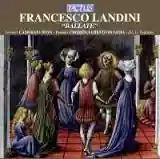
 •
Rating:
•
Rating:
THE REVIEW
Blind composer from birth. We're talking about the '300s. He contributed to making the simple monodic ballad polyphonic, making it increasingly refined and complex, singable and Italian, by utilizing the sweet "alla L" cadence. Landini, above all, knew how to integrate moral tones, existential questions, and bitter anathemas into his marvelous Ballate, pushing the boundaries of medieval intellect. In a few final words: GREAT HUMAN SPIRIT FREE BENEVOLENT INFLUENCE.
Loading comments slowly
Summary by Bot
This review highlights Francesco Landini's crucial role in evolving simple medieval ballads into complex polyphonic compositions. Emphasizing his use of the alla L cadence and integration of moral and existential themes, it praises the profound human spirit behind his Ballate. The album is recognized for its refinement, singability, and Italian character, pushing medieval musical boundaries.Tracklist
01 Quanto Più Caro Faj (03:11)
02 L'Alma Mie Piange (03:56)
03 Non Ara May Pietà (02:22)
04 A Lè S'Andrà (03:57)
05 Giunta Vaga Biltà (03:16)
06 Foglio 49v (17) (02:15)
07 Cara Mie Donna (03:34)
08 Questa Fanciull'Amor (03:36)
09 Costantia (02:57)
10 Per Seguir La Speranza (03:34)
11 I' Priego Amor (03:34)
12 Chosa Nulla Più Fé (03:49)
13 Bel Fiore Danza (02:59)
14 Guard'Una Volta (02:57)
15 Orsù(n) Gentili Spirti (04:04)
16 Che Pena Questa (02:47)
17 Muort'Oramai (05:07)
18 Foglio 94v (43) (01:21)
Francesco Landini
Francesco Landini (c. 1325–1397) was a Florentine composer, organist, and poet, the leading figure of the Italian Trecento (Ars Nova). Blind from childhood, he is renowned for his ballate and the characteristic Landini cadence.01 Reviews
