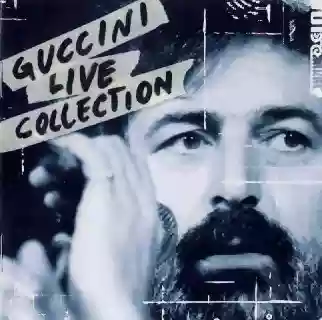

 •
Rating:
•
Rating:
THE REVIEW
I have decided to review "Guccini Live Collection" for two simple reasons: the first is that all other Guccini's albums have already been reviewed, the second is because I want to show everyone what Guccini truly IS today, not how others want to present him to us. In fact, my aim is not to review this particular album, but the entire life of a former songwriter, since that can be the only way to define him. I'm asking myself a question: did anyone need a collection of Guccini's live tracks? Seriously, did anyone feel the need? I would like to know. Back in '98 when I went to purchase this album, years have passed since that tragic mistake, I was already quite apprehensive about the title: "Guccini Live Collection" - a more tacky and predictable title he certainly couldn't have chosen. At the record store, I mustered up the courage, grabbed the CD (whose price wasn't even low) and went to the checkout, where a cashier was waiting for me, looking at me with a disgusted expression. The cover wasn't even that bad, with the title written on tape and beneath a photo of Guccini from at least ten years earlier; furthermore, by reading the back you could see a wide assortment of tracks (nothing new, eh!) spanning from '66 to the last album released then. And then they were two disks, not one! A whole two disks of my favorite songwriter, I thought when I read about the album's release in a magazine. In fact, until that moment, I had great esteem for Guccini. Now I'll continue with my story. As soon as I got home, I put the album into the player, and it started (after a few seconds of the usual applause to make the album seem longer) the usual, stale, heavy version of "Canzone per un'amica". You immediately notice the inappropriate arrangement for the song, with cheerful saxophones popping in when Guccini says phrases like: "when life has fled", "but death met you." Listening to the track, you're assaulted by off-key notes and misplaced tones, and finally, the track ends with a fade-out. A FADE-OUT! When I listened to it for the first time, I thought "there must be an error" or "what the heck have they done?" but after hearing the other tracks, I realized that ugly fade-out was present in the other tracks too. Alright, enough talking about fade-outs, come on, and let's muster up some courage trying not to fall into the grotesque (a practice at which the songwriter in question excels).
It seems logical to me that I will not dwell on all the tracks, otherwise reading the review would become as painful as listening to the album in question. So, I'll skip the second and third track, which, in addition to being beautiful pieces, are not among the worst in terms of execution. We move on to "Il vecchio e il bambino". I've always liked the piece and it has always moved me, BUT NOT IN THIS VERSION. Listening to it here, it only moves me the fact that I've thrown away more than 30,000 lire for this album! A whine. It sounds like old Francesco has asthma because he says three words per minute, turning listening into suffering. "Quattro stracci" follows: here Guccini, having exhausted his poetic vein, has moved on to the pathetic one. The next song is "Cyrano", which is sung here without a voice. But there's worse. The seventh is "Venezia", nice even in this version. But unfortunately, the album doesn't just contain seven tracks, as our Francesco has gone wild. It contains TWENTY-SEVEN!
I'll skip directly to the tenth, "Via Paolo Fabbri 43". Unfortunately, here Guccini enjoys turning indirect speeches into direct ones, even changing intonation to make us understand that at the moment, the father speaks ("the pension is really important") or the mother ("a graduate matters more than a singer"). I leave you to imagine the result. "Autogrill" isn't too bad. "L'isola non trovata": here Guccini shows us his proverbial habit of changing pieces to add mistakes or worsen them significantly (see also Via Paolo Fabbri and L'avvelenata). In this case, Francesco belts out "ne parlan piano i marinari" instead of "marinai". The fact itself wouldn't be so serious if it weren't for the fact that marinari is an adjective (let's not delve into any other comment)... Moreover, perhaps not everyone knows that the piece itself was blatantly copied from the poem (of far more epic proportions than this album) by Guido Gozzano "La più bella".
I'll skip "Asia" mortuary chamber version and "Un altro giorno è andato" soporific version to move on to the second CD, which opens with "Eskimo", one of my favorite tracks. Too bad this is the infamous "funeral version" which Guccini has liked so much lately. I'll skip a pitiful "Auschwitz", a decent "Canzone delle osterie di fuori porta" and another bit of rubbish to get to "Due anni dopo". Here Vince Tempera (or whoever) enjoyed pulling out an absolutely unsuitable arrangement for the piece, taking away all the depth of the story. Francesco also omits the usual falsettos present in the namesake album (not a big loss, to be honest)!
The other standout tracks are "L'avvelenata" where Guccini makes a gross grammatical error (luckily he corrects himself!), the usual "La locomotiva" and the last two tracks that attempt the nostalgia effect: "Statale 17" and "Noi non ci saremo".
Now I move to the conclusion (or brief summary).
Let's admit it. Francesco is no longer of the age to make albums.
He's gone. Finished. Nothing remains of him but a big faded figure. Okay, in the past he was a legend, a great legend; no one denies that. Just like it would be impossible to deny that this album is rubbish. It's a mess. Literally. Guccini is now tiresome with his croaky voice and his stupid soft "r" sound. He no longer has the dopey voice of yesteryear (Folk Beat n 1) nor the whining voice of the following years.
It's sad that a character who was such a great figure in the past today is only a shadow of what he was and lives off past glories. You can tell from the cover. Have you noticed what image he used? It must be at least forty years old! FRANCESCO! What are you doing to us? Such tricks are deceitful... Anyway - to inform you - the trickery doesn't end here. Francesco attempts the nostalgia effect here too by inserting old pieces remade with music (usually poor) written by someone else (maybe Vince Tempera?) - but this effect has now become tiresome. We've had enough of old pieces played mediocrely and redone even worse. Then the lyrics are the same nonsense! "Morte nera e secca"?! DRY?! Francesco, the only dry thing you have is the basement! ("Libera nos domine", fortunately, this isn't in the album).
Sorry for the digression. In short, save your money for another Guccini album (even if you find a discounted version at €14.90, don't be fooled, they discount it because they can't sell them!) preferably one before '98.
Loading comments slowly
Summary by Bot
The reviewer expresses strong disappointment with Francesco Guccini's 'Guccini Live Collection,' criticizing the poor live arrangements, fade-outs, and vocal performance. The album is described as a mediocre retread of old songs with awkward production. Despite Guccini's past legendary status, the reviewer feels this collection falls short and suggests fans seek earlier works instead.Tracklist Lyrics
04 Il vecchio e il bambino (03:42)
Un vecchio e un bambino si preser per mano
e andarono insieme incontro alla sera.
La polvere rossa si alzava lontano
e il sole brillava di luce non vera;
l'immensa pianura sembrava arrivare
fin dove l'occhio di un uomo poteva guardare
e tutto d'intorno non c'era nessuno,
solo il tetro contorno di torri di fumo.
I due camminavano, il giorno cadeva,
il vecchio parlava e piano piangeva.
Con l'anima assente, con gli occhi bagnati
seguiva il ricordo di miti passati;
i vecchi subiscono le ingiurie degli anni,
non sanno distinguere il vero dai sogni,
i vecchi non sanno nel loro pensiero
distinguere nei sogni il falso dal vero.
E il vecchio diceva, guardando lontano,
"Immagina questo coperto di grano,
immagina i frutti, immagina i fiori,
e pensa alle voci e pensa ai colori,
e in questa pianura, fin dove si perde,
crescevano gli alberi e tutto era verde,
cadeva la pioggia, segnavano i soli,
il ritmo dell'uomo e delle stagioni".
Il bimbo ristette, lo sguardo era triste
e gli occhi guardavano cose mai viste,
e poi disse al vecchio, con voce sognante
"Mi piacciono le fiabe, raccontane altre".
07 Venezia (04:12)
Venezia che muore, Venezia appoggiata sul mare,
la dolce ossessione degli ultimi suoi giorni tristi, Venezia, la vende ai turisti,
che cercano in mezzo alla gente l' Europa o l' Oriente,
che guardano alzarsi alla sera il fumo - o la rabbia - di Porto Marghera...
Stefania era bella, Stefania non stava mai male,
è morta di parto gridando in un letto sudato d' un grande ospedale;
aveva vent' anni, un marito, e l' anello nel dito:
mi han detto confusi i parenti che quasi il respiro inciampava nei denti...
Venezia è un' albergo, San Marco è senz' altro anche il nome di una pizzeria,
la gondola costa, la gondola è solo un bel giro di giostra.
Stefania d' estate giocava con me nelle vuote domeniche d' ozio.
Mia madre parlava, sua madre vendeva Venezia in negozio.
Venezia è anche un sogno, di quelli che puoi comperare,
però non ti puoi risvegliare con l' acqua alla gola, e un dolore a livello del mare:
il Doge ha cambiato di casa e per mille finestre
c'è solo il vagito di un bimbo che è nato, c'è solo la sirena di Mestre...
Stefania affondando, Stefania ha lasciato qualcosa:
Novella Duemila e una rosa sul suo comodino, Stefania ha lasciato un bambino.
Non so se ai parenti gli ha fatto davvero del male
vederla morire ammazzata, morire da sola, in un grande ospedale...
Venezia è un imbroglio che riempie la testa soltanto di fatalità:
del resto del mondo non sai più una sega, Venezia è la gente che se ne frega!
Stefania è un bambino, comprare o smerciare Venezia sarà il suo destino:
può darsi che un giorno saremo contenti di esserne solo lontani parenti...
08 Bologna (04:53)
Bologna è una vecchia signora dai fianchi un po' molli
col seno sul piano padano ed il culo sui colli,
Bologna arrogante e papale, Bologna la rossa e fetale,
Bologna la grassa e l' umana già un poco Romagna e in odor di Toscana...
Bologna per me provinciale Parigi minore:
mercati all' aperto, bistrots, della "rive gauche" l' odore
con Sartre che pontificava, Baudelaire fra l' assenzio cantava
ed io, modenese volgare, a sudarmi un amore, fosse pure ancillare.
Però che Bohéme confortevole giocata fra casa e osterie
quando a ogni bicchiere rimbalzano le filosofie...
Oh quanto eravamo poetici, ma senza pudore e paura
e i vecchi "imberiaghi" sembravano la letteratura...
Oh quanto eravam tutti artistici, ma senza pudore o vergogna
cullati fra i portici cosce di mamma Bologna...
Bologna è una donna emiliana di zigomo forte,
Bologna capace d' amore, capace di morte,
che sa quel che conta e che vale, che sa dov' è il sugo del sale,
che calcola il giusto la vita e che sa stare in piedi per quanto colpita...
Bologna è una ricca signora che fu contadina:
benessere, ville, gioielli... e salami in vetrina,
che sa che l' odor di miseria da mandare giù è cosa seria
e vuole sentirsi sicura con quello che ha addosso, perchè sa la paura.
Lo sprechi il tuo odor di benessere però con lo strano binomio
dei morti per sogni davanti al tuo Santo Petronio
e i tuoi bolognesi, se esistono, ci sono od ormai si son persi
confusi e legati a migliaia di mondi diversi?
Oh quante parole ti cantano, cullando i cliché della gente,
cantando canzoni che è come cantare di niente...
Bologna è una strana signora, volgare matrona,
Bologna bambina per bene, Bologna "busona",
Bologna ombelico di tutto, mi spingi a un singhiozzo e ad un rutto,
rimorso per quel che m' hai dato, che è quasi ricordo, e in odor di passato...
09 Canzone quasi d'amore (03:41)
Non starò più a cercare parole che non trovo
per dirti cose vecchie con il vestito nuovo,
per raccontarti il vuoto che, al solito, ho di dentro
e partorire il topo vivendo sui ricordi,
giocando coi miei giorni, col tempo...
O forse vuoi che dica che ho i capelli più corti
o che per le mie navi son quasi chiusi i porti;
io parlo sempre tanto, ma non ho ancora fedi,
non voglio menar vanto di me o della mia vita
costretta come dita dei piedi...
Queste cose le sai perché siam tutti uguali
e moriamo ogni giorno dei medesimi mali,
perché siam tutti soli ed è nostro destino
tentare goffi voli d'azione o di parola,
volando come vola il tacchino...
Non posso farci niente e tu puoi fare meno,
sono vecchio d'orgoglio, mi commuove il tuo seno
e di questa parola io quasi mi vergogno,
ma c'è una vita sola, non ne sprechiamo niente
in tributi alla gente o al sogno...
Le sere sono uguali, ma ogni sera è diversa
e quasi non ti accorgi dell'energia dispersa
a ricercare i visi che ti han dimenticato
vestendo abiti lisi, buoni ad ogni evenienza,
inseguendo la scienza o il peccato...
Tutto questo lo sai e sai dove comincia
la grazia o il tedio a morte del vivere in provincia
perché siam tutti uguali, siamo cattivi e buoni
e abbiam gli stessi mali, siamo vigliacchi e fieri,
saggi, falsi, sinceri... coglioni!
Ma dove te ne andrai? Ma dove sei già andata?
Ti dono, se vorrai, questa noia già usata:
tienila in mia memoria, ma non è un capitale,
ti accorgerai da sola, nemmeno dopo tanto,
che la noia di un altro non vale...
D'altra parte, lo vedi, scrivo ancora canzoni
e pago la mia casa, pago le mie illusioni,
fingo d'aver capito che vivere è incontrarsi,
aver sonno, appetito, far dei figli, mangiare,
bere, leggere, amare... grattarsi!
10 Via Paolo Fabbri 43 (09:13)
Fra "krapfen" e "boiate" le ore strane son volate,
grasso l' autobus m' insegue lungo il viale
e l' alba è un pugno in faccia verso cui tendo le braccia,
scoppia il mondo fuori porta San Vitale
e in via Petroni si svegliano,
preparano libri e caffè
e io danzo con Snoopy e con Linus
un tango argentino col caschè!
Se fossi più gatto, se fossi un po' più vagabondo,
vedrei in questo sole, vedrei dentro l' alba e nel mondo,
ma c'è da sporcarsi il vestito e c'è da sgualcire il gilet:
che mamma mi trovi pulito qui all' alba in via Fabbri 43!
I geni musicali preannunciati dai giornali
hanno officiato e i sacri versi hanno cantati,
le elettriche impazziscono, sogni e malattie guariscono,
son poeti, santi, taumaturghi e vati:
con gioia e tremore li seguo
dal fondo della mia città,
poi chiusa la soglia do sfogo
alla mia turpe voglia.... ascolto Bach!
Se solo affrontassi la mia vita come la morte,
avrei clown, giannizzeri, nani a stupir la tua corte,
ma voci imperiose mi chiamano e devo tornare perchè
ho un posto da vecchio giullare qui in via Paolo Fabbri 43!
Gli arguti intellettuali trancian pezzi e manuali,
poi stremati fanno cure di cinismo,
son pallidi nei visi e hanno deboli sorrisi
solo se si parla di strutturalismo.
In fondo mi sono simpatici
da quando ho incontrato Descartes:
ma pensa se le canzonette
me le recensisse Roland Barthes!
Se fossi accademico, fossi maestro o dottore,
ti insignirei in toga di quindici lauree ad honorem,
ma a scuola ero scarso in latino e il "pop" non è fatto per me:
ti diplomerò in canti e in vino qui in via Paolo Fabbri 43!
Jorge Luis Borges mi ha promesso l' altra notte
di parlar personalmente col "persiano",
ma il cielo dei poeti è un po' affollato in questi tempi,
forse avrò un posto da usciere o da scrivano:
dovrò lucidare i suoi specchi,
trascriver quartine a Kayyam,
ma un lauro da genio minore
per me, sul suo onore, non mancherà...
Se avessi coraggio, se aprissi del tutto le porte,
farei fuochi greci e girandole per la tua fronte,
ma sai cosa io pensi del tempo e lui cosa pensa di me:
sii saggia com' io son contento qui in via Paolo Fabbri 43!
La piccola infelice si è incontrata con Alice
ad un summit per il canto popolare,
Marinella non c' era, fa la vita in balera
ed ha altro per la testa a cui pensare:
ma i miei ubriachi non cambiano,
soltanto ora bevon di più
e "il frate" non certo la smette
per fare lo speaker in TV.
Se fossi poeta, se fossi più bravo e più bello,
avrei nastri e gale francesi per il tuo cappello,
ma anche i miei eroi sono poveri, si chiedono troppi perchè:
già sbronzi al mattino mi svegliano urlando in via Fabbri 43!
Gli eroi su Kawasaki coi maglioni colorati
van scialando sulle strade bionde e fretta,
personalmente austero vesto in blu perchè odio il nero
e ho paura anche d' andare in bicicletta:
scartato alla leva del jet-set,
non piango, ma compro le Clark,
se devo emigrare in America,
come mio nonno, prendo il tram!
Se tutto mi uscisse, se aprissi del tutto i cancelli,
farei con parole ghirlande da ornarti i capelli,
ma madri e morali mi chiudono,
ritorno a giocare da me:
do un party, con gatti e poeti,
qui all' alba in via Fabbri 43!
11 Autogrill (04:28)
La ragazza dietro al banco mescolava
Birra chiara e Seven-up
E il sorriso da fossette e denti
Era da pubblicita'
Come i visi alle pareti di quel piccolo autogrill
Mentre i sogni miei segreti
Li rombavano via i TIR.
Bella d'una sua bellezza acerba
Bionda senza averne l'aria
Quasi triste, come i fiori e l'erba
Di scarpata ferroviaria
Il silenzio era scalfito solo dalle mie chimere
Che tracciavo con un dito
Dentro ai cerchi del bicchiere.
Basso il sole all'orizzonte
Colorava la vetrina
E stampava lampi e impronte
Sulla pompa da benzina,
Lei specchio' alla soda-fountain
Quel suo viso da bambina
Ed io, sentivo un'infelicita' vicina.
Vergognandomi, ma solo un poco appena,
Misi un disco nel juke-box
Per sentirmi quasi in una scena
Di un film vecchio della Fox,
Ma per non gettarle in faccia
Qualche inutile cliché
Picchiettavo un indu' in latta
Di una scatola di te'.
Ma nel gioco avrei dovuto dirle
"Senti, senti io ti vorrei parlare...",
Poi prendendo la sua mano sopra al banco
"Non so come cominciare...
Non la vedi, non la tocchi,
Oggi la malinconia?
Non lasciamo che trabocchi
Vieni, andiamo, andiamo via..."
Termino' in un cigolio
Il mio disco d'atmosfera
Si sentì uno sgocciolio
In quell'aria al neon e pesa
Sovrasto' l'acciottolio
Quella mia frase sospesa
Ed io... ma poi arrivo' una coppia di sorpresa.
E in un attimo, ma come accade spesso
Cambio' il volto di ogni cosa
Cancellarono di colpo ogni riflesso
Le tendine in nylon rosa
Mi chiamo' la strada bianca
"Quant'e'?" chiesi, e la pagai
Le lasciai un nickel di mancia
Presi il resto
E me ne andai.
12 L'isola non trovata (02:46)
La vedi nel cielo quell' alta pressione, la senti una strana stagione
Ma a notte la nebbia ti dice d' un fiato che il dio dell' inverno è arrivato
Lo senti un aereo che porta lontano, lo senti quel suono di un piano
Di un Mozart stonato che prova e riprova, ma il senso del vero non trova
Lo senti il perchè di cortili bagnati, di auto a morire nei prati
La pallida linea di vecchie ferite, di lettere ormai non spedite
Lo vedi il rumore di favole spente, lo sai che non siamo più niente
Non siamo un aereo né un piano stonato, stagione, cortile od un prato
Conosci l' odore di strade deserte che portano a vecchie scoperte
E a nafta, telai, ciminiere corrose, a periferie misteriose
E a rotaie implacabili per nessun dove, a letti, a brandine, ad alcove
Lo sai che colore han le nuvole basse e I sedili di un' ex terza classe
L' angoscia che dà una pianura infinita, hai voglia di me e della vita
Di un giorno qualunque, di una sponda brulla, lo sai che non siamo più nulla
Non siamo una strada né malinconia, un treno o una periferia
Non siamo scoperta né sponda sfiorita, non siamo né un giorno né vita
Non siamo la polvere di un angolo tetro, né un sasso tirato in un vetro,
Lo schiocco del sole in un campo di grano, non siamo, non siamo, non siamo
Si fa a strisce il cielo e quell' alta pressione è un film di seconda visione
È l' urlo di sempre che dice pian piano
Non siamo, non siamo, non siamo
13 Asia (04:41)
Fra fiori tropicali, fra grida di dolcezza
La lenta lieve brezza scivolava.
E piano poi portava fischiando fra la rete
L'odore delle sete e della spezia.
Leone di Venezia, leone di S. Marco
L'arma cristiana è al varco dell'oriente.
Ai porti di ponente il mare ti ha portato
I carichi di avorio e di broccato.
Le vesti dei mercanti trasudano di ori,
Tesori immani portano le stive.
Si affacciano alle rive le colorate vele,
Fragranti di garofano e di pepe.
Trasudano le schiene, schiantate dal lavoro
Son per la terra mirra, l'oro e incenso.
Sembra che sia nel vento su fra la palma somma
Il grido del sudore e della gomma.
E l'Asia par che dorma, ma sta sospesa in aria
L'immensa millenaria sua cultura.
I bianchi e la natura non possono schiacciare
I Buddah, i Chela, gli uomini ed il mare.
Leone di S. Marco, leone del profeta,
Ad est di Creta corre il tuo Vangelo.
Si staglia contro il cielo il tuo simbolo strano
La spada, e non il libro hai nella mano.
Terra di meraviglie, terra di grazie e mali
Di mitici animali da "bestiari".
Arriva dai santuari fin sopra all'alta plancia
Il fumo della ganja e dell'incenso.
E quel profumo intenso, è rotta di gabbiani:
Segno di vani simboli divini.
E gli uccelli marini additano col volo
La strada del Katai per Marco Polo.
14 Un altro giorno è andato (03:53)
E un altro giorno è andato, la sua musica ha finito,
quanto tempo è ormai passato e passerà?
Le orchestre di motori ne accompagnano i sospiri:
l' oggi dove è andato l' ieri se ne andrà.
Se guardi nelle tasche della sera
ritrovi le ore che conosci già,
ma il riso dei minuti cambia in pianto ormai
e il tempo andato non ritroverai...
Giornate senza senso, come un mare senza vento,
come perle di collane di tristezza...
Le porte dell'estate dall' inverno son bagnate:
fugge un cane come la tua giovinezza.
Negli angoli di casa cerchi il mondo,
nei libri e nei poeti cerchi te,
ma il tuo poeta muore e l' alba non vedrà
e dove corra il tempo chi lo sa?
Nel sole dei cortili i tuoi fantasmi giovanili
corron dietro a delle Silvie beffeggianti,
si è spenta la fontana, si è ossidata la campana:
perchè adesso ridi al gioco degli amanti?
Sei pronto per gettarti sulle strade,
l' inutile bagaglio hai dentro in te,
ma temi il sole e l' acqua prima o poi cadrà
e il tempo andato non ritornerà...
Professionisti acuti, fra i sorrisi ed i saluti,
ironizzano i tuoi dubbi sulla vita,
le madri dei tuoi amori sognan trepide dottori,
ti rinfacciano una crisi non chiarita:
la sfera di cristallo si è offuscata
e l' aquilone tuo non vola più,
nemmeno il dubbio resta nei pensieri tuoi
e il tempo passa e fermalo se puoi...
Se i giorni ti han chiamato tu hai risposto da svogliato,
il sorriso degli specchi è già finito,
nei vicoli e sui muri quel buffone che tu eri
è rimasto solo a pianger divertito.
Nel seme al vento afferri la fortuna,
al rosso saggio chiedi i tuoi perchè,
vorresti alzarti in cielo a urlare chi sei tu,
ma il tempo passa e non ritorna più...
E un altro giorno è andato, la sua musica ha finito,
quanto tempo è ormai passato e passerà!
Tu canti nella strada frasi a cui nessuno bada,
il domani come tutto se ne andrà:
ti guardi nelle mani e stringi il vuoto,
se guardi nelle tasche troverai
gli spiccioli che ieri non avevi, ma
il tempo andato non ritornerà,
il tempo andato non ritornerà,
il tempo andato non ritornerà...
Francesco Guccini
Francesco Guccini (born 1940) is an Italian singer-songwriter and author, active since the 1960s and known for poetic, narrative lyrics and a long career as one of Italy's major cantautori.48 Reviews
