 •
Rating:
•
Rating:
THE REVIEW
I have always hated those strange forms of commercial forcing, also known as greatest-hits, that our good Italian singer-songwriters try to push on us year after year.
Very few, very rare, are the truly successful greatest-hits: I recall, to my memory, the excellent greatest-hits of Simon and Garfunkel (a must-buy) and the equally excellent "The King of Rock'n Roll" dedicated to Elvis Presley (reviewed by yours truly no more than two weeks ago).
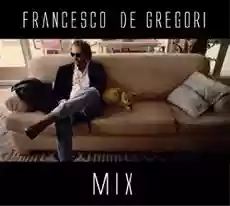
"Mix" instead deserves a solemn rejection, an utterly useless 'the best of' by Francesco De Gregori. It is nothing more than a live re-proposition of some hits of the Prince (or rather, ex-Prince) of Italian singer-songwriters: in the mix, there's a bit of everything, "La donna cannone", "Il bandito e il campione", "Viaggi e miraggi", "Pablo", "La valigia dell'attore", "Alice", "Rimmel", "Buffalo Bill", "Generale", "Viva l'Italia", and so on. Additionally, to better garnish the product, there are a series of more or less famous gems: "Signor Hood", "I matti", "Chi ruba nei supermercati?", "Come il giorno", "Cose". Plus, as a consolation, some covers of no interest, the standout being the very edgy acoustic version of "A chi", a staple of the former white negro Fausto Leali.
There's also the mysterious "Sotto le stelle del Messico a trapanar" (was there really a need?).
A dubious and very sad commercial operation, devoid of any charm and, very seriously, of any logic. Why present a collection of tracks from very different eras in scattered and illogical order? Why propose "Bellamore" and not, for example, "La leva calcistica della classe '68"? And why, above all, continue, year after year, to distort (often with disastrous results) the melody and rhythm of the songs? Someone might reply that Bob Dylan does it too in America, but De Gregori, as talented as he is, has never been (and never will be) as immense as Dylan. It should be added that "Mix" was released, incredibly, just one year after the previous anthology "Fuoco amico" (a little better) and perhaps, one should think, that the audience does not always have 25 euros to throw away every year to buy tracks already heard a thousand times. And the sumptuous and elegant packaging is not enough to deceive what was always believed to be the fooled masses.
It is therefore a blatant commercial operation that vainly tries to hide a painful truth: De Gregori is short of inspiration. He will make up for it the following year with "Pezzi" and, almost simultaneously, with the "Calypsos" (due to the cover). But one cannot hide one's weaknesses with a layer of assorted futility and banality. Clearly, I didn't buy "Mix", it was given to me (they know I love De Gregori, or rather, the very early De Gregori, from 1973 to 1982). I listened to it, rejected it, and sold it. Did I do wrong? I welcome advice.
Loading comments slowly
Summary by Bot
The review condemns Francesco De Gregori's 'Mix' as an unnecessary and poorly conceived greatest hits compilation. It criticizes the random track ordering, inclusion of uninspired covers, and repetitive use of familiar songs. The album is seen as a commercial attempt lacking artistic charm or logic. Despite loving early De Gregori, the reviewer rejects this release as a sign of creative decline.Tracklist Lyrics Videos
Francesco De Gregori
Francesco De Gregori (born 1951, Rome) is an Italian singer-songwriter known for poetic, often hermetic lyrics and a pivotal role in modern Italian canzone. His catalogue spans intimate ballads, historical narratives and politically charged pieces.68 Reviews
