
 •
Rating:
•
Rating: THE REVIEW
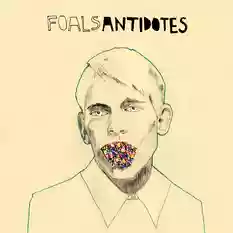
Finally the Foals! I say this because I had been eagerly awaiting the debut of the Oxford band for many months, following the release of a handful of intriguing singles (not included in the standard version of the album). Well, it was these three tracks, which served as an appetizer for "Antidotes" released at the start of 2008, that caught my attention: "Try This On Your Piano," "Mathletics," "Hummer" led me to categorize the Foals' sound alongside the very early Bloc Party, the Battles, and even evoke some memories of King Crimson's "Discipline," especially in the use of intertwined electric riffs. In short, the Foals expertly play the part of Math Rock with that heterogeneous and unusual rhythmic structure, angular melodies, sounds that go beyond the realms of traditional rock, dissonant strings, and great technical experimentation. The sounds are very intense, varied, with a truly well-structured use of the synth, percussion reminiscent of Afro music, and even room for saxophone. Truly a convincing debut.
Heralded by the syncopated and instrumental single "Balloons" and propelled by the no less hypnotic "Cassius", "Antidotes" stands out for the vivacity and complexity of tracks that, although short, are extremely articulated on average. "The French Open", for example, which opens the album, is almost entirely instrumental and draws from the Battles' repertoire, with an added attempt to bring that type of music to a more "popular" audience. "Red Sock Pugie" opens and spreads out against an exhausting percussive backdrop surrounded by layers of synth. After "Olympic Airways", another enthralling instrumental follows in the lineup with "Electric Bloom,” a less vibrant piece with post-rock musical reminiscences. "Two Steps, Twice", "Like Swimming", and "Big Big Love" are other clear Math-style instrumentals. "Heavy Water" is a song, also sung, more essential and clean based on drums and guitar. The album closes with "Tron," also hypnotic, but with the synthesizer more prominent, unlike the other tracks.
In conclusion, "Antidotes" and more broadly the Foals have the merit of delivering a truly interesting and long-awaited debut. The album even reached third place in the UK charts during its release week. "Antidotes" is a work that is not simple and not commercial as it is based on a foundation that is not purely "popular", but this too is an advantage. Some might argue that the Foals' music could be too repetitive (which is true, by the way), yet this very aspect could paradoxically be a plus for the "Oxfordian" band in the long run. As far as I'm concerned, it will certainly be on my list of the best albums of 2008.
Loading comments slowly
Summary by Bot
Foals' debut album Antidotes delivers a dynamic and complex math rock experience that blends intense rhythms, angular melodies, and experimental sounds. Influenced by bands like Bloc Party and Battles, it features both hypnotic instrumental and vocal tracks. Despite some repetition, the album's intricate structure and artistic ambition stand out. It reached number three on UK charts and marks an impressive introduction for the Oxford band.Tracklist Lyrics Videos
Foals
Foals are a British indie rock band formed in Oxford in 2005 and led by Yannis Philippakis. Their debut Antidotes (2008) reached No. 3 in the UK. Subsequent albums include Total Life Forever (2010), Holy Fire (2013), What Went Down (2015), and the two-part Everything Not Saved Will Be Lost (2019), with Part 1 shortlisted for the 2019 Mercury Prize.08 Reviews
