
 •
Rating:
•
Rating:
THE REVIEW
Older generations must set the example and prevent the memory of groups and masterpieces that made music history (modern!) from being lost! Here we are faced with the implementation of this statement and for those in a hurry who want to realize it, "just" skip the first four tracks and go to the middle of the amazing "Rattlesnake Shake," face the hypnotic solo of a certain (I write this for the younger ones, of course!) Peter Green, and thus realize that "God exists!" and has given our hero the inspiration for such a contribution to that mythical concert in Boston in February 1970. We couldn't explain it any other way,
Yes, at this point coming down to musical earth, I note that the first Fleetwood Mac was founded by that Mister Musician, class of '46, around '67, that is, in his early twenties, and had very little to do with the more famous (but not celebrated) ones from "Tango in the Night," "Tusk," "Rumors," etc., and owed their successful name directly to Peter, who generously combined the surnames of his two companions in adventure, bassist John McVie and drummer Mick Fleetwood. A band that in the span of two years churns out two good works: the self-titled debut album and "Mr. Wonderful" in '68, in addition to the absolute masterpiece (meaning it was not only such for this band but for music history) "Then Play On" the following year. From this prodigious production descends this album or rather an essential triptych of CDs drawn from concerts recorded on February 5, 6, and 7, 1970, at the Tea Party in the capital of Massachusetts, a little theater built in 1872 but rendered to rock music only in '67, which to many of you will mean nothing, but at the time was a meeting place for all, but really all the Great bands and where therefore our heroes felt obliged to give their best, which they promptly did!
Here I briefly pause so as not to disturb the listening of the first of such albums brought to light (it's appropriate to say and also thank!) in 1998 by Snapper Music, and to confirm the aforementioned note, I refer you to the last track on the list: "The Green Manalishi," one could discuss for hours about what can be achieved with a little guitar and a tambourine as in the finale, naturally knowing how to use them that way and letting the pauses and reverberations "play" too. But what is the Green Manalishi besides a FW Mac single released in England with great sales and critical acclaim? What did Green refer to when he wrote "Manalishi," probably a herb that produced decent satisfaction during its intake and less by the end of its effect, basically a close and more effective relative of marijuana, except that at the time these things were seriously PROHIBITED, especially in the puritanical States of the late sixties and convinced the composer, Green himself, to spread a more acceptable little story related to the color of money, even those green like him, icon of the devil on earth.
At this point, it's only left to proceed in order and go back to the beginning, but the album is so RICH that one could already open a debate on "Black Magic Woman" also by Green and discuss why at a certain point Carlos Santana makes it one of his showpieces by including it in the famous album "Abraxas" of September '70, the thing is quite controversial, but fundamentally depends on Green's usual goodwill, as already seen above regarding the name given to "his" band. It's obvious to debate which version is better, but about that and despite the fame, I, as a reviewer, defend the original version of the Black Magic Woman, briefly Witch, decidedly more sober and dry initially, only to then give way to the captivating final r&b that highlights the author's and Kirwan's qualities, far beyond those of the Mexican guitarist. It then gives way to the meditative and sweet "Jumping at Shadows," whose title is suitable to describe Peter Green's delicate phrasing that "jumps between the shadows" in depth compared to the listener, telling us that: "it is the faded photo of what he would have liked to be," but who would he have liked to be? At his tender age, he was one of the best guitarists and composers on the (global) scene.
From the light blues then passes to the lively rhythm of "Like It This Way," where the fantastic guitar duet continues, with Kirwan brilliantly rivaling Green, which will have certainly convinced those present at the Boston Tea Party that they were part of an event of immense value, multiple times later defined as the swan song of this historic band. The crescendo continues with the classic "Only You" tailored by Kirwan just right for this concert.
Speaking of swans and songs, why did Green leave Fleetwood Mac orphans shortly after this epic concert? Unfortunately, the cause descends from that "Green Manalishi" mentioned earlier, and whose effect would be schizophrenia, paranoia, and hallucinations that would force poor Peter some time later to hospitalization in an English psychiatric hospital, mental problems from which he fully recovered only long after when the music scene was totally different from the one left in 1970.
But returning to the Concertone, I note two fascinating blues pieces composed by Elmor James, father of many '70s guitarists and deceased a few years earlier, rendered masterfully by Fleetwood Mac with the ever-decisive contribution of Green, they are, in order, "I Can't Hold Out" and "Get to Move," unfortunately somewhat compressed between the two monumental Green tracks mentioned above, but leaving space also for Spencer's qualities on guitar and Fleetwood's percussion, always supported by the excellent McVie on bass. For the record at the Boston concerts, an apprentice Clapton also had a small role, but not in this album.
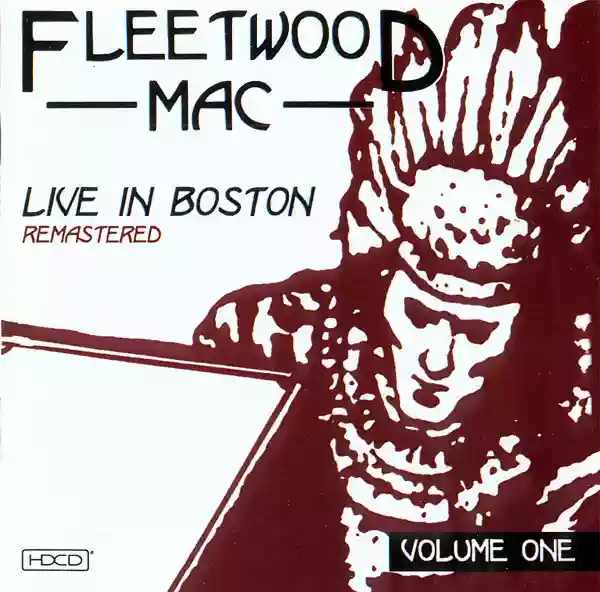
For completeness, I also point out the excellent technical recovery and sound quality of the concert, considering the means of the time, and also the unforgettable cover which reprises that of the first CD publication in '85 in which the 2 longer tracks did not appear, coincidentally precisely the aforementioned "monumental" ones, dedicated to the Massachusetts Indians or the natives ousted roughly by the English pilgrims who landed on the shores of Boston starting in 1620, but this is truly another story.
Loading comments slowly
Summary by Bot
This review praises Fleetwood Mac's 1970 live album recorded at the Boston Tea Party as a vital piece of music history. It highlights Peter Green’s extraordinary guitar talent and the band’s roots in blues and rock. The album is called a rich and essential capture of one of the band’s peak moments before Green’s departure due to health issues. The recording quality and historical context add to its importance.Tracklist Lyrics Videos
Fleetwood Mac
Fleetwood Mac are a band formed in 1967, originally central to the British blues movement around guitarist Peter Green, then later reinvented in the mid-1970s in California with Lindsey Buckingham and Stevie Nicks, becoming one of rock’s most commercially successful pop-rock groups.19 Reviews
Other reviews
By silvietto
"God really exists!"
A jam session... a conversation between virtuosos of the instrument as rarely heard before.
