
 •
Rating:
•
Rating:
THE REVIEW
If at twenty I had been introduced to a Fiorella Mannoia album, euphemistically speaking, I would have turned the other way. But, as we know, time is a gentleman: wisdom, open-mindedness, willingness to dialogue, and the absence of prejudice regardless, are a wealth of experience and life that only age can adequately forge.
Now that I'm more than twice that age, I realize that not everything that glittered back then was gold, and not everything I considered as worthless was mere rubbish. Of course, many firm points remain (and have remained), and some turpitudes will continue to torment me for a lifetime. However, this is not the case with Fiorella Mannoia, who in 1999 released this double live CD that spans about fifteen years of a continually rising career. Considered, rightly or wrongly, the female alter ego of Ivano Fossati, with the significant difference being that Fossati writes his songs, Fiorella Mannoia can be considered a top-notch interpreter in the landscape of Italian pop music.
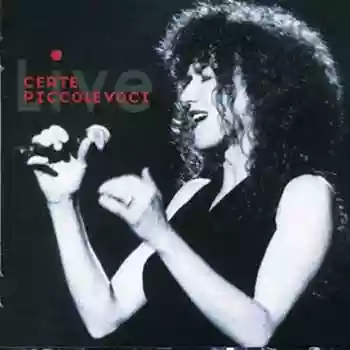
Endowed with an uncommon voice and interpretative passion, in this collection, she tackles almost all of her classics, offering us an author's insight worthy of being listened to. Only the opening track, "L’amore con l’amore si paga," is new and, interestingly, the only studio track on an otherwise entirely live-recorded album. Among the tutelary names accompanying her on this journey are the usual suspects, Ruggeri, De Gregori, Fabrizi, Fossati, with some singular interpretations added, such as "La stagione dell’amore" by Franco Battiato or the joyous "Il cielo d’Irlanda" by Massimo Bubola. The live execution does not detract from the beauty of the songs, nor from Mannoia's charisma, and there is nothing to criticize about the sound quality. Perhaps the applause in some tracks seems a bit excessively repetitive, but it’s a venial sin. Twenty-five songs, for about two hours of music, deliver us an interpreter worthy of being counted among the best currently circulating in the peninsula. Of course, it is pop music in its purest and simplest sense, so do not expect upheavals or revolutions, but it is an album that is pleasantly listenable, with few tonal falls.
Perhaps it's not necessary to evoke the divine Mina, but the songwriters who are willing or have been willing to offer her these songs convey the stature and regard Fiorella Mannoia enjoys.
Deservedly, I would say.
Loading comments slowly
Summary by Bot
This review reflects a mature appreciation of Fiorella Mannoia's 1999 live album 'Certe Piccole Voci.' Highlighting her exceptional interpretative skills and passion, the album spans fifteen years of her career. Featuring collaborations with renowned Italian songwriters, the live recordings maintain strong sound quality with minor critiques. Overall, it is a pleasant, well-executed collection for lovers of classic Italian pop.Tracklist Lyrics Videos
Fiorella Mannoia
Italian singer and interpreter from Rome, noted for collaborations with leading songwriters such as Enrico Ruggeri, Ivano Fossati, Francesco De Gregori and Franco Battiato. Sanremo milestones include Caffè nero bollente (1981) and Quello che le donne non dicono (1987).05 Reviews
