
 •
Rating:
•
Rating:
THE REVIEW
Finisterre line up:
Fabio Zuffanti: bass, secondary vocals
Stefano Marelli: guitar, vocals
Boris Valle: piano, keyboards
Salvatore Camilleri: drums
Agostino Macor: keyboards
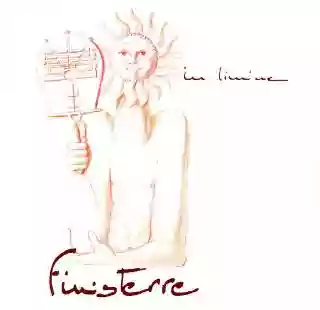
Finisterre is an Italian band formed in the early '90s, noteworthy for managing to revive progressive rock, a genre considered "dead". The album I'm reviewing, "In Limine", is a Mediterranean progressive in the style of Pfm, but more experimental and jazz-influenced (even if the group's leader, Fabio Zuffanti, claims to know nothing technically about jazz). The formula that emerges is at once homogeneous yet varied, as the band manages to span across different genres without falling into the trap of inconsistency.
"In Limine" is about an hour long (quite a bit for a progressive album) and encapsulates the rock tarantella of Pfm (the title track, "Hispanica"), elements of King Crimson's style (the chamber jazz rock in "Ideenkleid Leibnitz Frei", the experimental evolutions of "Algos"), the symphonic rock of Genesis ("XXV") and even folk. The album is mostly instrumental, thereby showcasing the group's technical skills. There are some vocal tracks, and while the voice is not the best, it’s not terrible either.
Let's start with a detailed description of the album: it begins with a very short "Intro" of just thirteen seconds, which reprises a theme from "Hispanica", another song on the album, with the Hammond organ and flute. "In Limine", lasting seven minutes, is very reminiscent of "E' Festa" due to its playful atmospheres. The beautiful flute theme, later reprised with the piano, serves as the main thread in the first part of the song, which is entirely instrumental. In the end, Marelli delivers a magnificent guitar solo over an organ base. The masterpiece of the album is the Genesis-like and baroque "XXV", sung in English by guest Claudio Castellini. Magnificent piano sequences that support the excellent singing and interludes of flute and sax evoke medieval scenes, creating a piece of strong impact. "Preludio" plays out over a base of suspended keyboards and electric guitars, with whispered cross voices. It's a very successful experimental piece. This is followed by the jazz rock of "Ideenkleid Leibnitz Frei" (Leibnitz's free ideology), which alternates frantic moments with calmer ones, leading to the final chaos. In "Hispanica", the group creates a wonderful Mediterranean interlude, with piano and Spanish-style guitars. This piece is also sung, and quite decently. The piece is less experimental than the others, but is one of the most beautiful. "Interludio" has a flute theme that repeats and plays with the piano, reminding me of a long walk in the desert (listen to it and see if it gives you the same impression; I doubt it because I am probably off :-D). And here we come to the two longest pieces on the album. "Algos (Ai Margini Della Terra Fertile)", at thirteen minutes, is Finisterre's experimental concentration of fantasy. The piece undergoes numerous mutations, from the piano beginning, to the subsequent flute section, to the synthesizer experiments, to the duel between piano and cello. It is a highly successful and particular piece that sums up all the sounds of the album up to that point. The last track is the sixteen-minute suite "Orizzonte Degli Eventi". Unfortunately, it is, in my opinion, the only weak point of the album: the vocals, which remained modest in "Hispanica", become ambitious and end up being irritating. Moreover, there are some hollow sections. Overall, however, it is good, with interesting ideas and excellent guitar parts. A strange thing: the suite reminds me, perhaps due to the dialogues between guitars and keyboards and the epic finale, of "Grendel" by Marillion.
The disc is finished, and after listening to it, you feel satisfied (it's nice to listen to an hour of good music). It may not be something transcendental, but this record is beautiful and distinctive, and I feel I can give it five stars, primarily because I like it a lot, and also because it takes some courage to resurrect a genre that no one thought of anymore.
P.S.: Fabio Zuffanti has led a multitude of projects, both parallel and not to Finisterre, of which I am unaware. If you want to know more, read their Ondarock profile, which talks about them very well. The link is: http://www.ondarock.it/italia/finisterre.htm. See you soon!
Loading comments slowly
Summary by Bot
Finisterre’s In Limine successfully revives progressive rock with a Mediterranean touch, blending styles from Pfm, Genesis, and King Crimson. The mostly instrumental album highlights technical skill and experimental jazz elements. While most vocals are fair, the ambitious vocal suite ‘Orizzonte Degli Eventi’ is less successful. The album is a strong, cohesive hour-long journey through varied prog styles, deserving praise for its creativity and courage.Tracklist Videos
Finisterre
Finisterre are a Genoa-based Italian progressive rock group formed in the early 1990s. After 70s-influenced beginnings, they embraced jazz, electronic and ambient colors on In ogni luogo (1999, Iridea Records) and refined a classic/modern prog fusion on La meccanica naturale (2004, Immaginifica; produced by Franz Di Cioccio). The band disbanded after 2004; members later formed Rohmer (2008).04 Reviews
