 •
Rating:
•
Rating:
THE REVIEW
Fields of the Nephilim are among the most credible torchbearers of the British goth-rock scene of the eighties. Formed in 1984, their debut "Dawnrazor" dates back to 1987: this "The Nephilim," marked 1988, is their stunning sophomore effort, and together with the noteworthy "Elizium" (from 1990), it constitutes one of the most significant testimonies the band has left us to date.
Compared to the wave of "dark" bands that burst, flourished, and in some cases withered away between the seventies and eighties, they present a fundamental difference: their dark rediscovers rock, the most genuine and untainted, while the punk and wave influences are drastically reduced. Their music does not seem to have known the post-punk revolution, the sparse and minimal sounds, the raw nihilism born and matured in the London suburbs, but it reveals itself steeped in a "cursedness," a "shamanism," a "swaggering" typical of rock, and in particular, typical of American rock culture. A tradition rooted in the epic nature of country, in the ruggedness of the most overwhelming rock'n'roll, in the despair of the accursed blues of the blacks, in the decadent visions of a Jim Morrison, in the spaghetti-western echoes of a Sergio Leone (an influence recognizable even in the post-apocalyptic cowboy look that the five musicians decide to adopt).
The dark of the Fields of the Nephilim has the flavor of the desert, and telling us about it are the guitars of Paul Wright and Peter Yates, the formidable bass of Tony Pettitt, the dynamic and abundant tempo-changing drumming of Don Wright. And naturally, the raw voice of Carl McCoy, a romantic hero, a restless soul, one who has very little to do with the fervors of an Ian Curtis or a Robert Smith, or with the neuroses of a Rozz Williams: McCoy is a titan of stone, a Herculean statue, imposing, yet torn by deep fractures. And on the verge of crumbling.
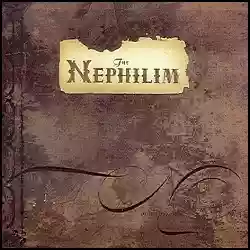
"The Nephilim," more than a masterpiece, should be considered as one of the pivotal moments of the eighties dark culture. Already from the self-celebrating title and the cover that sparsely depicts the album title, the band's iron will to leave a mark, impose its name, and brand the inflated music market of the time is evident. "The Nephilim" is the manifesto of the Fields of the Nephilim and deserves to stand proudly in the showcase of every respected dark enthusiast, alongside classics like "Closer," "Pornography," "First and Last and Always," "In the Flat Fields," and "Only Theatre of Pain."
In the first part, the tracks flow powerful, rhythmic, immersed in a warm, visceral, energetic sound: epic arpeggios and a solid rhythmic backbone are the impetuous wind carrying the pains and night visions of the charismatic McCoy, a true leader. Just think of the relentless "Endemoniada," which after a frenzied start, reveals itself as a true impactful opener, strong with powerful guitars and overshadowed by McCoy's cavernous howl that imposes itself on our ears right from the start with sighs and demonic cries. They are followed by more subdued moments ("The Watchman"), furious rock’n’roll assaults ("Phobia"), and tracks that shamelessly wink at the top charts ("Moonchild," the catchy single that takes us back to the debut album's atmospheres).
Much more interesting, in my opinion, is the final glimpse of the album. A bleak "Celebrate" (nothing more than a sparse bass arpeggio haunted by McCoy's alcoholic lament) acts as the watershed between the first section (decidedly more rock and easy-listening) and a second phase dense with gothic and theatrical atmospheres. "Love Under Will" is a dark, subdued, dreamlike ballad: Pettitt's throbbing bass, the arpeggio emanating desolation and solitude, the angelic choirs accompanying McCoy's possessed singing, depict places of perdition, of eternal damnation, places dusty as a western film set, chillingly sacred as the inside of a gothic cathedral aging in the desert.
The Gregorian chants closing the piece lead us directly to the gates of Hell: the massive "Last Exit for the Lost," an ultra-classic of the band. McCoy is a shaman summoning specters; his is a bleeding requiem destined for an audience of the damned. "Last Exit for the Lost" is the "The End" of the Fields of the Nephilim. Moving, in the finale, is the rhythmic acceleration that dissolves the hypnotic and lysergic moods of the piece, transforming it into a compelling apocalyptic ride: in these last, epic, tragic minutes, in the declamatory crescendo of the mad singer, in the power of the guitars growing rough and enveloping, lies all the class of the Fields of the Nephilim, McCoy's visionary talent, the band's ability to recreate tense and dramatic atmospheres.
"The Nephilim" is not a flawless album: not all tracks are memorable, and overall it may not please for its roughness, for the brashness seeping from every note, for its anti-aesthetic and deliberately (virile) excessive, over-the-top nature. Besides, there are albums that deserve five stars because they're "beautiful," perfect, and without smudges, and there are albums, however, that deserve five stars because, although not "beautiful," perfect, and without smudges, they mean something. "The Nephilim," without a doubt, belongs to this second category.
Loading comments slowly
Summary by Bot
Fields of the Nephilim's 1988 album 'The Nephilim' stands as a pivotal goth-rock record distinguished by its epic, desert-infused rock style. The band diverges from typical post-punk influences, embracing a raw, powerful sound marked by Carl McCoy's intense vocals. The album balances energetic rock tracks with dark, theatrical ballads, creating a dramatic atmosphere. While rough and excessive at times, the album is a meaningful masterpiece in dark culture.
Fields of the Nephilim
Fields of the Nephilim are a British gothic rock band formed in 1984, fronted by Carl McCoy. Known for cinematic, western-tinged imagery and a cavernous baritone, they defined a darker, ritualistic branch of goth with albums like Dawnrazor, The Nephilim, and Elizium, and later returned with Mourning Sun.08 Reviews
