
 •
Rating:
•
Rating:
THE REVIEW
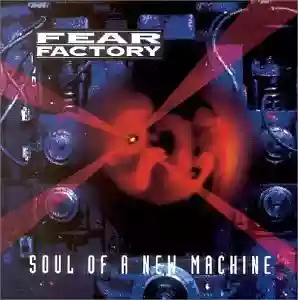
At first listen, it seems that we are "simply" in front of an album of epochal stature. In the highest sense of the definition: the density of meanings it encapsulates, the way it portrays the historical era in which it is inevitably set and foresees its future, and on the musical side, for the new frontiers it opens to unprecedented, yet virtually inexhaustible, interactions between different languages and genres, as well as for the importance that comes from the development of a musical genre (metal, transcending sub-labels and sub-genres) providing the impulse for the evolution of rock tout-court.
Something similar to what can be said about the importance of works such as Metallica's "Black Album" (systematization into classic status of trash-metal), albums by Jane's Addiction (broadly influential on many subsequent bands), Sonic Youth, and above all, a more appropriate parallelism perhaps, for the ability to foresee the future in the form of intuition shown by Public Image Ltd. in their second, crooked and brilliant "Metal Box".
The context in which the debut album of this American band comes to light is that of a musical scene characterized by the coexistence of the Seattle scene at its peak and the simultaneous emergence of "genres" and bands that, before the change in "mainstream taste" (with Red Hot Chili Peppers and Nirvana at the top of the charts being objectively unpredictable in American charts before certain changes), including "industrial metal", and particularly the album "Psalm 69" by Ministry, also monumental, which beyond the boundaries of a "cult" work, established itself as one of the most significant (even commercially) albums of 1992.
Moving on to the examination of the musical contents, one seems to be able to define the sound of "Soul Of A New Machine" in the following way: it sounds like a kind of "Death playing like Godflesh": those of "Pure", in particular, with Justin Broadrick and Richard Hampson (ex Loop) on guitar, that is, that current of EBM reinterpreted from the perspective of ex grind-core musicians (Broadrick) and ex space-rock (Hampson) in a project (even if not entirely explicit) of transcending the sectoral canons of Death-Metal, Trash-Core, Grind-Core, Industrial, Electronic Body Music and other languages pertaining to very distant spheres, but that in fact characterizes the profile of some of the best Earache bands (Scorn, Fudge Tunnel, Sleep, Pitch Shifter, etc.).
The Fear Factory, recording for "rival" Roadrunner (Sepultura, Paradise Lost, etc.), seem in this sense to bring to completion a work of perfect synthesis and fusion of sounds, such as the harsh guitar tones of Trash-Core, the hyperkinetic (and virtuosic) drumming of Grind-Metal, and (most fascinatingly) confer these sounds the basic imprint of electronic-matrix sounds: the Fear Factory, in other words, manage with this masterpiece, to accomplish from a Death-Metal form what the Ministry with the aforementioned album achieved from an industrial and electronic matrix. The perfect syncretism of the sounds contained here is, in a sense, one of the highest and boldest expressions of what has been called the "perfect harmony of cross-over".
Listen to the tracks that best give an idea of this new internal grammar: "Arise Above Oppression", techno-metal rhythm in death version, with guttural or distorted voices, giving the impression of a quasi-"expressionistic" vision of rock or metal; meaning music in which the theatricalization of suffering, the view of the horror of the contemporary world (but not only), and the sense of existential shock it provokes give shape to distorted and deformed portraits of people, interior/exterior landscapes now focused on more important details of the whole, now on large open spaces ("Suffer Age", "Lifeblind") of the historical scenario where an elusive detail ("a flower in the trash") can have the meaning of a saving hope, or even more, shed a poetic light on a scene of tormented and unspeakable suffering. But it is in the sequence "Natividad" (dedicated to the Latin American origins of the frontman's mother) and "Big God/Raped Souls" that Fear Factory possibly reach the peak of the entire album: a deafening noise in the first serves as an intro for the second, an invocation with an ultra-distorted voice that screams "so I am viciously raped, so I am in burning violence... in America: this is America, this is America, and I love America..." repeated in an obsessive and paroxysmal way, actually seems (even if perhaps unintentionally) to reconnect to expressionist poetry. What follows belongs to the Encyclopedia of Rock of all eras: suspended percussion followed by their own echo, repeated two-three times, guitar explosion in a memorable riff by the musical standards of death metal (Sepultura-Death-Entombed: the triad of the genre's top exponents), the traditional guttural "singing", which however (uniquely) alternates with ethereal, almost female voices. An idea (I feel like saying) ingenious, which makes what was thought to be an already perfect album for its genre sound like something that, incredibly, goes much, much further: the staging of the "Ballardian crash" man-machine, is actually the pretext to introduce the main idea of the album, the encounter with an increasingly mechanized world, the dehumanization and the consequent sense of alienating estrangement find in these "obsessive, trying obsessively to free themselves from the reality they narrate" music one of the deepest layers of the meaning of the contemporary age.
The only response seems to be what the album title suggests (better to call it a "work" as it is an authentic concept of the social macrocosm zoomed onto the microcosm of internal reality): the search for spirituality (soul) within this enormous, imposing, and alienating "machine". Unfortunately, it is a title that also seems to allude to the sad awareness of the unattainable utopia it contains, but the meaning of the "Resurrection of the Oppressed" with a clear mystical-religious undertone, is precisely, in my (very limited) opinion, that of hope even inside and beyond despair.
Loading comments slowly
Summary by Bot
Fear Factory's debut album 'Soul Of A New Machine' is a landmark in metal history, blending death metal, industrial, and electronic body music with profound social commentary. The album is praised for its innovative cross-genre synthesis and conceptual depth, reflecting on mechanization, dehumanization, and hope. It stands alongside other epochal works for its impact on metal and rock evolution. Tracks like 'Big God/Raped Souls' exemplify its emotional and musical complexity. This album remains essential for fans of metal's progression.Tracklist Lyrics Videos
Fear Factory
Fear Factory are an American metal band widely associated with industrial metal and a cybernetic blend of thrash and death metal, known for mechanized riffing, precise double-kick rhythms, and vocals that alternate harsh aggression with melodic clean passages.21 Reviews
Other reviews
By Senmayan
Burton Bell has a voice that on this first album ranges from a wickedly vicious growl to a very particular clean voice, almost like an android capable of experiencing emotions!
I’ve never heard a drummer use the double pedal in such a clean and surgical way, almost as if it were a second drum set!
