
 •
Rating:
•
Rating:
THE REVIEW
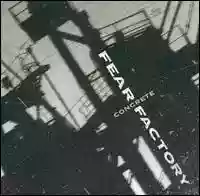
Some works are more important for what they represented, for the following they created, than for the actual value of their content. For such works, it seems spontaneous, almost inevitable, to conduct a retrospective analysis, taking into account the events following their publication: the impact they caused, the artistic evolutions of their authors, comparisons with subsequent works, and so on. In this category we also find the subject of the review: conceived between 1990-91, "Concrete" was supposed to be the debut of Fear Factory, but due to a dispute between the band and the then-producer Ross Robinson, it didn’t see the light until 2002. Upon further reflection, since it was released when the band had already produced their best works, one can also afford to review it in hindsight.
Going into the specifics of the dispute, the young Fear Factory were not happy with their contract and were attracted to Roadrunner, a prestigious label dedicated to metal. The band won the rights to the songs, allowing them to re-record them as they pleased (six new versions were included in the first official full-length, "Soul Of A New Machine" of 1992, and others were revisited throughout their career), while Robinson, on his part, won the rights to the album. Only in 2002, when the group was already disbanded (the reunion, with some line-up changes, took place in 2004), did Roadrunner acquire the recordings from the now well-established producer and assembled this product to fulfill the terms of the contract, which required another album: needless to say, it was a shamelessly commercial operation and the controversies didn’t lack.
The refined ferocity compacted by the production and innervated with technology; the conscious use of electronics and keyboards; the presence of choruses that are not only singable but also memorable, as an alternative to the death verses; the tight and dizzying rhythmic symbiosis between guitar and double kick: these are the constituent elements of an unmistakable and highly influential style, exemplified by the masterpiece "Demanufacture" (1995) and the subsequent and slightly less valid "Obsolete" (1998). In "Concrete," these elements are in a primordial stage: the melodic choruses consist of monotonous, whiny vocalizations, sometimes off-key, and it is clear that Burton C. Bell's voice is unripe; technological infiltrations are entirely absent, yet in compensation, the drums and guitar already interact, albeit their cohesion needs improvement. In light of what has happened in the subsequent years, these pioneering attempts, albeit naive and a bit pretentious, can only be welcomed. "Self Immolation", so raw and straightforward, can be considered a precursor to "Replica" and "Edgecrusher", as well as a window into the future of extreme metal, which, a few years later, would merge into nu metal. But if one focuses solely on the listening plane and ignores any other sphere, it becomes clear that the most successful songs, largely located towards the end, are the most "traditional", and that the band feels more at ease when playing "just" a death metal that is intense and brutal, devoid of melodic interventions, and very inclined towards blast beat and grindcore (the thirty seconds of "Deception" are a burst worthy of Napalm Death).
Although for the most part characterized by the typical naiveties of a debuting group, "Concrete" is varied and interesting, despite the market intentions with which it came into being; maybe it is not entirely accurate to consider it an official album, as it is, but it is far more genuine than many other unofficial records (remixes, compilations, etc.) that are essentially useless and add nothing to the career of this great band (if anything, they inflate it).
Loading comments slowly
Summary by Bot
Concrete is Fear Factory's early work recorded in 1990-91 but released in 2002 due to contractual disputes. Though raw and unpolished, it presents nascent elements of the band's distinctive style. The album holds historical importance for metal evolution and showcases early extreme metal and death metal influences. Despite commercial motivations behind its release, Concrete remains an interesting and genuine artifact in Fear Factory's legacy.Tracklist Lyrics Videos
Fear Factory
Fear Factory are an American metal band widely associated with industrial metal and a cybernetic blend of thrash and death metal, known for mechanized riffing, precise double-kick rhythms, and vocals that alternate harsh aggression with melodic clean passages.21 Reviews
