
 •
Rating:
•
Rating:
THE REVIEW
"All The Pain Money Can Buy," the 1998 album that with its hit "The Way" brought Fastball to fleeting mainstream success, is certainly not a landmark: an honest power-pop record, quite unripe and inconsistent, with some gems alternating with not exactly memorable songs. However, the Austin trio demonstrated all their worth and achieved artistic maturity with the subsequent "The Harsh Light Of Day" (2000). Unfortunately, the group had already played their trump card with "The Way," and to achieve ongoing and lasting success, one needs to be somewhat (very) opportunistic, and evidently, Tony Scalzo, Miles Zuniga, and Joey Shuffield were not capable of doing so or, as I like to think, chose not to, resulting in the beautiful "The Harsh Light Of Day" selling a meager 85,000 copies and reaching a 97th position in the USA as its best chart placement. Naturally, Hollywood Records took two seconds to realize that they had already squeezed all they could from the not exactly bountiful Fastball, and so the three Texans found themselves swept away like dust from the mainstream Olympus; on foot, with a career to rebuild, with the absolute certainty of no longer being able to reclaim the glittering paradise they had touched with a finger, revealed as a treacherous and fleeting illusion.
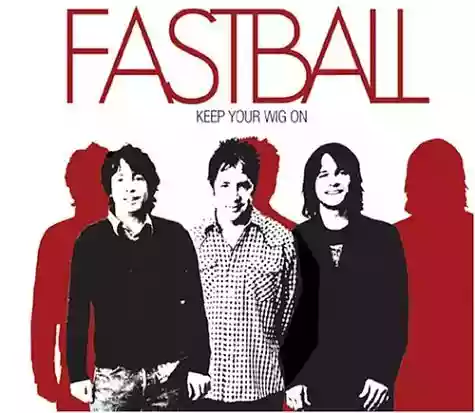
Thus, "The Harsh Light Of Day" was followed by four years of silence, interrupted in 2004 by the release of "Keep Your Wig On," under the aegis of independent label Rykodisc: in the twelve songs of this album, Fastball proves to have grown artistically, far from celebrity and the glitz of MTV: their music has grown, maintained its characteristic guitar-oriented trademark and fresh spontaneity, but has also been enriched from a qualitative and creative standpoint, adopting new sounds and stylistic registers: this is clear from "Shortwave," a brief intro of just over a minute that plays on the bounce between a simple piano line and Tony Scalzo's affected and reverberated voice, perfectly interpreting a slightly surrealist text: an opening that is almost a statement of intent, but the surprises do not end here: among the numerous experiments that make "Keep Your Wig On" an interesting, colorful, and never banal album, stand out songs like the lopsided piano-rock of "I Get High," imbued with disenchanted and bittersweet self-irony, "'Til I Get It Right," an exhilarating autobiographical ride, graced by a perfectly fitting, almost epic choir in its stride and concluded by an elaborate solo where sax and guitar duet, the light summer-flavored, carefree country-rock of "Mercenary Girl," flavored with the usual touch of biting irony typical of Tony Scalzo's songwriting, and "Red Light," a kind of frantic Mexican-style reggae-pop punk complete with a horn sarabande, the undisputed peak of the album and perhaps of Fastball's entire career is reached with "Falling Upstairs," a bitter and unsettling ballad characterized by an enveloping and sly guitar with a few tremulous notes of xylophone and piano in the background, where you can almost hear a more sparse and 'homemade' but equally intriguing and expressive version of Muse's "Absolution."
Alongside these "new" Fastball tracks, there is, of course, space for songs that trace the more classic and purely power-pop style of the Austin trio, including the fast and rustic "Lou-ee, Lou-ee," the textbook pop-rock of "Drifting Away" and the more tormented sounds of "Our Misunderstanding," written with Jeff Trott, Sheryl Crow's longtime collaborator, which directly recalls the wonderful "Slow Drag" from "All The Pain Money Can Buy," culminating in the first single, "Airstream," a song with relaxed and rarefied tones, excellent for describing the exit from a period of pressure and difficulties, somehow echoing, in a substantially different way, the same desire for freedom as "The Way," and it is a desire for freedom that pervades Fastball’s entire career, a trio of musicians who found themselves at a crossroads, having to choose whether to remain musicians or become cash-grabbing sellouts and, partly by necessity and partly by love, chose the former option, leading them to forgo extravagant videos, MTV awards, and mansions in Beverly Hills but also to produce albums like "Keep Your Wig On," the product of a mature band at the height of their potential, having found their stylistic measure both musically and in songwriting, free from artificial poses, sellouts, and scripts, and this is more than enough to earn my complete respect and admiration.
Loading comments slowly
Summary by Bot
Fastball's 2004 album Keep Your Wig On represents the band's artistic maturity after early mainstream exposure. Blending their trademark guitar-driven power-pop with new sounds and experimentation, the album reflects their choice to prioritize musical integrity over commercial success. Highlights include a variety of styles, from piano-rock and country influences to reggae-pop. The band shines with creative freedom, producing a nuanced and engaging effort worthy of respect.Tracklist Lyrics
Fastball
Fastball is an American power-pop/alt-rock trio from Austin, Texas, formed in 1994 by Tony Scalzo, Miles Zuniga, and Joey Shuffield. They broke through with the 1998 hit The Way from All the Pain Money Can Buy and have continued releasing albums including The Harsh Light of Day, Keep Your Wig On, Step Into Light, and The Help Machine.02 Reviews
