
 •
Rating:
•
Rating:
THE REVIEW
Forget the grunge. Musically speaking, Seattle is renowned as the city of long faces. Let's be clear: Kurt Cobain was one of the greatest rock music interpreters ever to appear on this planet; Nirvana churned out memorable songs and led a movement, grunge, that was only varied in its superficial aspects (the style could be, depending on the bands, more inclined toward hard-rock, or punk, or metal, or noise, or Neil Young... it doesn't matter...), while in essence the homogeneity of that scene seems evident to me: Nirvana, Mudhoney, Alice In Chains, Pearl Jam, Soundgarden, and all the rest of the bunch had in common that disillusioned, bitter, discouraged, depressed feeling, which sometimes risked falling into the most serious self-pity. So, forget this mood for a moment. And try to ask yourself what Seattle was like just before grunge. One possible answer is called Fastbacks.
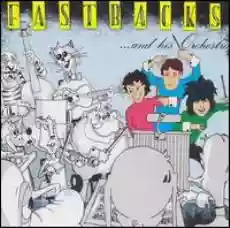
Two girls not particularly attractive, but very likeable: Kim Warnick and Lulu Gargiulo. A stellar guitarist named Kurt Bloch, capable of anything (really!), the kind who when they play give you the impression they’re having the time of their life. An arbitrary drummer. The Ramones and their silly choruses. There you have the Fastbacks, in my opinion the best power-pop group ever. Even better than Cheap Trick. They had been active since the early 80s, but their first LP is only from 1987 and is titled "And His Orchestra". It contains 11 songs that border on perfection, full of energy, inspiration, variety, empathy, captivating melodies, fiery guitars, driving rhythms.
"Seven Days" is the essence of the Fastbacks: a raw start, a very silly nursery rhyme, a grotesque solo that transforms the song into a joyful collective dance. The hero is Bloch, the least pretentious guitar-hero in history. The most incredible things come out from his magical six strings: sturdy riffs, walls of sound ("I need some help"), pompous fanfares in the style of Brian May ("Wrong, Wrong, Wrong"), enchanting arpeggios à la Big Star, dazzling solos, submerged phrases, sudden breaks, all sorts of interludes. From the most lyrical intimacy to the most outspoken extroversion, there is no mood that Kurt is not able to suggest and support with his instrument.
Then there are the girls: Kim and Lulu. It's hard to tell if they're just being themselves or playing a part. It's difficult to understand where irony ends and genuine sentiment begins. Between Joan Jett and Exene, with more than a nod to the Ronettes, balancing tenderness and aggression, the female voices define a spectrum of sensations so naive it deeply resonates with the soul: the tone goes from confidential ("Light's On You") to dreamy ("You Will Be The One", "K Street"), only to unleash in the scorching charge of "Set Me Free" (which seems like a tribute to Heart). Like young girls in love, Kim and Lulu paint an imaginary world of sighs, enchantment, and hopes.
But dreams don't always come true: and so "Don't Cry For Me" reveals a sullen mood, a frown attempting to regain calm in the chorus, while "Call It What You Want", with that voice lost among the dissonant whip of the guitar, that palpable discomfort, that underlying anxiety always ready to surface, is their "grunge" piece.
And then one realizes that, perhaps, the buffoonery, the silliness, the "futility" of this music is only a way to exorcize daily sufferings, just a game to forget the abyss of existence. After all, faced with the shamelessly saccharine chant of "In The Winter", one gets the impression that the people of cynical and disadapted girls (the so-called "punkettes") begin to yearn for the domestic hearth and feel the need to regress to childhood. Maybe with Kurt Bloch making faces and lifting spirits. Those who like to minimize the deep meanings of consumer music will argue that in reality the essence of Fastbacks' music is simply the taste of "playing beautiful songs", the pleasure of enjoying themselves and entertaining, pure escapism. I agree.
However, if there is a need to escape from something, there must be a reason, right?
Loading comments slowly
Summary by Bot
This review highlights Fastbacks' debut album 'And His Orchestra' as a refreshing alternative to Seattle's grunge scene. It praises the band's catchy power-pop energy, Kurt Bloch's versatile guitar work, and the compelling female vocals by Kim Warnick and Lulu Gargiulo. The album balances joyful melodies with moments of introspection, offering both escapism and emotional depth. It positions Fastbacks as a joyful and influential force that predates and contrasts the gloomier grunge movement.Tracklist Videos
01 Seven Days (02:45)
02 The Light's on You (04:01)
03 If You Tried (02:53)
04 Don't Cry for Me (03:47)
06 Wrong, Wrong, Wrong (03:49)
08 You Will Be the One (03:22)
09 Call It What You Want (05:22)
10 Set Me Free (03:42)
11 I Need Some Help (03:33)
12 Midnight Confessions (02:44)
13 See and Say (02:25)
14 Only at Night (02:19)
15 What Will They All Say (02:37)
16 In America (04:38)
17 No Lethal Hope (03:05)
18 Fast Enough (02:37)
19 Wait! (02:34)
20 Whenever I'm Walking (03:42)
Fastbacks
American power-pop/punk band from Seattle featuring Kim Warnick, Lulu Gargiulo, and guitarist Kurt Bloch. Debut LP ...And His Orchestra arrived in 1987; they became cult favorites through the 1990s.01 Reviews
