
 •
Rating:
•
Rating:
THE REVIEW
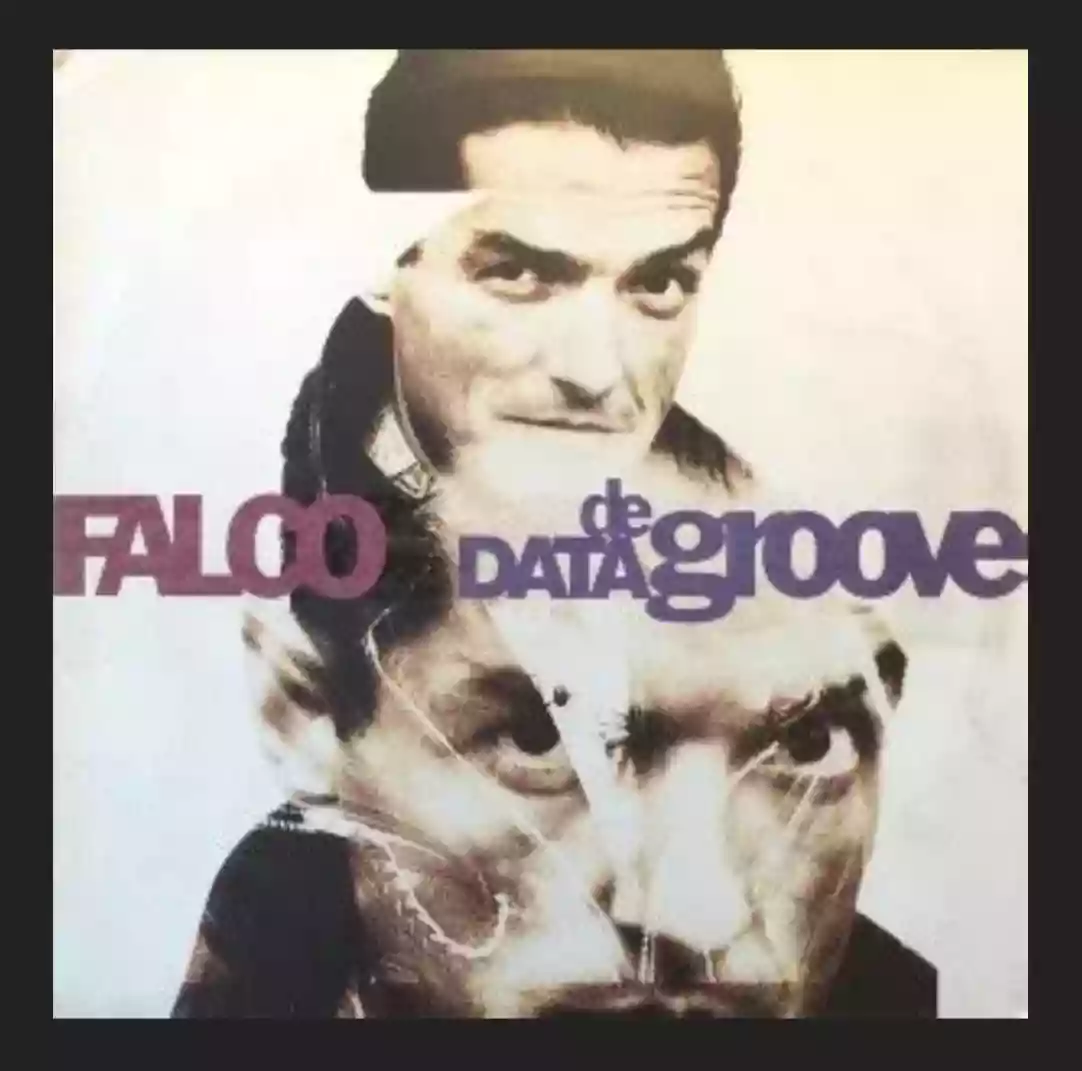
For Falco, the turn of the decade coincided with a serious attempt to begin a new existence, both artistically and personally.
After a long period of reflection and rehabilitation from alcohol and various excesses, the Austrian pop star returned to the scene rejuvenated in body and spirit.
The goal Falco had set for himself with the new album could be summarized with the motto: return to the past to look to the future.
There was therefore a professional reunion with Robert Ponger, producer from the time of the first two albums. The "pact" between the two was to try to innovate the contemporary Pop formula. Ponger thus attempted to introduce rhythms and sounds that broke free from the coordinates of the eighties, now worn out and surpassed by the innovation brought by the flourishing House era.
Falco, on the other hand, once off the fruitful but ultimately frustrating "Bolland bandwagon," wrote and recorded—though not without a few creative crises—lyrics that were sometimes highly cryptic and hermetic, preferring above all to pursue his own personal satisfaction rather than once again chasing, at all costs, the tastes and expectations of the public.
The overall result of all this enterprise reached a "degree of purity" never seen in any previous album (perhaps only the debut album can compete, with uncertain results) but inevitably lacked immediacy and broad appeal. As a consequence, "Data de Groove" was by far the least sold LP of those released up to that point: the figures were shocking in all markets, including the domestic one, where for the first time one of his albums not only failed to reach number one, but did not even enter the Top 10.
The regretting parties were thus not only the usual American label Warner/Sire (which quietly released the record through a sub-label) but also the German Teldec, which thanks to Falco had reaped enormous profits in previous years.
Two singles were extracted: the bland title track and the already more intriguing "Charisma Kommando," still far from being able to rival—even just in terms of quality, since commercially the comparison isn’t even worth considering—with the songs from the golden era of the 1980s.
With "Data de Groove" you need to dig beneath the surface to find truly significant moments.
Among the gaps of a work so resistant to being understood and appreciated, only lovingly persistent listening allows you to discover at least a couple of gems.
One is the magnetic and seductive "Pusher," whose musical composition for the first time involved Falco himself. It’s no coincidence that it was the track with the longest and most troubled gestation, at risk of delaying the LP’s release date.
And then there stands out and shines "Bar Minor 7/11 (Jeanny Dry)," where over a refined velvety Latin-Jazz backdrop Falco playfully toys with words, referencing the much-awaited "Jeanny-brand" in the title, but with that "Dry" which is brilliantly misleading.
Also of some note are the opening track, "Neo Nothing - Post of All," urgent and buoyant, and an "Expocityvision" with a cerebral lyric and an airy refrain.
As mentioned, the commercial response to this ambitious but excessively pretentious return album was nothing short of merciless. Some unsold copies were even withdrawn—and probably pulped—from outlets ending up with overstock, thus making "Data de Groove" quite hard to find in the years that followed.
Falco also promptly squandered his newly regained physical (and above all, mental) form, falling back into the same old vices that had never truly been eradicated.
Thus, the nineties did not get off on the right foot. What future awaited the now former Viennese pop star?
Loading comments slowly
Summary by Bot
This review gives Falco's 'Data de Groove' a below-average score, citing the album's electronic experimentation but lackluster results. Despite Falco's ambition, the reviewer finds the execution unsatisfying. The album is suggested to be less memorable than earlier works. Synth-based production and creative risks form the album's core. The review may discourage fans seeking Falco's best material.Tracklist
Falco
Falco (Johann “Hans” Hölzel) was an Austrian singer and rapper associated with the Neue Deutsche Welle. He achieved worldwide fame with Rock Me Amadeus—topping the US Billboard Hot 100—and hits like Der Kommissar, Vienna Calling, and Jeanny. He died in a car accident in the Dominican Republic in 1998.11 Reviews
