
 •
Rating:
•
Rating:
THE REVIEW
From a branch of the Nuova Compagnia di Canto Popolare emerged the solo career of Eugenio Bennato. Together with Carlo D'Angio, he decided to form another musical project that re-worked and presented folk music (or to put it in English, folk).
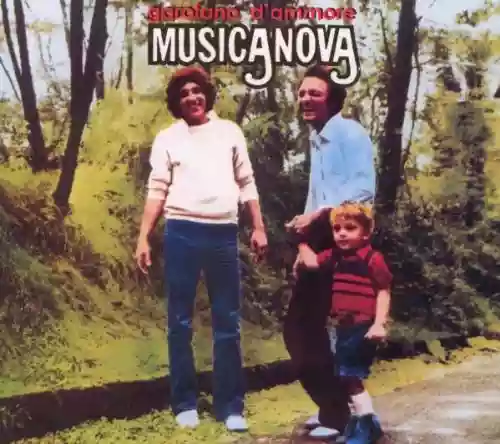
In 1976, Musicanova came to be, and in the same year, they released their first album for Philips: "Garofano d'ammore." Besides Bennato and D'Angio, the group also included the young percussionist Toni Esposito, Gigi De Rienzo, Robert Fix, and the fantastic Teresa De Sio, undoubtedly one of the best voices in the folk scene ever. The album contains about 40 minutes of music played at the highest level, with Bennato reworking chants and songs mostly from the Apulia and Gargano regions, the land of the "chitarra battente," a musical instrument almost unknown to the entire world, which was conceived and developed by musicians of the caliber of Andrea Sacco and Antonio Piccininno. Master Bennato himself decided to delve deeper into the study of this instrument, so fundamental in the sounds of the tarante and the pizziche.
The album features 10 tracks that span all genres of Southern folk music. Compared to the works with the Nuova Compagnia di Canto Popolare, Bennato's album presents a return to "executive simplicity" compared to more elaborate arrangements (also due to the influence of Roberto De Simone). Nevertheless, it should not be asserted that the songs revisited in "Garofano d'ammore" are a-technical or trivial. In "Bella figliola ca sta 'nfenesta," a serenade to the rhythm of tarantella describing a young man's approach to a girl at a window, lies the album's title; the same theme is held, that is the depiction of a beautiful woman, in the subsequent "Montanara," which reprises the classic theme of the Tarantella of Gargano, a mid-tempo with a dreamy atmosphere (later reprised in "Lezioni di Tarantella" in 1999, this time performed by Andrea Sacco himself). Bennato ventures on a highly technical and well-executed path with the "Tarantella di Sannicandro," "Ballo cantato per mandoloncello, violino e percussioni," and with the "Pizzica Taranta," where one can appreciate the (otherwise known) skills of Toni Esposito, especially in the Tarantella di Sannicandro, and the warm and energetic voice of Teresa De Sio, who gives her best, as always. Another showcase of technique is given by master Bennato with the instrumental "Ballo per chitarra," which precedes the last track with the eloquent title: "Canto finale," a tammurriata.
"Garofano d'ammore" represents the first stone laid by Bennato in his journey towards the rediscovery of the musical origins of the south.
Loading comments slowly
Summary by Bot
Garofano d'ammore, released in 1976, marks Eugenio Bennato's solo venture into Southern Italian folk music. Together with Musicanova, Bennato and his collaborators crafted a technically excellent album rooted in tradition, employing rare instruments like the chitarra battente. The album balances simplicity with masterful arrangements and features standout vocals by Teresa De Sio. It is a significant early step in Bennato's journey to rediscover the musical origins of Southern Italy.Tracklist
01 Bella Figliola Ca Staje 'Nfenesta (02:05)
02 Montanara (03:01)
03 Tarantella Di Sannicandro (04:37)
04 Rodianella (05:27)
05 Pizzica Tarantata (05:20)
06 Ballo Cantato Per Mandoloncello, Violino E Percussioni (04:17)
07 Viestesana (03:12)
08 Cirè Spizzata (04:11)
09 Ballo Per Chitarra (01:56)
10 Canto Finale (04:58)
Eugenio Bennato
Italian singer-songwriter and guitarist from Naples, co-founder of Nuova Compagnia di Canto Popolare, later creator of Musicanova and the Taranta Power movement. He blends Southern Italian folk with Mediterranean textures and modern idioms.06 Reviews
