
 •
Rating:
•
Rating:
THE REVIEW
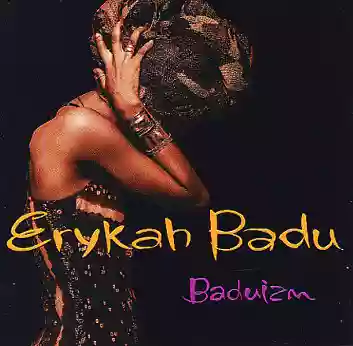
"Baduizm" is the magnificent debut of the equally wonderful Erykah Badu. And I'll say it right away that this album is amazing, so no one can have any doubts.
How many people keep saying the nonsense that the greatest musical decade was the '70s (or the sixties)? Too many. Well, this album is proof that masterpieces can always emerge and that the modern era has nothing to envy from the so-called golden decades of popular music. In 1971, Marvin Gaye's "What's Goin' On" was released, and I think everyone is aware of its historical significance and, above all, its beauty. In '97, "Baduizm" was released, and the twenty-six-year-old Erykah showed the whole world she has absolutely nothing to envy from the now sainted (and damn, I'd say it's about time he was canonized!) Marvin.
If "What's Goin' On" has an organic and full sound, then "Baduizm" is much more sparse and essential without losing any of its softness and sweetness: you can tell from the intro that Erykah's soul is a fusion of sounds from the blaxploitation era, of contemporary hip-hop that is more refined and less commercial (the aura of the Roots floats throughout the album) and also of the most ancestral and anguished jazz (maybe it's because of the voice, but one of the first names that comes to mind is Billie Holiday). But comparisons are useless and misleading: because Badu is all the women of soul and even those who will come, she is the most perfect and unattainable example of a black singer... Her voice has something ancestral with that slightly nasal tone, those silvery shades, and the sublime lyrical vein that pervades it.
Even the intro of the album (Rimshot, later also reprised as an outro) introduces us to Erykah's expressive depths: a soft and jazzy pace that soon gives way to the famous and even more fantastic On & On, perhaps one of the most beautiful pieces ever, in which the cotton fields and the sun-scorched concrete of the metropolis become one. The band accompanying her on this soulful adventure is led by a very clean and effective Questlove of the Roots, who for the occasion devises rhythms perhaps less sweaty than those of the original band but much more seductive... Otherside Of The Game relies on the counterpoint of a strangled trumpet that so much recalls Miles Davis to immerse it in warm and nocturnal atmospheres, while Next Lifetime is the best modern r'n'b (Alicia Keys or Kelis would do anything to have it on their album). Afro is a playful piece in which Erykah showcases all the power of her bare voice, one of those playful tunes with which everyone would like to be woken up in the morning... Certainly is one of my favorite tracks, a jazz-soul standard supported by a clear bass on which Badu's voice bounces and dances.
Throughout the album, it feels like traveling to the sacred places of African American culture: the Virginia plantations, the jazz clubs of New York, the beaches of the West Coast (and San Francisco during the psychedelic period also comes to mind), the streets of Detroit, and again the clubs of the Big Apple but this time dancing under the rhythmic blows of hip-hop... This album is a must-have in your collection: how can you sleep peacefully without having ever heard No Love and Erykah's heavenly vocal performance?
In a sad and poor era (economically, culturally, and morally) like ours, an album like this is simply unmissable as is any note born from our goddess's throat: if there is a reason why the genre king of black music is called "soul music," this is one of the best ways to discover it. "Baduizm" is an unmissable album, both immanent and transcendent at the same time, overflowing with grace and magical lyricism...
Loading comments slowly
Summary by Bot
Baduizm, Erykah Badu's debut album, is praised as an amazing modern masterpiece blending soul, jazz, and hip-hop. The album channels rich African American cultural influences with a fresh, sparse sound. It is noted for its timeless quality and Badu’s unique, ancestral voice. Highlight tracks like On & On showcase the album’s lyrical grace and musical depth.Tracklist Lyrics Videos
Erykah Badu
Erykah Badu (born Erica Abi Wright) is an American singer‑songwriter and producer widely dubbed the "Queen of Neo‑Soul." She rose to prominence with the Grammy‑winning 1997 debut Baduizm and followed with acclaimed releases including Mama’s Gun, Worldwide Underground, and the New Amerykah series. A key figure of the Soulquarians collective, she blends soul, R&B, hip hop, and jazz with singular style.06 Reviews
