
 •
Rating:
•
Rating:
THE REVIEW
I wanted to read a gruesome Horror book. I wanted to scare myself and reflect on the anxieties that afflict the soul.......
One day, a fine connoisseur of Lovecraft recommended this book to me, calling it chilling.....and by god, he was right!
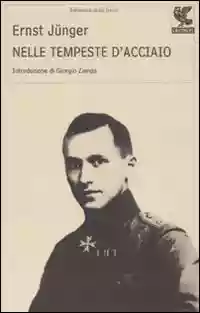
The author, E. Junger, was a zoologist who also conducted experiments with psychotropic substances. He recounts his experience on the front of the Great War through the cold and detached eyes of a scientist.
The result is a meticulous and detailed account of the horrific situations in the trenches, where life takes on a heroic value, unlike how we are used to bringing our pristine behinds home today.
Disease, the noise of war, pain, morphine, hungry rats...it truly feels like being in the trenches, given how skillfully the book is written.
One of the best Horror books because, deep down, war is frightening now, but back then, people thought more of heroism rather than the hedonism that prevails in our society.
I advise visiting those places, especially the areas surrounding Haguenau in French Alsace, where I often got lost wandering under the influence of psychotropic substances (always respecting the laws and other people) remembering the sacrifice of thousands who died for future generations...RIP Heroes.
Loading comments slowly
Summary by Bot
Ernst Jünger's memoir offers a chilling, meticulous account of life in the trenches during the Great War. Told through a scientific lens, the book portrays horror and heroism authentically. The reviewer praises its vivid descriptions and recommends it as a top horror read for anyone seeking a profound reflection on war's brutal realities.
Ernst Jünger
German author and soldier (1895–1998), noted for his World War I memoir In Stahlgewittern (Nelle Tempeste d'Acciaio) and essays on technology, modernity and the figure of the rebel. He had an early nationalist orientation and a complex, contested relationship with Nazism; later he remained an influential and debated intellectual figure associated in part with Martin Heidegger's circle.02 Reviews
