
 •
Rating:
•
Rating:
THE REVIEW
Crossroads. That's what often spurs me to discover new things (not just in the musical field).
The Engine Kids are right in the middle of one of these crossroads, and it seemed "destined" for me to listen to them, considering at least three paths led me to this Seattle band (and one: early '90s + Seattle... yes, I am a "grunger").
On one hand, E.K. emerged from that post-hardcore scene (Revelation area and the like) that has always thrilled me (and two). On the other, the brain and the driving force of this combo is the bearded majesty Greg Anderson (Burning Witch, Thorr's Hammer, Goatsnake, Sunn O))), Teeth of Lions Rule the Divine, Burial Chamber Trio, Ascend), thus one of the black eminences of Drone (and three).
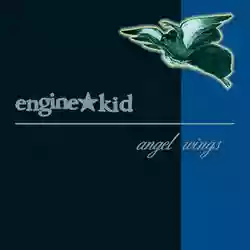
In the early '90s, good old Anderson dedicated himself to a type of music very distant from his current occupation: E.K. was born from the ashes of some '80s hardcore/straight edge groups and, after a first not too original album, they released the full-length "Angel Wings" (1994) publishing an interesting blend of post-rock minimalism from the aforementioned Slint and jazzcore that would become the trademark of the Iceburn collective (with whom they've shared a couple of splits). If in the first part of the album, the Kid focuses on a hard and abrasive sound with fractured rhythms (the first excellent four tracks "Windshield", "Holes to Fight In", the heavy "Anchor" and, especially, "Nailgun", 78 seconds of post-core where they seem to link sonicyouthian noise spasms to psychedelic hard rock inspirations), in the second part of the album, they deconstruct their sound, slowing down the rhythms, introducing more rarefied atmospheres and flirting with boredom due to the excessive conventionality of the proposal.
The best moment of the album (along with the aforementioned "Nailgun") is in the final part where they propose two less orthodox tracks: "Herbie Hancock" which paves the way for fusions between jazz and hardcore and the final cover "Olé", a John Coltrane track (a bow, please!) lasting 12 minutes in which they match the abrasive HC temperament with a wind section (saxophone and trumpet), representing that connecting link between Slint and jazzcore that would be the backbone on which the drone discourse would be grafted in the great Ascend album.
In conclusion, "Angel Wings" can be an interesting listen for those (like myself) who appreciate the genre, while for others it may prove to be hard to digest.
Loading comments slowly
Summary by Bot
Engine Kid's 1994 album 'Angel Wings' offers a complex mix of post-hardcore and jazzcore with notable influences from Seattle's early 90s scene and Greg Anderson's evolving style. The album's first half is energetic and abrasive while its latter part explores slower, more minimal tones. Highlights include the intense track 'Nailgun' and a 12-minute John Coltrane cover that marries hardcore spirit with jazz elements. This album appeals to fans of genre-blending experimental rock though it may challenge casual listeners.Tracklist Videos
Engine Kid
Engine Kid is an American post-hardcore band from Seattle led by Greg Anderson. Active in the early 1990s, they fused abrasive post-hardcore with Slint-like minimalism and jazzcore elements, releasing Bear Catching Fish (1993) and Angel Wings (1994), and sharing split releases with Iceburn. They reunited in 2021, coinciding with the archival box set Everything Left Inside.01 Reviews
