
 •
Rating:
•
Rating:
THE REVIEW
Being the last one to arrive at a site like DeBaser feels like arriving late to a party and realizing that the most beautiful women have already been taken.
So what to do if all the albums I would have liked to write about have been extensively covered? At such parties, you go for the second choices.
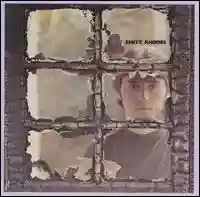
Here I am, with my beer in hand, sniffing out a potential target. At a certain point, behind a rickety window, I spot a boy with a melancholic gaze staring at me. His name is Emitt Rhodes. What hides behind that window?
In 1970, a year after the breakup of his band for teenagers, The Merry-Go-Round; Rhodes shut himself in his parents' garage with instruments and a four-track recorder to record his debut album all by himself. That same year, in Scotland, the knight McCartney was doing the same thing with his first album, which is ironic when listening to the two works: they seem cut from the same cloth.
The industry magazines praised the work of the Illinois songwriter, dubbing him “The One Man Beatles.” I would more correctly call him “the doppelgänger of McCartney's doppelgänger,” because from the first to the last second of the album, it's clear both in the use of instrumentation and in the vocal tests, the influence of the Liverpool bassist.
It opens with a lively piano pop song, “With my Face on the Floor,” catchy and cheerful.
It continues along this line until “Long Time to See” which with its melancholy and sounds even precedes the atmospheres that will be found in McCartney's “Band on the Run.”
“Lullaby,” sweet and whispered, truly skirts plagiarism towards his model; I would challenge anyone not to mistake it for Paul.
With the single “Fresh as a Daisy,” it returns to a more rhythmic mood. The album flows pleasantly, with some pieces standing out from the others (Live Till you Die), up to the best song of the lot: “Find Yourself Running,” where finally, after many though pleasant exercises in style, the artist's soul seems to shine through. Strangely enough, it's the only piece that seems slightly influenced by Lennon.
In conclusion, I find it exaggerated that someone defined it as one of the best albums of the 70s, but it may appeal, and quite a lot, to those who are comfortable with that type of songwriting that does not aim at radical revolutions, but only at tickling the palate of those who love a certain catchy music.
A note aside for the mastering: the continuous bouncing on the tracks makes it difficult to listen for ears accustomed to clean works. But this is pure craftsmanship, truly homemade; the result is anything but clean, and it's a pity because the talent was there.
Loading comments slowly
Summary by Bot
Emitt Rhodes' 1970 debut album was crafted entirely by himself in a homemade studio, drawing heavily from Paul McCartney's style. The album offers catchy piano pop and melancholic melodies with an authentic homemade charm. Though the mastering is rough and prevents clearer listening, Rhodes' talent shines, especially in tracks like 'Find Yourself Running.' A good fit for listeners who appreciate non-revolutionary yet engaging melodic songwriting.Tracklist Lyrics Videos
Emitt Rhodes
Emitt Rhodes (1950–2020) was an American singer-songwriter and multi-instrumentalist. He started as a drummer with The Palace Guard, co-founded The Merry-Go-Round, then recorded his 1970 self-titled solo debut at home, playing and producing everything himself—earning the nickname “the One Man Beatles.” He followed with Mirror (1971) and Farewell to Paradise (1973), and returned with Rainbow Ends (2016).01 Reviews
