
 •
Rating:
•
Rating:
THE REVIEW
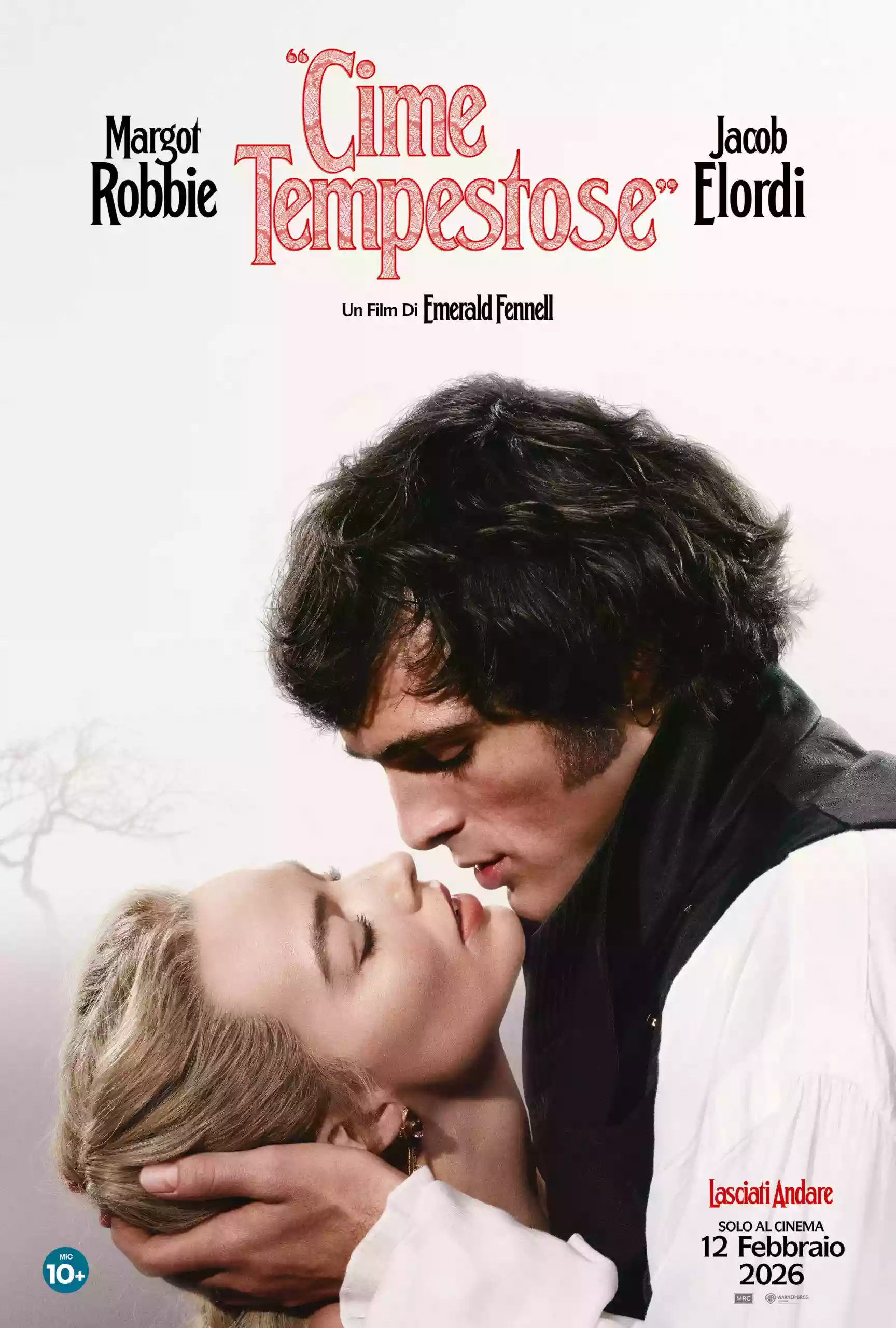
What is criticized about "Wuthering Heights" is certainly not its unfaithfulness to the book. That must be made clear. What doesn't work in Emerald Fennell's new film is precisely the consistency, the sense, the lack of that minimum dose of realism needed to create empathy. Fennell's aesthetic may be modern, free, provocative, but if that comes at the expense of the story rather than to its benefit, then everything is pointless. A futile effort.
I read somewhere, amid the flood of dedicated articles, that the film tells a love story in the TikTok era. And I think that's quite true. But let's not get ahead of ourselves. Fennell creates rather an evocative scenario, if you will. Free, symbolic architectures, intense, paroxysmal music, hyperbolic visual constructions, and at first it seems to be a tolerable auteur signature.
But then she gets carried away, and from a surrealist vision, it slips into cartoonish caricature. Characters like monsters from a children's movie (the deformed, greenish father), an overuse of symbols that turns clumsy (the piles of bottles), a constant sexualization that finally becomes bad taste (Isabella chained on all fours, the servants engaging in S&M).
The mechanism is obvious: a tormented love story, full of symbols, excess, sex, plunging necklines, eccentricity. Simplified characters, narrated almost like a soap opera. The story is easy, a repetitive push and pull. The characters are like influencers: the protagonist flaunting new outfits all the time, cleavage always in the foreground. Him? A two-meter-tall hunk. The others are caricatures: Edgar's sister, Isabella, looks like Fantozzi’s daughter, so ridiculous is she made to appear. Catherine's father is a repugnant ogre, with no shades to his personality. The maid Nelly… a spiteful weaver. Edgar? A ceremonious simpleton.
An aesthetic container, where symbols, sex, and excess don’t deepen the drama, but rather simplify it, reducing it to mere surface.
Thus, Fennell gets very little right. Some naturalistic scenes are beautiful, some symbolic scenarios (the room with the walls mimicking Cathe’s skin), the always intense music. But in terms of writing, what we have here is a low-quality effort. The words exchanged by the two lovers never build any evolution, they don’t progress in any real development, but simply repeat and reiterate one single idea from the beginning to the end. The words are always extreme, as if every moment were the last. And so they produce numbness, ultimately dampening the power of feeling.
I don’t think it’s a problem of ability but rather of intent: the idea is to capture a new audience, those who rarely go to the cinema, so images become dominant, the texts, the words, fade into the background, simple, elementary, repetitive. The ability to read sequences, in recent years, has become more difficult in the face of hours and hours of daily scrolling (recent data are clear). Attention is increasingly fragmented, a form of image inflation: and so you have to exaggerate. Push it to the limit. Extreme beauty, sensuality constantly on display, houses and drawing rooms that dazzle the eyes, characters like carnival masks.
In being so fashionable, "Wuthering Heights" thus shows us just how regressive the taste of a certain segment of the audience has become, an audience with no patience for complexity and who demand a quick consumption of images. Everything becomes like “Barbie and Ken” (as someone wrote), even on the moors.
Without precise words, without the poetry of feelings, the inner world of two tormented lovers turns into a pose for flashes and cameras. If cinema gives up being also writing, and becomes just a glossy image, the real risk is to end up attending screenings of pretty music videos with models kissing to triumphant soundtracks. Some might enjoy that, but please, let’s not call it the Seventh Art anymore.
Loading comments slowly
Summary by Bot
The review offers a critical perspective on Emerald Fennell's adaptation of 'Cime Tempestose'. It suggests that the film fails to live up to expectations. The reviewer assigns a low rating, reflecting disappointment with the movie. Major shortcomings are implied though not elaborated. Overall, the film leaves much to be desired.
Emerald Fennell
Emerald Fennell is a British film director, screenwriter, and actress. She wrote and directed Promising Young Woman (2020), which won the Academy Award for Best Original Screenplay, and later directed Saltburn (2023). She was head writer/showrunner of Killing Eve’s second season and portrayed Camilla Parker Bowles in The Crown.04 Reviews
