
 •
Rating:
•
Rating:
THE REVIEW
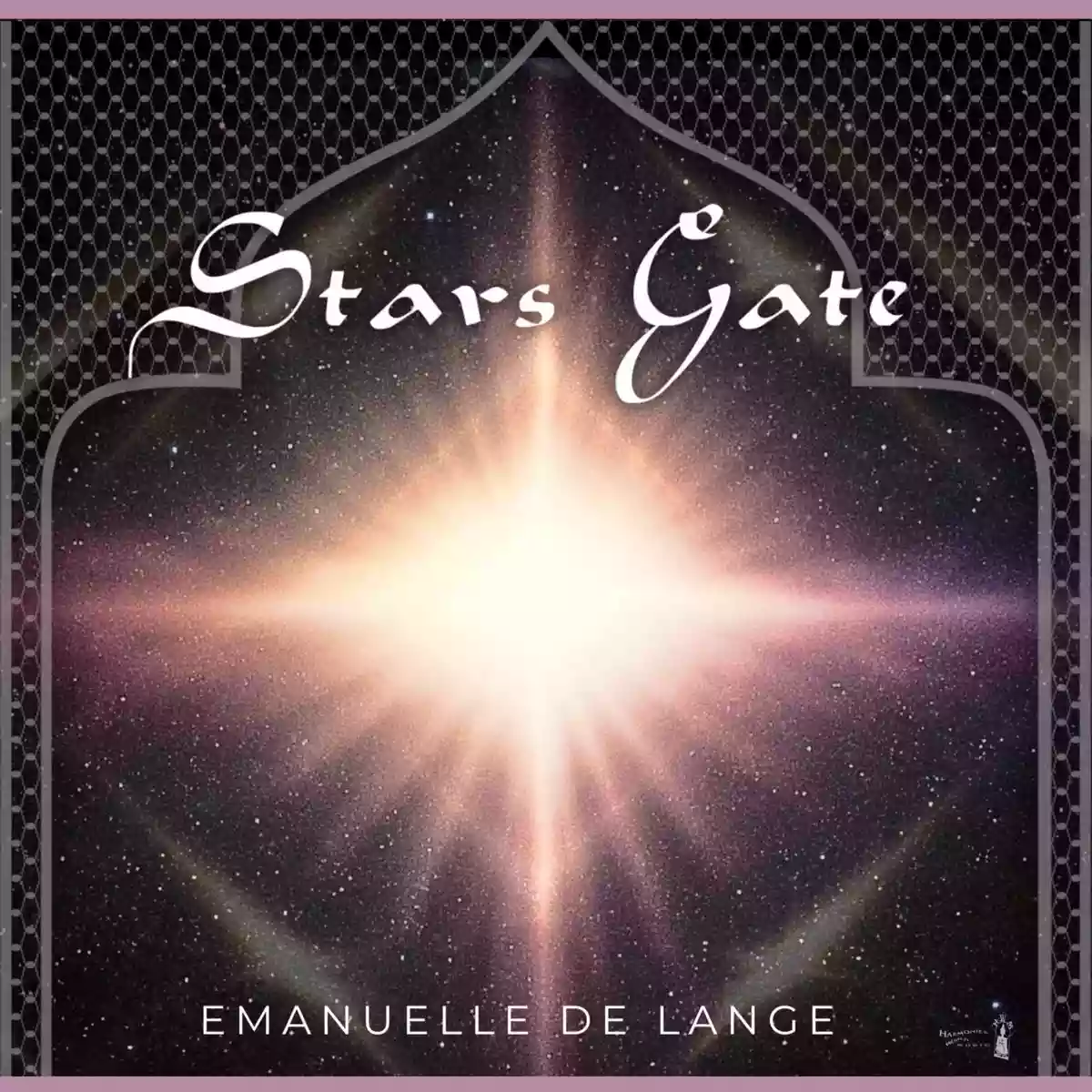
Emanuelle De Lange releases Stars Gate, a debut album that fits within the ambient, Space Music, New Age, and Electronic genres. This is a project created outside traditional record label circuits and, at least for now, little known to the general public. The artist’s emerging status and the limited distribution of the album place the work in a niche context, closer to self-production than to the professional channels of the music industry.
From a stylistic point of view, the album is characterized by the constant use of very deep drones, sounds crafted by De Lange himself on synthesizers, and a predominant use of reverb. The writing favors slow and extended structures, with gradual developments and micro-variations, privileging the continuity of the sound flow over the traditional song form.
A significant technical feature is the choice of instrumentation: De Lange uses iconic synthesizers that have marked the history of electronic music, including the Roland Juno-60, Roland D-50, Yamaha DX7, an E-mu Emulator II, and an Ensoniq SQ-80, along with the legendary Yamaha CS-80.
The influence behind De Lange’s album stems from "Novus Magnificat" by Constance Demby, from which the title also draws further homage. This inspiration is reflected in the atmospheric setting of the tracks, the use of broad harmonies, and the deployment of layered sonic textures. De Lange frequently listens to Demby’s albums, who stands as a constant point of reference for him; his admiration for her becomes a genuine guide, both musically and personally. The influence of Demby’s album is particularly felt in the track "THE STARS GATE PT.I", where De Lange draws inspiration from the second suite of Novus Magnificat.
Also particularly striking is the bonus track "Celestial Odyssey", released after Stars Gate in 2025 as an unreleased piece. This track is highly electronic, spacey, and experimental, culminating in a true outburst or celestial explosion towards the end of the album, with a touch of symphonic music.
An important element for contextualizing the project is the fact that the album was recorded in complete autonomy when the artist was only 18 years old, without any real studio recording experience. This is reflected in a generally clean but not always homogeneous production, with some mixing and frequency balancing choices that could be improved. At the same time, considering the completely self-taught background and limited resources, the overall result appears credible and promising.
Overall, Stars Gate is an honest and coherent debut, showing a clear aesthetic direction but also evident room for growth, especially in terms of compositional variety and the definition of a more recognizable personal voice. While it is a little-known album made by an emerging artist, the work suggests an interesting potential that could develop into a more mature and distinctive style in future projects.
Loading comments slowly
Summary by Bot
The review evaluates Emanuelle De Lange's album 'Stars Gate', awarding it a strong 4 out of 5. The reviewer discusses the album's highlights and overall sound. The analysis covers its aesthetic, creativity, and reception. The article gives readers insight into what to expect from the artist. The tone is thoughtful and appreciative.
Emanuelle De Lange
Emanuelle De Lange is an emerging, self-producing electronic artist whose debut album Stars Gate explores ambient/space music/new age soundscapes built from deep drones, heavy reverb, and slow-evolving structures.01 Reviews
