 •
Rating:
•
Rating:
THE REVIEW
The persistent punctuality with which - while many seasoned gentlemen of light music still manage to savor melodic delights, endlessly postponing their swan song - some seasoned musicians hasten, through artistic thuds, to refute the saying "an old hen makes good broth" is surprising. Thus - still lulled by the smoky, scotch-infused voice of dear old Van or enchanted by the ever more subtly communicative James Taylor - little surprise is evoked by the inevitable appointment with the cunning hues of Sir Reginald Wright, aka Elton John. Reduced now to a more or less aware puppet of show biz, he hasn't produced anything worthy of his resounding name since 1992 - the year when the decent "The One" gave birth by cesarean section to the greatest piece in our artist's repertoire in five decades, "The North".
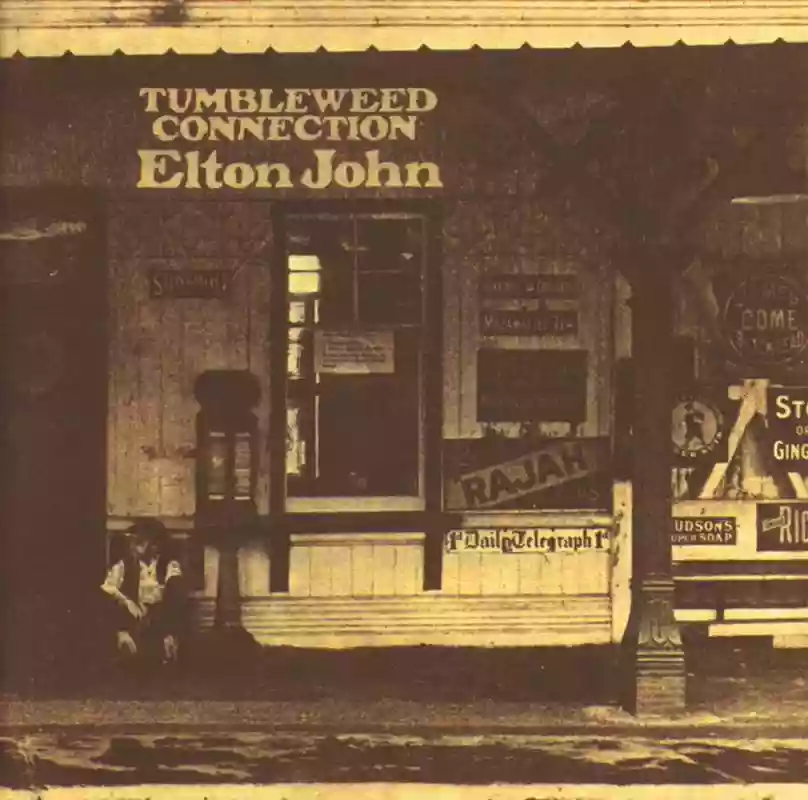
The story is nauseatingly familiar: from the horrific and unjustifiable experiment of "Victim Of Love" (1979) onwards, the baronet struggled - alternating indecorous or useless works with some barely adequate ones - to revive the magic that, in the short span between 1970 and 1973 (some say 1975), managed to string together imperishable gems such as "Tumbleweed Connection", "Madman Across The Water", "Honky Chateau", "Don't Shoot Me", and the double "Goodbye Yellow Brick Road". Supported by the eternal box office success of pieces like "Rocket Man", "Candle In The Wind", "Daniel", and a thousand others - the memory of this excellent songwriting risks failing to honor the genius inherent in the construction of the works themselves, which appear mostly (at least to the lay audience) as mere containers of exquisite hits. The issue becomes thorny where these hits are scarce or entirely absent: such is the case of the progenitor of the glorious lineage, the extraordinary visual-literary treatise of "Tumbleweed Connection" (1971) - which even 35 years after its appearance still elicits a poignant ovation.
This intense and rich reinterpretation of the western epic sees Bernie Taupin's lyricism and Elton's melodic inventions reach a degree of fusion so effective that it leaves one astounded with each listen. Put aside the sugared pop chart-toppers like "Sacrifice" or "Word In Spanish" in favor of embracing without reservations the irresistible rock-blues of "Ballad Of A Well-Known Gun" and "Son Of Your Father", the sublime gospel-pop experiment in "My Father's Gun", or the west-coast delight of "Love Song" (sung and signed by Lesley Duncan). Allow yourself a break, before confronting the terrifying melodic completeness of "Where To Now St. Peter?", the disarming singability of "Country Comfort" (admirably reinterpreted the same year by Rod Stewart, in "Gasoline Alley"), and the emotional crack of "Talking Old Soldiers". Let the poignant song of "Amoreena" flow through your veins and the restless piano of the extraordinary boogie-rock in the concluding "Burn Down The Mission". And if all this is still not enough to make you dizzy, the sweet orchestra led by Paul Buckmaster is ready to accompany Karl Jenkins' oboe in announcing those three minutes of unparalleled and total perfection known as "Come Down In Time" - the absolute pinnacle of melodic inspiration that, at least in these grooves, knows no age.
Loading comments slowly
Summary by Bot
This review praises Elton John's 1971 album Tumbleweed Connection as a timeless and richly crafted western-themed masterpiece. It highlights the exceptional partnership with Bernie Taupin and the album's diverse musical styles ranging from rock-blues to gospel-pop. The review contrasts this peak period with later, less inspired works, underscoring the album's enduring artistic fusion and emotional impact. It calls out specific standout tracks and the orchestral arrangements that elevate the record.Tracklist Lyrics
Elton John
Reginald Kenneth Dwight, known as Elton John, is an English singer, pianist and composer who rose to prominence in the late 1960s and early 1970s. Longtime collaborator Bernie Taupin provided lyrics for much of his work. He is best known for piano-driven pop/rock songs and landmark 1970s albums; he was knighted and has had a prolific recording and performing career.54 Reviews
Other reviews
By Giuseppe13
"My Father’s Gun is truly the perfection of music, at least that of this genre, of those years."
"Tumbleweed Connection is destined to remain as the epitaph of a finished, dead music. But you only die once, and this is forever."
