
 •
Rating:
•
Rating:
THE REVIEW
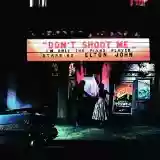
In 1973, R.K. Dwight is a highly established rockstar, already boasting a series of contemporary pop anthology albums, along with memorable songs like "Your Song," "Tiny Dancer," and "Rocket Man." However, as the saying goes, appetite comes with eating, and for Elton John of those times, churning out hits and albums continuously seems almost like an extraordinary routine. Thus, just eight months after "Honky Chateau," it is already the turn of "Don't Shoot Me, I'm Only The Piano Player," the living demonstration of what a pop genius can conceive at the peak of his artistic splendor.
"Don't Shoot Me..." is an incredibly inspired album which, despite a "global" personality less pronounced than "Elton John" or "Madman Across The Water," showcases a flair and creative exuberance expressed in a range of heterogeneous sounds that coexist in perfect harmony, from the bubbly choral pop rock of "Teacher I Need You" to the sour & sweet atmospheres of the ballad "High Flying Bird," up to the more complex and orchestrated tracks like the epic and smoky blues groove of the masterpiece "Have Mercy On The Criminal" and the subtle and refined elegance of "Blues For My Baby And Me," which unfolds into a laid-back and almost liberating chorus. Not to mention some lesser-known gems like the ironic swing of "I'm Gonna Be A Teenage Idol" and especially the stunning country-western "Texan Love Song," a bitter and disenchanted protest song that undoubtedly stands as one of the album's high-impact points, alongside the two smash hits that have made "Don't Shoot Me..." an international success. Of course, I am talking about "Crocodile Rock," a delightful and compelling parody of rock n' roll with its unforgettable Fanfisa organ riff and one of the Pinner Pianist's greatest masterpieces, the velvety and melancholic "Daniel," which opens the album in the best possible way.
"Don't Shoot Me, I'm Only The Piano Player" is undoubtedly an album strongly influenced both musically and lyrically (particularly the lyrics of "Daniel" and "Texan Love Song") by the historical period in which it was conceived, but this does not in the least affect its absolute value and brilliance: it doesn’t quite reach 5 stars only because of a couple of transitional episodes, "Elderberry Wine" and "Midnight Creeper," but this 1973 LP is volcanic and eclectic just like its author in those years, who has incontrovertibly been consigned to the history of contemporary music precisely thanks to albums like this one.
Loading comments slowly
Summary by Bot
This review praises Elton John's 1973 album 'Don't Shoot Me, I'm Only The Piano Player' as a creative and eclectic masterpiece. It highlights the variety of musical styles from catchy pop to blues and country influences. While acknowledging minor weaker tracks, the album is celebrated for its artistic flair and historical significance. Hits like 'Crocodile Rock' and 'Daniel' are noted as standout songs.Tracklist Lyrics Videos
Elton John
Reginald Kenneth Dwight, known as Elton John, is an English singer, pianist and composer who rose to prominence in the late 1960s and early 1970s. Longtime collaborator Bernie Taupin provided lyrics for much of his work. He is best known for piano-driven pop/rock songs and landmark 1970s albums; he was knighted and has had a prolific recording and performing career.54 Reviews
