
 •
Rating:
•
Rating:
THE REVIEW
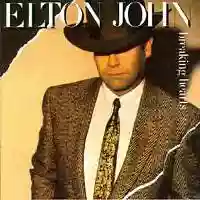
Much more emblematic and significant than its artistic value and expressed content might suggest: "Breaking Hearts" from 1984, the eighteenth studio album by Reginald Kenneth Dwight. In the four preceding records, our artist found relative artistic tranquility and creative prosperity, settling into well-made pop and managing to compose little masterpieces unfortunately little recognized like "Sartorial Eloquence," "Just Like Belgium," "All Quiet On The Western Front," or "One More Arrow," to name a few. In the next two, he would crash terribly; crushed by his vices and incapable of recovering the style and inspiration that had made him unique, with "Nikita" as the only noteworthy song. The tormented "Breaking Hearts," which sits right in between these two periods, is the ultimate transition album in EJ's career: 10 songs that follow one another without an apparent logical thread, divided between the utter inconsistency and futility and the innate talent of a pop music genius still capable of hitting the mark before the darkest crisis of his artistic journey.
Certainly, the first approach with "Breaking Hearts" is one that strikes, but not positively: "Restless" and "Who Wears These Shoes," faded easy-rock with a funky aftertaste with neither head nor tail, plastic songs, in short, that fail to convey anything pleasant, and even more energetic pieces like "Slow Down Georgie," "Lil' Frigerator," and "Did He Shoot Her?" don't fully convince, resulting little more than a glossy, anonymous, and lacking in bite copy of EJ's more rock side, which in the previous decade managed to express itself at much higher levels. But "Breaking Hearts," as I already said, isn't just the album of the poverty and lighthearted melancholy of the above-mentioned songs; Elton John is still capable of inventing something original and enjoyable, like the indolent, sunny, and subtly ironic calypso swing of "Passengers," for which a fun music video was shot, and the closing "Sad Songs (Says So Much)," the only example in the entire album where backing vocals and synthesizers manage to complement a truly catchy and enjoyable song. Nothing exceptional but definitely above the average of this controversial album, and it's especially in the ballads, where he doesn't attempt to sound forcibly cheerful and à la page, that our artist manages to give his best, as shown by the soft and vaguely melodramatic title track "Breaking Hearts (Ain't What It Used To Be)" and especially "In Neon," an elegant and pleasant ballad with a bittersweet, self-ironic, and distinctly autobiographical flavor, in which EJ allows himself the luxury of quoting himself by reviving the opening of "Roy Rogers"; thus reaching excellent levels that wouldn't be touched again in the subsequent four years, firing his last arrows before the collapse.
And so "Breaking Hearts," this album that doesn't even rank among the top twenty composed by Elton John, lacking a precise identity and half to be judged without appeal, instead reveals itself as a unique episode in our artist's discography, who had never shown himself so Dr. Jekyll and Mr. Hyde in a single album. But, after all, this is the ultimate transition album, the album of an artist "on the razor's edge," on the brink of the abyss, and this peculiarity is what gives "Breaking Hearts" a value and a reason to be remembered, albeit more in historical than musical and artistic terms.
Loading comments slowly
Summary by Bot
Breaking Hearts is Elton John's 1984 eighteenth studio album, marking a critical transition in his career. The album showcases a mix of inconsistent and uninspired tracks alongside moments of genuine creativity. Ballads like the title track and 'In Neon' stand out for their emotional depth. Overall, the album holds more historical significance as it captures John on the brink of an artistic crisis.Tracklist Lyrics Videos
Elton John
Reginald Kenneth Dwight, known as Elton John, is an English singer, pianist and composer who rose to prominence in the late 1960s and early 1970s. Longtime collaborator Bernie Taupin provided lyrics for much of his work. He is best known for piano-driven pop/rock songs and landmark 1970s albums; he was knighted and has had a prolific recording and performing career.54 Reviews
