 •
Rating:
•
Rating: THE REVIEW
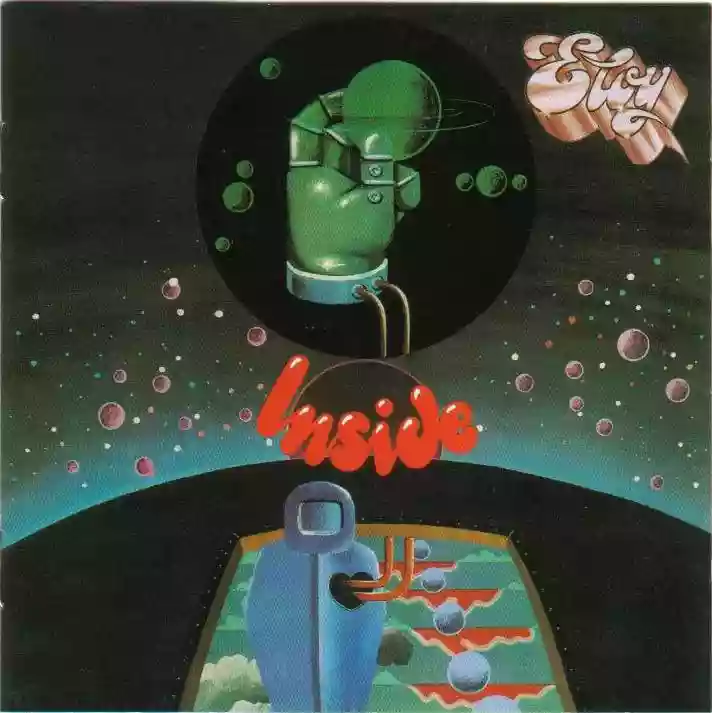
From the hard rock of their eponymous debut, Eloy quickly moved towards a progressive space-rock with the lineup redesigned by the founder, guitarist Frank Bornemann. Recorded in 1972, "Inside" achieved decent commercial success, possibly due to the sound that lay between Hawkwind and Pink Floyd.
Fundamentally, "Inside" is built around a winning combination of melody, symphonic prog, and long jams. The musical pattern, devoid of additional horns or extra percussion, is the classic rock setup. The song structures aren't as complex as, for example, in Yes, but the album boasts memorable melodies, original arrangements, and significant lyrics; essentially, the tracks highlight consecutive mesmeric riffs of bass and drums, while guitars and organ alternately improvise the sound direction and rhythmic support.
The album has 4 tracks and starts with the 17-minute epic and dark "Land of no body", driven by the experiments and improvisations of Wieczorke's keyboards, plunging into grooving.
The title track "Inside" has a notable sinister riff, running throughout the piece before leaving us with an atmospheric finale.
"Future City" is characterized by pleasant percussive twists and constant guitar work throughout the jam, which then flows into the concluding "Up and Down", a classic combination of Eloy's elements, made of languid spatial detonations, rich organ string textures, and a sublime, slow merging of jazz and blues in the background.
The two added tracks on the 2000 reissue are short singles from '73, "Daybreak" (epic hymn for guitar and organ, with brief vocal choruses) and "On the road" (hypnotic crescendo keyboard backdrop).
Bornemann's guitar, fluid and never redundant, is versatile in supporting the textures and embellishing the solos, but often the play is directed by keyboardist Wieczorke, who, with a classy performance, brings out the best from his Hammond, sometimes powerful and furious, sometimes light and ethereal, often pushing it to the limit in the manner of Keith Emerson; the peak moments are reached when supported by Bornemann’s guitar, especially in the intertwining sections.
Excellent work by the rhythm section of Stocker and Randow, with the bass vigorously guiding the jams and the drums precise and warm, never over the top.
Additionally, in "Inside" Bornemann gives his first vocal performance, and unfortunately, we notice it: he was older, and despite the support of studio technicians, his vocal lines are bare and unsophisticated; definitely, the choice to sing in English, despite the diction and timbre, was unfortunate, especially considering that the meaning of the lyrics, being quite important, should be more easily grasped.
Thus, the uninspired voice is the only downside of this album, which could indeed be considered a masterpiece, as even after 35 years it still flaunts an admirable freshness and a contagious energy.
Loading comments slowly
Summary by Bot
Eloy's 1972 album Inside marks a shift to progressive space-rock, blending melodic, symphonic prog and extended jams. The album's four main tracks showcase strong bass and drum foundations, versatile guitar and keyboard interplay, and memorable riffs. Frank Bornemann's vocal debut is the album's weak point, but the overall energy and freshness remain remarkable even decades later. Two bonus tracks from 1973 add bonus listening variety in the reissue.Tracklist Lyrics Videos
Eloy
Eloy are a German progressive rock band formed in 1969 in Hanover by guitarist Frank Bornemann. Known for symphonic and space-rock concept albums, they released landmark records such as Dawn, Ocean, and Planets and have remained active across decades.05 Reviews
