
 •
Rating:
•
Rating:
THE REVIEW
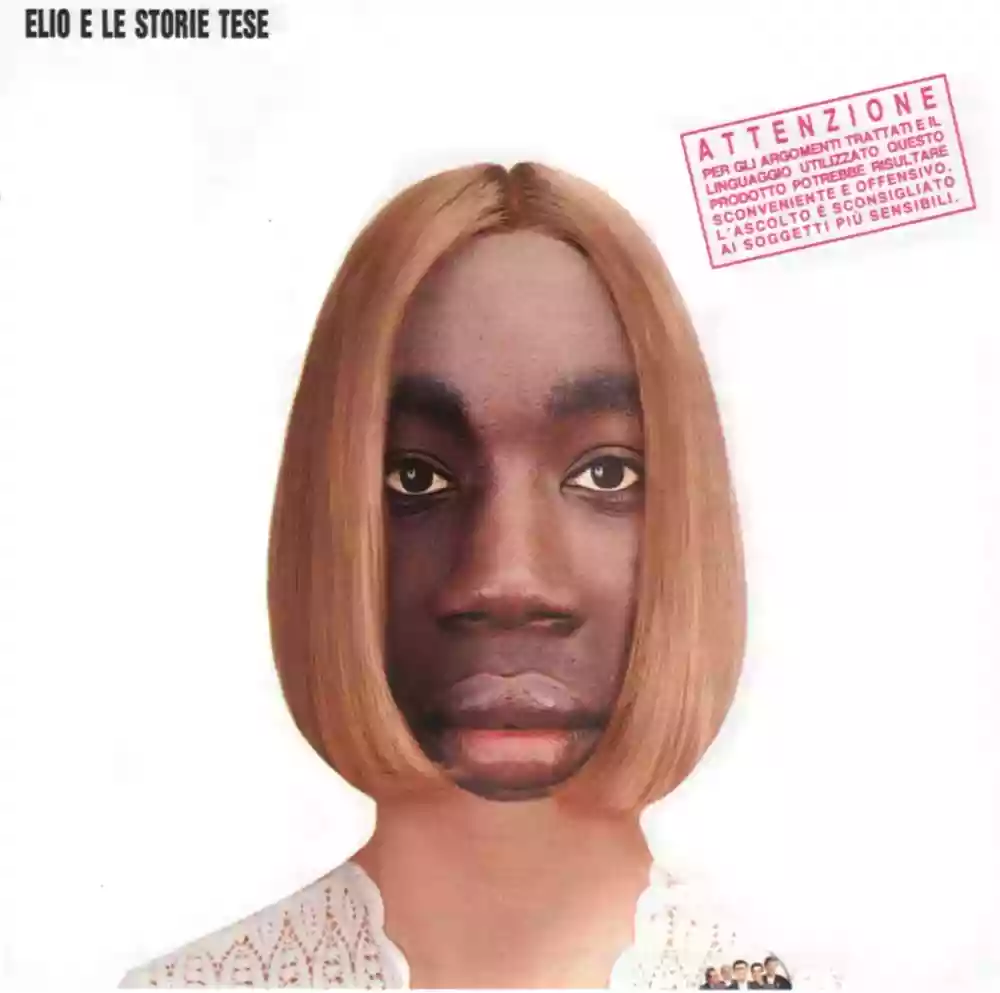
I will not write a review to convince anyone of the value of this band and especially of their first two albums; I don’t think it's necessary. I'm writing it to highlight some aspects, perhaps not immediately evident, that push this album higher and higher among the greatest things ever done in Italian music.
The 1992 album, Italyan, Rum Casusu Çikti, is a classic that I have listened to countless times. But I want to focus on the previous album, the first one: a bit more challenging, focused on difficult and even repulsive themes, with fewer progressive tracks and fewer songs known to the mainstream audience. Maybe it doesn't reach the levels of the next one, but in some ways, it's even more courageous and radical in the subjects it tackles. Let's say there was a shift towards nonetheless interesting, but less heated and uncomfortable themes. Perhaps that's why Elio Samaga Hukapan Kariyana Turu could be considered the greatest album of Elii.
I would like to delve deeper into the lyrics of these songs, not only in the thematic choices but especially in their stylistic beauty, their brilliant structures, the meticulous use of words. These are very ambitious and challenging exercises in style (in the positive sense of the term). There is genuine genius in the words.
Each track has a double face: the scandalous topics are never really the fundamental issues of the lyrics but only starting points to explore the semantics of words and articulate bizarre verbal structures.
Only a novice might think that John Holmes merely celebrates a porn actor: it's instead a complex, deliberately redundant game of assonances and consonances. One could identify lexical sequences like: pene (member) – bene – pene (sufferings) – pene (member) – pone – pane. You can see that the stylistic game of constructing a meaningful text starting from a sequence of resonant and homonymous words is far more interesting and fun than the simple story of a porn star. But that is precisely the problem with Elio: certain subtleties are too elevated to be understood, and only the macro-topics are received, stripped of the nuances that elevate them. Another sequence is: moto (vehicle) – moto (activity) – moto (vehicle) – mito – muto. Or again: su di ciò – sudicio.
The conceptual core of the album is lexical: words, their use, rhetoric, taboos, euphemisms, metaphorical language. Or simpler onomatopoeic issues like that of the refrain of Abitudinario. The verse instead helps to break down the barrier of prevailing good taste in Italy, to tell the daily lives of ordinary people. Farts in the tub and in bed, nose boogers spread around, and so on. Even more radical Silos, which like Cassonetto differenziato, amplifies a scandalous theme by proposing tragicomic solutions. In the first case, all the substances our body emits, after being carefully listed, are thought of as a possible solution to world hunger. Enriched by another game of false homonymy: «voglio un silos – sì lo voglio …» which emphasizes the rhythm of the refrain.
Carro constructs a surreal narrative based on many clichés, but fraying and mixing them together. The dual result is the unmasking of the pettiness of daily ideas and at the same time a bizarre story that foreshadows the subsequent ones. The stylistic work is remarkable: «Enters now a company whose spokesperson reminds me to give, a hard blow to the circle and the barrel full of grapes and the drunk wife but between saying and doing there's "and the" and a washer does not make spring …». The words are “played” as well as, or even better than, the instruments.
Cassonetto differenziato is a gigantic masterpiece. The ironic and estranged point of view on such a delicate topic allows for the construction of a comedic narrative that nonetheless does not dull the corrosive critique, instead it amplifies it. Words that flow magnificently, as in the liveliest of songs, but deliver stinging rebukes: «The actual fruit is found in the orchard, the seafood in the sea, the fruits of sin are found in the sea, in the orchard, inside the river in the pond, in the hedge under the house, or more likely in a bag, in the dumpster». The segmentation of concepts, the lexical games, the dark comedy, the estranged point of view, on a musically brilliant basis, make it a striking piece. You laugh uproariously but with a sanguine aftertaste.
I won't linger too much on the legendary Cara ti amo; rather, I reflect on Piattaforma. As with John Holmes, it would be naive to stop at the macro topic. Here too there's fine stylistic and lexical work. It's not just a great metaphor of a sexual relationship with a minor: there's an exploration of the possibilities of metaphorical language, moving from more trivial images to decidedly less so. «Listen to how the bell pepper screams» is a beautiful synesthesia. Also notable is «I shudder imagining you between the catheti». Others are scattered here and there, alternating with the easier ones. But the ending serves as a warning: the surprise in discovering it is Enzo's son is enlightening: often taking certain truths/suspicions for granted is not wise. Reaching for the truth is not so trivial, especially in the private sphere of others.
Cateto follows the highly fertile vein of absurd narratives, also in this case with remarkable stylistic cues. The most beautiful is the use of the term «that whore» at the moment of maximum pathos, within a story that speaks seriously and with a romantic tone of a completely absurd event. A stratagem that will be used many more times. The final comment «And the moral of this story is that shit isn’t as ugly as it’s painted» makes the effort to give space and dignity to that semantic sphere even more evident.
Some spoken tracks are brilliant, for example those in which the album itself is discussed, with friends teasing each other. Others could have been avoided because they're not so funny or otherwise a bit dull. Musically, we're not yet at the stellar levels of Essere donna oggi, Il vitello dai piedi di balsa, or La vendetta del Fantasma Formaggino, but that margin is more than compensated by the more uncomfortable and repulsive topics, which are incredibly ennobled.
Loading comments slowly
Summary by Bot
This review explores the groundbreaking qualities of Elio e le Storie Tese’s debut album 'Elio samaga hukapan kariyana turu.' It highlights the album's courageous tackling of difficult themes, sophisticated wordplay, and exceptional lyrical artistry. The review praises the album’s blend of dark humor and musical creativity, positioning it as one of the greatest works in Italian music. Despite some less engaging spoken tracks, the album’s depth and innovation fully compensate.Tracklist Lyrics Videos
02 John Holmes (una vita per il cinema) (03:26)
04 Nubi di ieri sul nostro domani odierno (Abitudinario) (04:13)
05 According the Memphis Horns (00:27)
07 Una gita a... (00:10)
08 The fabulous '68s according to Tony Martucci (00:41)
12 Introducing the real Parakramabahu (00:25)
13 Parakramabahu Rajatuma (00:48)
15 Suspense! Il signor Brando meets Marlon Brando (00:17)
16 Introducing the Cara ti amo (02:33)
17 Cara ti amo (risvolti psicologici nei rapporti fra giovani uomini e giovani donne) (04:22)
18 Messaggio satanico (00:38)
20 Spuma da 100 (00:40)
21 John Holmes (Shidzu version) (03:38)
22 Ang ang ang (00:21)
Elio e le Storie Tese
Italian satirical/prog-pop rock group formed in Milan and led by Stefano "Elio" Belisari, known for genre-blending arrangements, virtuosic musicianship and ironic, satirical lyrics; prominent during the 1990s (including Sanremo 1996) and active through a farewell period in 2018.42 Reviews
Other reviews
By diamond_darrell
What many unfortunately consider a group of buffoons and jesters... is perhaps one of the most important entities that our music has ever known.
Absolutely a must-listen and re-listen.
