 •
Rating:
•
Rating:
THE REVIEW
“…I looked up, half hoping to see the thing from my dream, but all I saw was a sky full of stars”. (M. Everett)
Suspended between the sky and the earth, between the desire to abandon a time and space with which a tormented soul like him can only collide, and the choice to resist the terror that surrounds him, Eels, known officially as Mark Everett, is the last descendant of a lineage of songwriters who, from Nick Drake to Daniel Johnston, passing through Beck, Lisa Germano, Smog, and many others, have never feared to express their insecurities and to tell their reality as losers.
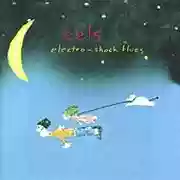
Written following the death of his mother and sister, 'Electro-Shock Blues' is essentially a concept on the notion of loss, of absence, and on the startling surprises that that treacherous and mocking enemy that is life often reserves for us; in a sound that combines folk with the most unrestrained experimentation, imbued with anguish and nervousness, Eels summarizes and sublimates the achievements of an entire generation of losers.
His style is one of exciting contrasts, which receives the water of life from the juxtaposition of harsh and furrowed words of one who will never see the source of their pain dry up, and the often cheerful rhythms, as well as the simple and innocent melodies and his humbly neutral and dejected way of humming.
The introductory “Elizabeth On The Bathroom Floor” is the chilling account of a lost soul walking on the brink of depression, until falling into the void (“My name’s Elizabeth, my life is piss and shit”). A vaguely funky rhythm further stirs the terrifying realism of “Going To Your Funeral” (“…and feeling I could scream”), while a spasmodic tension, suggested by a bloodless and dissonant arrangement, prevents calmly humming the catchy chorus of “Cancer For The Cure” (“The kids are digging up a brand new hole/ where to put the deadbeat mom”).
The disturbing “Hospital food” and “The Medication Is Wearing Off” make one think of the mocking smile of a madman who knows a horrible truth, but who still holds in his hands a dream struggling to die. The lovely “3 Speed”, sung in complete solitude, expresses the bewilderment of someone unable to find meaning in their suffering (“Why won’t you just tell me what’s going on”), while the mournful and hesitant “Electro-Shock Blues” reflects the dismay of one forced to live with the ghost of their madness. When he surrounds himself with shadows, to sing the angelic melody of “Dead Of Winter”, it's like hearing the lament of someone who has chosen to lock themselves permanently in their shell of pain. These last three tracks are not so far from the more traditional folk, but an eerie and lugubrious atmosphere carries them miles away from so much pale contemporary songwriting, incapable of giving voice to the troubles of the heart.
Eels gets lost in the labyrinth of his neuroses: the pop chorus of “Last Stop: This Town” fails to bring to the album the bit of vitality the listener hopes to encounter sooner or later. Instead, it ends up increasing the disorientation (“You’re dead, but the world keeps spinning”). Such tension can only flow into a key track like “Climbing up to the moon”, where his disenchanted tone sings a heartbreaking lullaby rocked by continuous melodic openings, meanwhile transforming his tragedy into a concrete and palpable drama, devoid of a truly feasible solution (“Got my foot on the ladder and I’m climbing up to the moon”).
The album closes with "P.S. You Rock My World”, surprisingly open to hope, and the message is clear: pain does not only generate pain, and from it, as horrific as it may be, one can and must always be reborn (“Maybe it’s time to live”). But after so many small and big wounds, true catharsis is impossible.
Loading comments slowly
Summary by Bot
Electro-Shock Blues by Eels is a deeply personal album born from tragedy, exploring themes of loss, depression, and catharsis. Mark Everett's blend of folk and experimental sounds evokes a raw and honest portrayal of pain. The album balances stark lyrics with haunting melodies and moments of fragile hope. It stands out as a powerful concept album that voices the struggles of the heart with authenticity and emotional depth.Tracklist Lyrics Videos
Eels
Eels is an American rock project led by singer-songwriter Mark Oliver Everett (often credited as E or Mr. E). Reviews emphasize confessional, autobiographical writing, shifting between bleak subject matter and flashes of humor and hope, across indie/alternative rock that often leans into folk, blues, and pop forms.22 Reviews
Other reviews
By ScaRy1
"Look at all the people with the flowers in their hands / they put the flowers on the box / that’s holding all the sand / that was once / that was once you."
"A suicide album then? No. Rather, a convalescence album, to listen to while curled up in a corner licking your wounds."
