 •
Rating:
•
Rating:
THE REVIEW
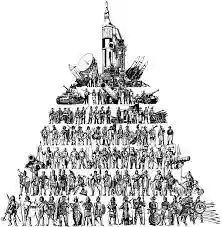
THE TOWER OF BABEL 6/10
I know I’m about to “disappoint” Withor, and I hope I can be forgiven. I recently listened again to this Bennato album, which I had neglected for quite some time, squeezed as it is between three indisputable masterpieces: “I buoni e i cattivi,” 1974, and, subsequent to the album under review, “Burattino senza fili,” 1976 (then there will also be “Sono solo canzonette,” 1980, which perhaps is the one I like best of all). On this site there was only one review, dating back to 2006, exactly twenty years ago, and very enthusiastic. Well, mine, as you may have guessed, is much less so. To me, “La torre di Babele,” 1976, placed among those albums, really seems like a minor work (even if still decent — Bennato in the ‘70s never made truly bad records), although it does contain what I consider Bennato’s most beautiful song, “Venderò.” We’ll get to that later on.
Of course, the concept at the basis of the album possibly feels even more modern today than it did back then (the man who “bends” technology, his own creation, to the purpose of producing wars, conflicts, and bloodshed) and some passages are practically flawless (especially musically, for instance “Viva la guerra,” which opens side B), but honestly, that’s to be expected, considering the names of the musicians involved: Tony Esposito; Eugenio Bennato; Gigi De Rienzo; Lucio Fabbri. In short, let’s set aside the musical aspect, which is truly remarkable. And yet, something is missing: the bite, the harshness typical of Bennato in those years here seems a bit wasted, sometimes almost lacking conviction (of course it’s worth repeating these are just personal opinions, I’m not among those people who believe that an artist, no matter how great, has produced only masterpieces; even the best have had slumps). But perhaps the real problem with “La torre di Babele” is that it has aged very badly, like all those works (musical, cinematographic, pictorial, photographic) that talk almost exclusively about the present — that is, the photograph of a precise historical moment, inevitably destined to wear out over time. Take “Franz è il mio nome”: the conditions of countries under real socialism are a recurring theme for Bennato (see, in the nineties, after the fall of the Berlin Wall, “Tutto sbagliato, baby”) and here he’s telling the story of a country in such a state: Germany. And Berlin, divided in two by the Wall. The criticism of East Berlin is clear, but also of the West (the West is not the land of gold), with a prophetic line (one that is indeed still very relevant): “Lì tutto è permesso/lì tutto si può comprare/e ti conviene spendere senza pensare/e se non avrai più
Loading comments slowly
Summary by Bot
The review offers a critical perspective on Bennato's 'La torre di Babele.' It questions the album's reputation and musical value. The author seems unimpressed with the overall experience. Listeners looking for strong songwriting and impact may be left wanting. The review provides specific reasons for its low rating.
Edoardo Bennato
Edoardo Bennato (Naples, 1946) is an Italian singer‑songwriter known for blending rock and blues with incisive satire and fairy‑tale concept albums. A charismatic live performer and early one‑man‑band on Italy’s big stages, he co‑wrote and performed the 1990 World Cup song “Un’estate italiana” with Gianna Nannini.43 Reviews
Other reviews
By Pibroch
"Franz shouts with his shrill voice - 'I sell freedom.'"
"La Torre Di Babele first catches the eye with its original graphic design, straddling the past and the future."
