
 •
Rating:
•
Rating:
THE REVIEW
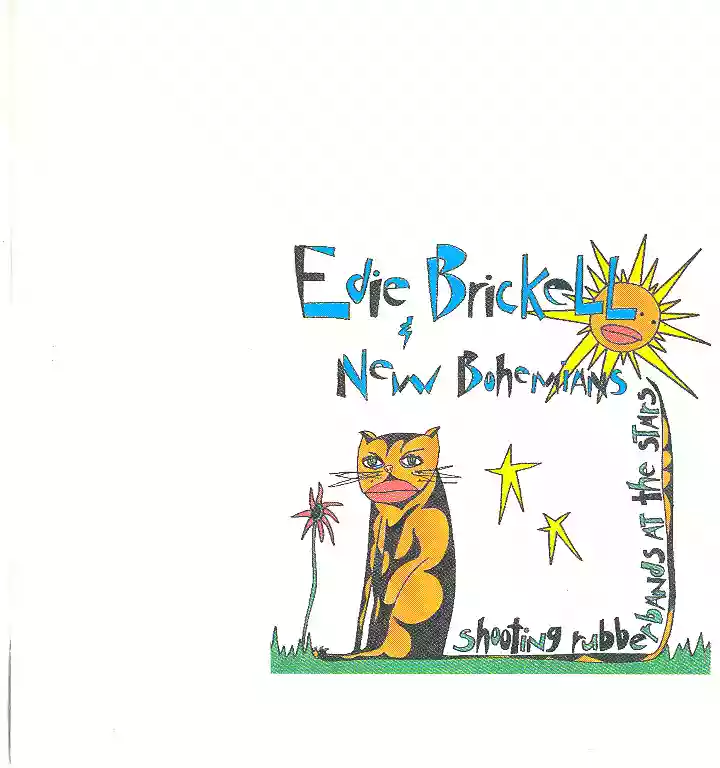
Listening to it again, I realize that much of today's good folk-pop and indie music owes (consciously or not) something to the intimate, distracted, and vaguely frayed atmospheres of this small, great folk-pop album.
Edie, a shy 23-year-old student from Dallas, released in 1989 through Geffen Records an album that would become a worldwide success thanks to a mid-tempo single with a swaying rhythm and a sad but sincere ballad about friendship with an arpeggio that's nothing short of perfect. "Shooting rubberbands at the stars" is a jewel now unjustly hidden by the sands of time; rediscover the non-trivial preciousness in the arrangements and guitar solos of "What I Am" while she asks us not to let her sink into her own thoughts. "Little Miss S." is a typical character in the (allow me the term) "Brickellian" world; we imagine her on a terribly sunny day, sitting on the small pier of a calm Midwest stream, her gaze lost in (not?) assessing her misfortunes while Edie's voice and the Bohemians' melodies seem to fraternally caress her head with sweet and reassuring notes. The nocturnal "Air Of December" is the track that made me fall in love with the album definitively... only today do I realize that the electronic backdrop reminded me of the best neo-romantic ballads of early Duran Duran, then Edie's slightly brash voice would almost theatrically break the suspended static with the urgency of a loving memory. Another excellent mid-tempo is "The Wheel" whose lyrics feature the curly folksinger trying to reassure us of our worth and supposed uniqueness. More carefree, perhaps even more Brickellian, is the joyful "Love Like We Do" where a watery guitar and drums take over the subdued atmosphere while she rhymes about the happiness of life as a couple. Then "Circle" is a small, sad masterpiece of acoustic pop on the value of solitude and the falsehood of sometimes too noisy group friendships.
The frenetic "Beat The Time" introduces us to the B-side with its somewhat programmatic invitation: "close the door and open your mind". "She" stigmatizes a girl too in love with herself to see herself really, except in the distorted, superficial, and glossy mirror of women's magazines and cold material values. Another small painting of everyday moments is "Nothing" where she tries to overcome the rubber wall of a "nothing" said under the breath, with her back turned and head down. I haven't emphasized enough the value of the New Bohemians (in albums without them she could not replicate the fresh folk naiveté, overly sophisticating the sound): they are excellent in "Now" where functional and raw acoustic guitar textures intersect, spacious keyboards (whose timbre would be considered trendy today, therefore dated), and a bass with a naked and rounded sound. "Keep coming back" is an up-tempo folk-rock cry about the end of a love with wounds still open, in fact, just inflicted: "desperately tryin' to get off my mind but ya keep comin' back!!!". The ghost-track "I Do" is the last jewel of just over a minute where the ecstatic musical intuition of this tiny pop miniature perfectly marries the quest for feeling present in the lyrics: a kind of "Sunday Morning" in a red pajama to sing while rubbing your eyes...
Ugly album? Beautiful? Trivial perhaps??
The heart knows no reasons...
Loading comments slowly
Summary by Bot
This review revisits Edie Brickell and The New Bohemians' 1989 album, praising its intimate, emotional folk-pop sound and lasting influence on indie music. Highlights include the hit single 'What I Am' and other standout tracks like 'Air of December' and 'Circle.' The reviewer admires the intricate arrangements and sincere lyrics, calling the album an unjustly overlooked gem.Tracklist Lyrics Videos
Edie Brickell & New Bohemians
Edie Brickell & New Bohemians are an American alternative/folk-rock band formed in Dallas in 1985. Led by singer-songwriter Edie Brickell, they broke through with the 1988 debut Shooting Rubberbands at the Stars and its hit single What I Am, followed by Ghost of a Dog (1990), a reunion album Stranger Things (2006), and later releases Rocket (2018) and Hunter and the Dog Star (2021).02 Reviews
