
 •
Rating:
•
Rating:
THE REVIEW
From an unknown band at their debut in the early '70s, by the end of the same decade, the Eagles were celebrated as a true American musical legend. A phenomenal success also due to a planned and orchestrated strategy with David Geffen first and Irvin Azoff later (certainly not newcomers).
Supporting them was a team of genuine advisors, the «Blue Jeans Machine», who curated their image: that of the old west, complete with Indian symbols, canyons, and cacti, to be clear, while special attention was particularly given to the covers of their records. This sensational response is evidenced by the greatest sales success in US recording history: 'Their Greatest Hits, 1971-1975' (the first album ever to receive a platinum disc, meaning 1 million copies sold, in the first week of release) sold in the United States even more than Michael Jackson's “Thriller” which holds the worldwide sales record (and to think that much of the material included in 'Hotel California' and 'The Long Run' is missing). However, this should not be misleading, because the Eagles are a genuine band made of talented musicians and grandiose singers who give their best both in solo and choral versions: with beautiful girls, tequila, whiskey, margaritas, and whatever else, inevitably by their side at parties where having fun was, of course, a must.
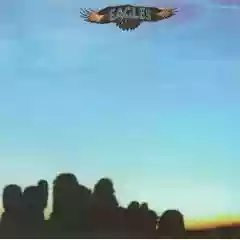
Glenn Frey (Detroit, Michigan, 1948), Don Henley (Gilmer, Texas, 1946), Bernie Leadon (Minneapolis, Minnesota, 1947), and Randy Meisner (Scottsbluff, Nebraska, 1946) meet in the «city of angels» during the recordings of Linda Rondstadt's eponymous album and decide to seriously try creating a musical project meant to express a mix of country, southern and bluegrass, folk and rock. Thus the Californian eagles are born (California and Los Angeles, in particular, is the operational base even though all come from different states) and at the starting line, we find four artists capable of composing, singing, and playing their respective instruments: Frey and Leadon on guitars, Henley on drums, and Meisner on bass. The debut album, the self-titled 'Eagles' (1972), recorded in London, is already a manifesto of the West Coast, much to the delight of Asylum (the same record company as Rondstad’s, indeed), the nascent recording creature of the aforementioned David Geffen, absolutely convinced of the quartet’s potential.
The opening track is the famous “Take It Easy”, the result of collaboration between a country-rock legend like Jackson Browne and Glenn Frey who signs with his voice (in typical country slang) the group's first career single, which immediately climbed to the top of the US charts. Don Henley subsequently showcases his warm and unmistakable voice, against the backdrop of tribal drums, in “Witchy Woman”: a piece that seems lifted from the soundtrack of a Sergio Leone-style western epic, with a dry, crescendo solo by Bernie Leadon. It is this last one, the emotional vocal execution in another great hit titled “Peaceful Easy Feeling” (another flagship) that highlights the fundamental falsetto contribution of a Randy Meisner in choral guise (which will be one of the hallmarks of this historic band), then capable of surprising in his personal vocal performance in the track “Take The Devil”. Another track where Meisner writes and sings excellently is “Tryin”: genuine rock 'n' roll that pairs with “Chug All Night” where Frey’s voice is simply legendary! Henley echoes him in “Nightingale” again written by Jackson Browne.
Leadon outdoes himself in a real example of country-rock such as “Early Bird” (complete with a banjo) and sings in the typical genre ballad titled “Train Leaves Here This Morning”. Written by Frey, “Most Of Us Are Sad”, finally, is sung by an impeccable Meisner.
The album has an excellent discographic response and enters the Top 40 of the USA chart: not bad for a band just making its debut and destined to become a legend, under the banner of the motto «Sex, Tequila & Rock ‘n’ Roll». Not to be missed.
Filippo Guzzardi
Loading comments slowly
Summary by Bot
The review celebrates The Eagles' self-titled debut album as a landmark in American country rock, highlighting the band's talented musicianship and vocal harmonies. It outlines their origins, distinctive West Coast style, and standout tracks like 'Take It Easy' and 'Witchy Woman.' Emphasizing the commercial success behind a well-planned image and strategy, the review positions the album as essential listening for fans of 1970s rock and country fusion.Tracklist Lyrics
Eagles
Eagles were an American rock band formed in Los Angeles in 1971, known for country-rock roots, polished West Coast rock, and prominent vocal harmonies. They achieved massive commercial success in the 1970s, broke up in 1980, and reunited in 1994, later releasing Long Road Out of Eden.16 Reviews
