
 •
Rating:
•
Rating:
THE REVIEW
Personal opinion. Too much has been said (sometimes inappropriately) and very little has been written on the occasion of the tenth anniversary of De André's passing. On that note, I wanted to create a brilliant page, but not being thoroughly familiar with the work of the Genoese singer-songwriter, I chose to step back in the hope that someone will do it in my place.
However, it is always the recurrence of another sad anniversary that pushes me to write about an artist equally dear to me, who managed to embellish surprising musical landscapes, sometimes in a sparkling way, sometimes with colors tinged with melancholy. I am referring to Dusty Springfield (1939-1999), an iconic figure in her homeland (English from London) with a distinctive timbre, who emerged during the British invasion (the same of the Beatles, to be clear) and, starting from the sixties, like the national Mina and Dalida, managed to transform complex scores, authored by the greatest names of the era, into accessible and broad pieces. In a word: High-level Pop.
Already at her debut, labeled as a screamer in "I Only Want To Be With You," Dusty stood out for her timbral characteristics and impeccable technical awareness, as well as, not to be underestimated, great allure and persona charm. It is unfortunate, in fact, to acknowledge that despite the numerous interpretations to which her voice alludes, Dusty's image, a delicate and refined woman, has made less of an impact compared to her songs.
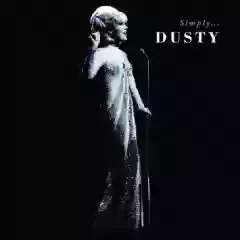
Fortunately, bringing a fair balance between these indispensable halves is the collection "Simply... Dusty" (2006) beautifully curated, both in the song selection and in the photographic-narrative apparatus. Four CDs and a book to pay tribute to an artist who, besides being an outstanding example of making music with the utmost respect for authors (among them Bacharach, Wrexler, King, Newman, Bergman, Costello...) and listeners, represented that part of Englishness full of charm and elegance that was successfully exported along with the baronets.
The phonographic support retraces, across four CDs, Dusty’s career, from her beginnings with her brother in The Springfields to her first solo in Denim (the cover, remember?) of "A Girl Called Dusty"; from the melodious-orchestral phase of "You Don’t Have To Say You Love Me" to the grandeur of "Son Of A Preacher Man" (Dusty... in Memphis), from the sobriety of the Philly Sound ("From Dusty With Love") to the little-known greatness of "Cameo". From the darkness of the late seventies to the rediscovery in synth-pop flavor of "Reputation" signed by Pet Shop Boys.
Ninety-eight tracks (!) from official discography and unreleased (the four extracted from the never-realized "Longing" and the version of "You’ve got a friend" are beautiful) to show us how the comments in the appendix (Costello, Midler, King, E. John, Pet Shop Boys, B. Bacharach, McCartney, The Carpenters, P. Clark, Cliff Richard) are sincere and participative in recounting the affection towards an extraordinary performer who left us too prematurely.
Never more than in this case do I feel like recommending this collection, which brings together splendid classics (Losing You, Wishin’ and Hopin’, I Just Don’t Know What To Do With Myself, The Look Of Love, All Cried Out, Doodlin’, See All Her Faces, Am I The Same Girl, Going Back,...) with a rich and complementary photographic-documentary apparatus.
This time, music and images truly blend synchronically to illustrate important fragments of fashion and musical history. A history that undoubtedly would not have been the same without the "dusty" voice and the marvelous vibrato of Dusty Springfield.
P.S. For those unfamiliar with Dusty Springfield, this collection (at a very affordable price) represents a definitive purchase. For those wishing to delve deeper, I would undoubtedly recommend listening to: "Dusty In Memphis" (1968), "A Girl Called Dusty" (1964), and "Cameo" (1973).
Loading comments slowly
Summary by Bot
This review highlights the 2006 compilation Simply... Dusty, a comprehensive 4-CD set that celebrates Dusty Springfield's remarkable career and vocal talent. It praises the balance between her personal charm and musical output while showcasing her versatility across different musical phases. The collection is recommended as a definitive purchase for newcomers and a valuable anthology for fans and music lovers. The review also points to key albums worth exploring further.Tracklist Lyrics Videos
01 Dusty Springfield (01:54)
02 Ragtime Selection (02:27)
03 The Lane Sisters / (Seven Little Girls) Sitting on the Back Seat (02:14)
04 The Springfields / Far Away Places (02:53)
05 The Springfields / Island of Dreams (02:38)
06 The Springfields / Say I Won't Be There (02:52)
07 The Springfields / No Sad Songs for Me (02:59)
08 I Only Want to Be With You (02:37)
11 Will You Love Me Tomorrow? (02:40)
17 I Will Always Want You (03:36)
18 Your Hurtin' Kinda Love (02:40)
19 I Wanna Make You Happy (02:27)
21 Baby Don't You Know (02:50)
23 Who Can I Turn To (When Nobody Needs Me)? (03:25)
24 Doodlin' (02:48)
27 If It Hadn't Been for You (02:26)
28 You Don't Have to Say You Love Me (02:50)
Dusty Springfield
English singer and defining voice of 1960s pop and blue‑eyed soul. Known for hits like I Only Want to Be With You, You Don’t Have to Say You Love Me, The Look of Love, and Son of a Preacher Man, and for a late‑80s resurgence via Pet Shop Boys leading to Reputation. Died in 1999.03 Reviews
