
 •
Rating:
•
Rating:
THE REVIEW
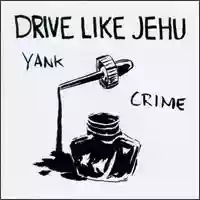
I Drive Like Jehu were a band from San Diego, active in the first half of the 90s, dedicated to a finely crafted emo-core and creators of only two albums. This “Yank Crime”, dated 1994, is their swan song and, according to many, their best work. Led by Rick Fork and John Reis, DLJ were one of those American bands that, in the 90s, picked up the legacy of the post-hardcore pioneers (Rites of Spring, Squirrel Bait, Bitch Magnet) and adapted it to the post-rock era. Their music relied on the sparkling duets of the two guitars, a volcanic yet extremely precise rhythm section, and the singer's screaming: in short, the quintessence of emocore.
The masterpiece is at the beginning: “Here Come the Rome Plows” (worthy of Rites of Spring, only played on less "spring-like" and more oppressive sounds) bursts forth as a vivid manifesto of their entire aesthetic, with saturated guitars, breathless runs, dissonant counterpoints, a dramatic flair, convulsive harmonies, agitated rhythms, unrestrained baroqueness; all perfectly measured for over 5 minutes. It's a pity that the rest of the album is not always at these levels. The essence of the work is indeed made up of tracks that are really too long, too elaborate, too self-indulgent, and ultimately repetitive. What the San Diego guys lack is a sense of restraint, the very thing that made Squirrel Bait great (duly paid homage to in the disheartened refrains of “Golden Brown” and “Super Unison”).
“Luau”, one of the key moments of the album, is around 9 minutes long and offers an obsessive, hypnotic cadence with a geometric interweaving of guitars reminiscent of Don Caballero, a mournful, anguished singing, sharpened by a suggestive play of vocal overlays. “Do You Compute” instead is introduced by a shrill guitar arpeggio, which funnels into a minimalist progression reminiscent of Terry Riley's teaching, closing with a subdued and cryptic Slint-like coda. And Slint (those of “Good Morning, Captain”) return punctually in the closing elegy, “Sinews”, which attempts in vain to reach the levels of an “Americruiser” (Bitch Magnet) or a “Trowser Minnow” (Rapemen) in the gallery of pseudo-piano-forte ballads, often placed at the closure of prestigious (pre)-post-rock albums.
The main flaw of this album is the desire to demonstrate at all costs the wide range of harmonic solutions available to the band, which leads to focusing more on form than on substance. Despite its flaws, “Yank Crime” remains an interesting work to understand the more or less recent developments of that genre that was once called "hardcore".
Loading comments slowly
Summary by Bot
Drive Like Jehu's 1994 album Yank Crime is regarded as their finest work and a significant post-hardcore record. The album features intricate guitar duets, intense rhythms, and emotive vocals. While opening track 'Here Come the Rome Plows' stands out as a highlight, some songs feel overly long and self-indulgent. Despite its flaws, Yank Crime remains essential for understanding emocore's evolution in the 90s.Tracklist Lyrics Videos
Drive Like Jehu
Drive Like Jehu are an American post-hardcore band from San Diego formed in 1990 by John Reis and Rick Froberg with Mike Kennedy and Mark Trombino. They released two studio albums—Drive Like Jehu (1991) and Yank Crime (1994)—and reunited from 2014 to 2016.03 Reviews
