
 •
Rating:
•
Rating: THE REVIEW
The name Donovan is inextricably linked to the 1960s: that was his period of greatest popularity and artistic splendor, and all his albums from "Fairytale" to "Barabajagal" are genuine gems: folk, psychedelia, jazz, rock, pop influences, children's rhymes, and hallucinated visions, a truly astonishing ability to create melodies. However, Donovan was never a rockstar, a big personality, and he wasn't able to market himself well: he ended up being closely associated with the hippie culture and, when that ceased as a mass phenomenon, Donovan also faded into the background. However, this doesn’t mean he "died" in 1969, no, not at all: his career continues at high levels, and to greet the new decade, he releases an unmistakably Donovan-esque album but fresh and full of new ideas, in some ways breaking with the recent past: "Open Road."
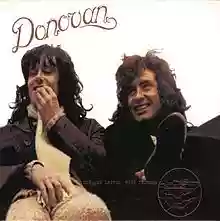
After a shamelessly (and magnificently) poppy album like "Barabajagal" with its "I Love My Shirt" and "Pamela Joe," Donovan steers towards a more rock sound; this entails a structural change of some importance, in fact, it ends the collaboration with his historic producer Mickie Most: Donovan takes the helm personally and relies on a true rock band: Mike Thomson on guitar and bass, Mike O'Neill on keyboards, and John Carr on drums. "Open Road," the final result of this new project is an immediate album, well-constructed and very catchy, but it requires many attentive and in-depth listens to be absorbed and appreciated for its true value because it is a very homogeneous album from a qualitative point of view; there is no song that stands out above the others, and regarding appeal and immediacy, this is a small flaw. However, this record showcases a beautiful and particular sound: we are in 1970, glam rock is starting to take off and Donovan, who was one of the main inspirations of this subgenre, adapts to it and blends it with his style with excellent results, just think of the initial "Changes", easy and catchy rock, beautiful guitar riff and Donovan's unmistakable voice which is as suitable as it can be for glam rock; this subtle, sensual, and suggestive singing combined with light and catchy rock forms a great alchemy, which is also found in songs like "People Used To", "Song For John", "Riki Tiki Tavi", vaguely hysterical and irresistible, a pulsating and sardonic "Poke At The Pope" and the indolent languor of "Clara Clairvoyant", marked by blues phrasings and a powerful and psychedelic refrain, all great songs, in which new ideas and sounds are made their own by the artist with absolute naturalness and class.
Of course, there are episodes that relate to Donovan's old style, a rarefied and lysergic ballad like "Curry Land", which almost seems like a rock re-styling of the sounds of "Mellow Yellow," to which the ambiguous pop of the sleepy, sighing, and insinuating "Joe Bean's Theme" can also relate, while "Season Of Farewell" evokes more relaxed and calm sensations, of sweet and contemplative psychedelia. Lastly, there are two songs imbued with Celtic suggestions, the dark "Roots Of Oak", where magical and initiatory rituals of ancient druids live again, in an electric, tense, and charged atmosphere and the track considered by Donovan himself as the symbol of the album, namely "Celtic Rock", an epic and urgent march, with a dramatically theatrical progression starting from the magnificently over-the-top singing, where Celtic but also oriental sounds mix, highlighting the work of all the band members in a resounding instrumental escape.
By no means inferior to its predecessors, "Open Road" is truly a great record, there couldn't have been a better way to greet the new decade; unfortunately, it marked the beginning of the end of Donovan's commercial success, but this is an insignificant detail: although the facts (sales figures) apparently prove otherwise, we are in the presence of an intelligent artist, clever and chameleonic, who has managed to withstand the passing of years and musical trends, skillfully and brilliantly navigating on the coordinates of his genius. "Open Road," the first album of the excellent 1970s production of the Scottish singer-songwriter, is a glaring and splendid example.
Loading comments slowly
Summary by Bot
Donovan's 1970 album Open Road marks a significant shift towards a rock sound infused with glam and psychedelic elements. The album showcases a strong band collaboration and innovative musical ideas, blending old folk styles with new genres. Though it did not achieve major commercial success, the record is praised as a brilliant, cohesive, and timeless work. Open Road reflects Donovan’s adaptability and enduring artistry as he welcomes a new musical decade.Tracklist Lyrics Videos
Donovan
Donovan (born Philip Donovan Leitch) is a Scottish singer-songwriter who rose to prominence in the 1960s, moving from acoustic folk into psychedelic pop and related styles. Reviews frequently describe him as an underrated peer of the era, often compared to Bob Dylan, with a reputation for strong melodies, poetic imagery, and stylistic flexibility across decades.24 Reviews
