
 •
Rating:
•
Rating: THE REVIEW
"What's Bin Did And What's Bin Hid," the debut album of Philip Donovan Leitch, was overall a fresh and pleasant product: good/great songs, albeit with a somewhat rough and derivative style from an artist still immature, and especially that blessed/cursed "Catch The Wind," which would bring good Philip immediate success, but also lead to incoherent, hasty, and indefensible comparisons invented by a music press already then in search of figures to build, presumed feuds, rivalries, and dualisms. For the mild and reserved Donovan, there was no better way to break free from uncomfortable and unpleasant labels than to evolve, to develop a precise artistic identity: albums like the eclectic "Sunshine Superman" with its oriental influences and the delicate sound watercolors of "A Gift From A Flower To A Garden," a fundamental album for pop as well as for psychedelia, would be the final destination of a path that begins immediately with the second record, "Fairytale" of 1965.
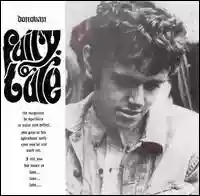
This remarkable album sees Donovan abandon the American-like ambitions of the debut to focus on a more European, more British sound: "Fairytale" is apparently a more homogeneous product than the previous one, containing more mature and personal insights. The album is almost entirely written by Donovan himself and settles on folk sounds, still strictly acoustic, with some preamble of psychedelia beginning to emerge, and a calm and meditative atmosphere, easily noticeable from the beautiful cover photo depicting the disheveled Scottish boy in a dreamy and thoughtful pose.
The showpiece of "Fairytale" is what would become the second great classic of Our Man after "Catch The Wind," that is, "Colours", a simple and crystalline acoustic folk ballad, enhanced by the artist's soft and subtle voice, which would be revisited in a duet with an ever-splendid Joan Baez; "Colours" is perhaps the song that most connects to the sounds of "What's Bin Did And What's Bin Hid," while "Summer Day Reflection Song", "Jersey Thursday", and "Belated Forgiveness Plea" manage to express, even with an absolute economy of means, practically almost only with Philip’s acoustic guitar, exotic, psychedelic, and distant atmospheres.
The short and amusing nursery rhyme "Circus Of Sour" is almost an embryo of ingenious pop refrains like "Skip-A-Long Sam" and "Little Boy In Corduroy" that would follow in a few years, the visionary "Sunny Goodge Street" is an enchanted and hallucinated urban portrait, enriched by a sibylline flute and a timid orchestral arrangement, while the ballad "To Try For The Sun", delicate and dreamy, is inspired by more intimate and personal reflections and sentiments, and stands out for the use of a sharp harmonica, which also appears in the carefree "Candy Man", a folk-pop divertissement, but more mature, more personal, and better constructed than those of the previous album.
Among so many beautiful songs, the lyrical intensity of "The Ballad Of A Crystal Man" stands out, here too a mix of folk and psychedelia, a beautiful committed and pacifist text wonderfully interpreted by a voice that, far from being amazing and equipped with some unknown range, manages, however, to always be empathetic and moving, as also demonstrated by the sparser and essential "Little Tin Soldier", pressing and ruthless. Completing the picture is the sentimental, serene female portrait of "The Ballad Of Geraldine".
"Fairytale" is certainly not the most mature album of Donovan, but in my opinion, it is perhaps the most beautiful overall because it is a product of great personality, from an artist who has finally decided what he wants to become, the level of inspiration is extremely high, almost all the songs sound like great classics, showcasing a Donovan who expresses all his abilities as an underrated genius of melody and a great sensitivity in the lyrics; an album that finds an absolutely perfect balance between simplicity and refinement; an alchemy that only artists of pure class like Phil Donovan have been able to achieve.
Loading comments slowly
Summary by Bot
Donovan’s 1965 album Fairytale marks a key step in his artistic maturation, shifting to a more British folk sound infused with early psychedelia. The album features memorable songs like “Colours” that showcase his melodic genius and lyrical depth. It balances simplicity with refinement, revealing Donovan’s true identity beyond his debut’s comparisons. Fairytale stands out as perhaps his most beautiful and inspired work, blending acoustic folk with delicate and exotic atmospheres.Tracklist Lyrics Videos
Donovan
Donovan (born Philip Donovan Leitch) is a Scottish singer-songwriter who rose to prominence in the 1960s, moving from acoustic folk into psychedelic pop and related styles. Reviews frequently describe him as an underrated peer of the era, often compared to Bob Dylan, with a reputation for strong melodies, poetic imagery, and stylistic flexibility across decades.24 Reviews
