
 •
Rating:
•
Rating:
THE REVIEW
How to best craft a heterogeneous album that includes folk elements, psychedelic features, Eastern influences, and everything that the British invasion had to offer during the legendary '60s???
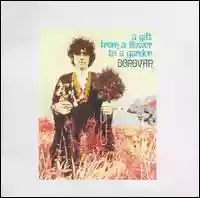
Donovan finds his answer in this album; at the time of its release, it was considered one of his most successful works, although today it begins to slightly show the signs of time passing inexorably, especially in the first electric part. Yes, because this album actually stems from the ashes of two previous records, both released in 1967, namely “Wear your love like heaven” (electric) and the more successful “For little ones” (acoustic).
However, the contrast of material of such different nature does not tarnish the overall value of the album; rather, it strengthens it, making the listener part of genuine delights such as “Someone’s singning”, “There was a time”, “Epistle to Derrol” (dedicated to banjoist Derrol Adams), “Starfish on the toast”, “The tinker and the crab” but also (to be completely honest) some rare embarrassing episodes, such as the Arabian-inspired “The enchanted gipsy”. For the more meticulous, one might highlight the absence of a song that stands out above the others, as had been the case with “Catch the wind”, “Colours”, “Sunshine superman”, “Mellow yellow" for previous album releases, but it’s also true that, even without containing many hits, the album is generally of more than good quality.
It remains a fundamental work to better understand the musical reality of that much-praised golden age of music, primarily because it is very well-crafted, but also because it is the only album that unites and reconciles the two souls of the Scottish songwriter, namely that of the melancholic minstrel emulating Dylan and that of the rocker capable of distilling pure psychedelia and acid-rock pills like few others.
Interestingly, musicians of the caliber of Jack Bruce (Cream) and John Paul Jones (Led Zeppelin) are also present to contribute to the success of this album.
In the end, those who did not live through that period and are entirely ignorant of the social and musical context that produced this and a thousand other albums of the era will necessarily struggle a bit to immerse themselves in the magical and, let’s face it, somewhat dated charm of Donovan; a musician whose career has been characterized by a continual alternation of ups and downs, it is true, but who perhaps today remains too often unjustly in the shadows.
Loading comments slowly
Summary by Bot
Donovan’s album blends folk, psychedelia, and Eastern musical influences into a well-crafted work from the 1960s. It combines two previous records, creating a rich, diverse listening experience despite some dated sounds. Contributions from Jack Bruce and John Paul Jones enrich the work. While it lacks a standout hit, it remains essential for understanding that golden musical era. The album highlights Donovan’s dual musical identity and his understated legacy.Tracklist Lyrics Videos
Donovan
Donovan (born Philip Donovan Leitch) is a Scottish singer-songwriter who rose to prominence in the 1960s, moving from acoustic folk into psychedelic pop and related styles. Reviews frequently describe him as an underrated peer of the era, often compared to Bob Dylan, with a reputation for strong melodies, poetic imagery, and stylistic flexibility across decades.24 Reviews
Other reviews
By luludia
Donovan is simple, and being simple is the most difficult thing in the world.
You touch the sky with a finger, and that’s it.
