
 •
Rating:
•
Rating:
THE REVIEW
The metropolis, the great leviathan of our contemporary society.
At night a collection of neon lights, bar signs where an alcoholic drowns in his last glass, nightclubs where breathtaking women can be admired for a few coins, a continuous stream of headlights racing through its streets and inside the car a man absorbed in his thoughts and worries about the future turns on the radio and tunes into WJAZ and finds the voice of Jester "Il Notturno" to keep him company until the first light of dawn.
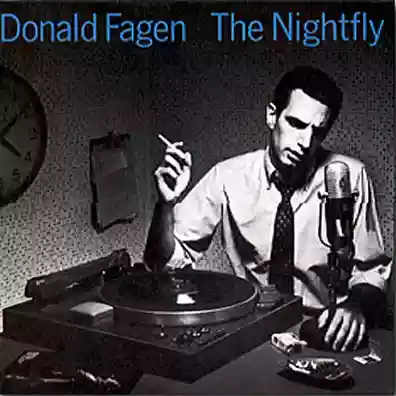
Donald Fagen, in his first solo work, after the "then certain" end of the Steely Dan partnership, manages to exemplarily narrate the nightlife, reconciling New York metropolitan stereotypes with the existentialism of a man alone in front of the night, the ghosts of the past, memories, and uncertainties that trouble his soul.
The horizons of "The Nightfly" do not stop at such a coarse philosophy, because Fagen wants to go back in time about twenty years and narrate American society at the dawn of the '60s, the Kennedy-era "new frontier" that reinvigorates the American economic and cultural dream.
But it is certain that the "New Frontier" is also that of Fagen himself, who embarks on a risky "unknown journey" without Walter Becker's Hawaiian spirit. A historic album then, and decidedly optimistic despite the darklight atmospheres, murders, and prostitutes and all that comes with it...
And when the first words of the beautiful soft jazz of "I.G.Y." are heard, it becomes immediately clear that the optimism is decidedly flaunted. Airplanes, subways, underwater tunnels, the frontiers of space, and humanity will have a future even brighter than the climate Fagen must have felt at the time. And with "Green Flower Street" and "Ruby Baby", American dreams of glory are abandoned to immerse in real life; that of the slums, of the serial killer waiting around every corner, of the nightclub where to spend the company with Ruby, a stunning woman, perhaps also a product of the collective imagination and stereotyped fantasies about prostitutes.
But while the first track presents a dance sound startling in its modernity and especially its digital sound, the ruby girl, a cover done and redone, (recall Dion) presents instead a jazz-retro taste that better suits the atmosphere of the album.
And on the same path of soft-jazz proceeds "Maxine", a sweet and elegant ballad that flows slow and pleasant, followed by the album’s key single, which briefly encapsulates Fagen’s vision on the politics and history of the '60s: "New Frontier" is perhaps a track with a more commercial and immediate taste but if pop it is, then it's worth admitting that it is decidedly quality pop... the kind that slowly died in the following decade amidst atrocious agonies.
The song's lyrics are very funny and interesting: a young man (perhaps the young Fagen himself 20 years earlier) finds himself maneuvering to win over and take to bed a super-sexy blonde, and must ironically retreat with her into a bomb shelter due to the widespread fear of a total war that was felt in the 60s.
But the true jewel of the album is, in the opinion of the writer, "The Nightfly", a track that captures in a few words the whole essence of the album, the sense of a new life but also of future music. The great and total novelty of "The Nightfly" is that it is the first album recorded entirely in digital, with a sound perhaps somewhat plastic, fake but extremely clean and pleasant.
The brazen Lester, a skilled DJ who broadcasts jazz music and keeps us travelers company, transmitting a sensation of absolute power over the night ("tonight the night is mine") and making it our benevolent friend. Behind such a soft text, Fagen shows a desire to cut ties with life and the past and to challenge himself on everything he had achieved so far.
The Steely Dan trademark returns, in the Latin rhythm of "The Goodbye Look", this time dedicated to the counterpart of the 60s scenario, Castro's Cuba; and then it twirls on the cheerful swing of "Walk between raindrops", but it is clear that the best of the album has already been squeezed out.
A historic album for pop and jazz music, revolutionary, distinctive, interesting, varied, absolutely a must-have.
Loading comments slowly
Summary by Bot
Donald Fagen’s debut solo album The Nightfly masterfully blends jazz and pop, capturing the spirit of 1960s New York nightlife and societal optimism. The album stands out as a historic milestone in digital recording with clean, smooth sounds. Lyrically, it explores themes of nostalgia, existentialism, and cultural dreams, making it a rich and varied work. The reviewer praises the album as both revolutionary and essential for fans of jazz and pop music.Tracklist Lyrics Videos
Donald Fagen
American singer, songwriter, and keyboardist; co-founder of Steely Dan. His acclaimed solo catalog includes The Nightfly (1982), Kamakiriad (1993), Morph the Cat (2006), and Sunken Condos (2012).10 Reviews
Other reviews
By Socrates
That bony and angular DJ featured on the album cover... if he didn’t save my life, undoubtedly made it better.
‘Maxime’ is one of the best ballads ever written, with the decisive contribution of a young Michael Brecker’s sax.
