
 •
Rating:
•
Rating:
THE REVIEW
Also a drummer, but above all an intense singer and emotional lyricist, Donald Henley from Gilmer (less than five thousand souls, in a corner of Texas) never intended to sufficiently deepen his proficiency on instruments traditionally used for composition (piano, guitar...) and so he has always needed a "shoulder," someone to provide him with a nice guitar riff or a cluster of piano chords, upon which he could then weave a beautiful vocal melody of his and an equally effective love, or rage, perhaps social protest, or instead melancholic remembrance, lyric.
In the golden era of the Eagles his perfect partner was Glenn Frey: volcanic, instinctive, superficial, fast, arrogant, Glenn provided the raw idea, the direction, the cue; it then passed to the meticulous and reflective Henley who completed, refined, improved, organized, and chose the best solution. The synergy worked, as we know, tremendously well for a while, making them multimillionaires for life.
In 1984, the year this work was released, Don and Glenn were no longer on speaking terms, and the drummer's new indispensable partner became Danny Kortchmar, guitarist and producer, up to that point a long-time collaborator first of James Taylor and then of Jackson Browne, talented but without the possibility, or luck, to acquire widespread personal fame (although his producer résumé would later include people like Bob Dylan, Billy Joel, Neil Young...).
The great lead song of the album, the crack as they say in the USA, is, however, a gift from Tom Petty's Heartbreakers guitarist, Mike Campbell. Henley and Kortchmar, in any case, add to "The Boys of Summer" much of their own, namely arrangement, performance, and singing from a state of grace: a rolling, pressing rhythm of Linn Drum (an electronic drum then in vogue), is crossed by the obsessive arpeggio of a synthesizer. Meanwhile, the sumptuous work of the lead guitar, which refines, sobs, and counterpoints, finally releasing a great concluding solo, alternates with the evocative singing which, starting from the memory of a fifties baseball team, tackles the broader theme of the transition from youth to mature and aware age.
Henley's vocal timbre is immediately recognizable because of a very particular, hoarse tension, reflecting his wary, dissatisfied, and demanding character: undoubtedly one of the great voices of America even if the character, precisely because of his difficult and far from amiable and relaxed nature, does not inspire instinctive sympathy, exposing himself instead to true and proper prejudices (especially in Italy). Personally, he is among my absolute favorite singers... as he aged, he did nothing but improve in technique and expressiveness, something predictable given the subject, a true antithesis to any possible self-indulgence... but the beauty is that, as the years went by, Don has understood more and more effectively how to direct his perpetual, intrinsic, proverbial anger toward truly important matters, namely the various social and environmental abuses that plague the world around him (and around all of us), devoting a true economic fortune, and much of his time, to humanitarian causes and political denunciation, as a genuine progressive and not merely a talker as is customary in our parts. Among other things, after many disorganized and hedonistic years in Los Angeles, he has long since given up on fierce competitiveness, envy, and related stress, returning to live in his Texan village, trying to raise his children on concrete and solid values: maximum respect.
At the time of this album, we are still in full Californian phase: the second notable track of the album is "Sunset Grill" (dedicated to a Hollywood locale) and is characterized by dramatic washes of synthesizer, fine-tuned by the great colleague Randy Newman, as well as by the characteristic, superb glissando of Pino Palladino’s fretless electric bass. In the chorus, for the occasion, an unsuspected Patty Smith.
Curious, but all the more typical, is the fate of "All She Wants To Do Is Dance": the lyrics, containing a ferocious critique of the superficiality and small-mindedness of many people lacking social conscience, ended up remaining in the background compared to the captivating disco rhythm set up around them. It turned out that those very characters who were the object of Henley's anger ended up dancing to it, for a long time and with satisfaction, to this song that animatedly accused and reprimanded them.
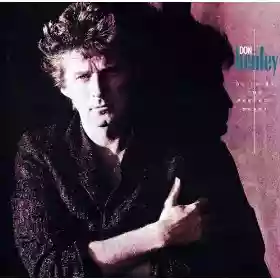
Second of only four albums released in his name by the musician in thirty years ("I prefer to release one album every ten years, but with all good songs, than one every two-three years with just a couple of remarkable things and the rest to fill...") "Building The Perfect Beast" was still missing from the notable collection of reviews on this site, and this was not correct: long live Don Henley then.
Loading comments slowly
Summary by Bot
Don Henley’s 1984 album Building The Perfect Beast highlights his unique vocal style and emotional lyricism supported by talented collaborators. Featuring iconic tracks like "The Boys of Summer," the album blends social protest with personal reflection. The review praises Henley’s artistic maturation, his dedication to meaningful themes, and the album’s lasting impact in rock music. It underscores the successful partnership with Danny Kortchmar and contributions from other notable musicians.Tracklist Lyrics Videos
Don Henley
American singer, songwriter, and drummer; founding member of the Eagles and acclaimed solo artist known for hits like The Boys of Summer and Dirty Laundry. Henley’s solo albums include I Can't Stand Still (1982), Building the Perfect Beast (1984), The End of the Innocence (1989), Inside Job (2000), and Cass County (2015). He is also noted for environmental and social advocacy.02 Reviews
