
 •
Rating:
•
Rating:
THE REVIEW
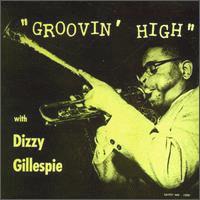
The recordings of "Groovin' High" were made between 1945 and 1946 and many of these represent the first official examples of bebop, the new style that decisively influenced the foundations of modern jazz.
They were the jam sessions of the smoky clubs of Harlem in the early '40s, where Gillespie, Charlie Parker, pianist Monk, and guitarist Charlie Christian (spiritual father of Wes Montgomery) ventured in search of new musical horizons. Unfortunately, these sessions were never recorded.
In 1945, Dizzy's mastery on the trumpet was at its peak and could be witnessed in the perfection and energy of his solos. Compositions like "Groovin' High", with its joyful and immortal spirit (an absolute masterpiece, it's impossible not to know it), "Salt Peanuts" (explosive, reminiscent of Gershwin), and "Hot House" are clear examples of "boppers" technique. It should not be forgotten that the other great bopper Charlie Parker is often present in the "Groovin' High" recordings, also a master in solos and in perfect sync with Dizzy.
Significant is the solo in "Oop Bop Sh'Bam" where the solo is indicative and Dizzy's onomatopoeic vocalizations (quite grotesque) appear almost delirious. Also, consider the curious title, whose meaning is close to voodoo or witchcraft sounds. This is to highlight that jazz has roots in dark, magical, secret, and pseudo-ritual activities, as black as night with unknown and indecipherable meanings. "Things To Come" is of apocalyptic violence and is an emblem of Gillespie's potential, forming an ideal layer to explain all the trumpeter's explosive force. How not to mention the immortal standard "All The Things You Are", of a romantic, impressive, and poignant modernity. Delirious, fast, and noisy "Things To Come", with a Dizzy acrobat. 13 excellent tracks, where the two masters weave dizzying climbs to the heights and the trumpet's beams of notes climb the sax's wrenching phrases.
But there is more. The work features recordings with small ensembles or big bands, which include a vibraphonist, pianist, and bassist. Remember the drummer Kenny Clarke.
Dizzy has always conveyed a cheerfulness and a vitality that were deeply rooted in him. So don't be afraid to approach these sounds. They are fresher than you might imagine. In such a fertile era of inventions, Gillespie's music represents a celebration of virtuosity that remains, however, enshrined in established rules.
Loading comments slowly
Summary by Bot
Groovin' High captures Dizzy Gillespie at the peak of his bebop mastery during the mid-1940s. Featuring legendary collaborations with Charlie Parker and Monk, the album showcases groundbreaking compositions like 'Groovin' High' and 'Salt Peanuts'. Its vibrant energy and virtuosity marked the foundations of modern jazz. The review highlights the historical importance and enduring freshness of these recordings.Tracklist Videos
Dizzy Gillespie
Dizzy Gillespie (1917–1993) was an American jazz trumpeter, bandleader, and composer, a principal architect of bebop alongside Charlie Parker and a pioneer of Afro‑Cuban/Latin jazz. His bent trumpet, puffed‑cheek embouchure, and virtuosic improvisation made him one of the most recognizable figures in modern jazz.02 Reviews
